 Go Back

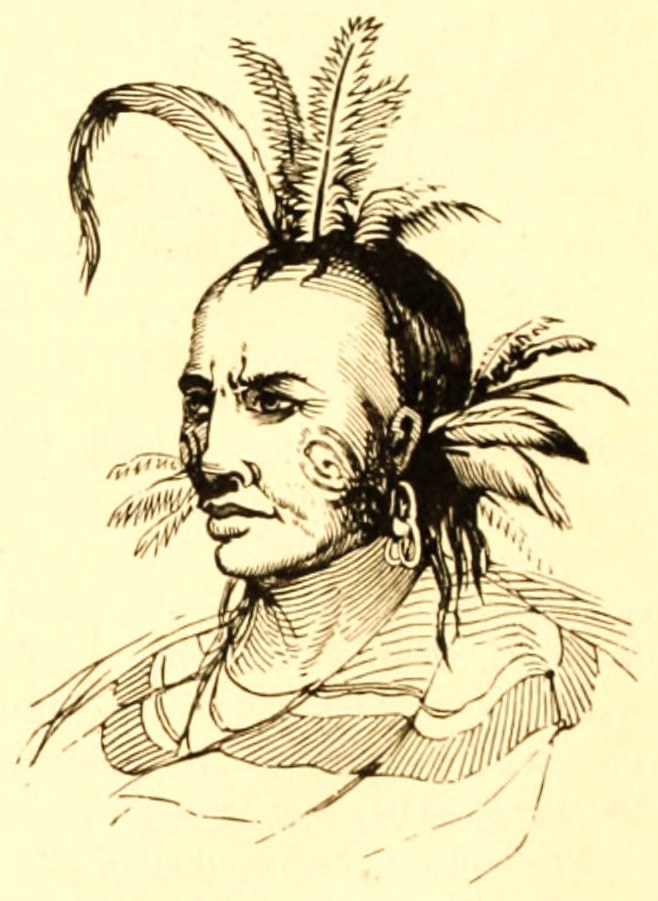
Before the English arrived, Virginia Indians had lived in what is now Virginia for over 12,000 years. In May 1607 Wahunsunacock, better known as Chief Powhatan, was the mamanatowick, or paramount chief, of more than thirty tribes in the Powhatan Chiefdom. He had inherited six tribes and gained the rest through marriage alliances and coercion. Their land covered tidewater Virginia between the James and Potomac Rivers, a region they called Tsenacommacah, about 100 miles by 100 miles. The National Park Service estimates a population of at least 25,000 before English diseases, and about 15,000 in 1607.
Each tribe had its own chief, a weroance or weroansqua, but all paid tribute to Powhatan. Encyclopedia.com adds that the confederacy had a peace chief for internal affairs, a war chief for external affairs and a council that included priests. In the winter of 1607 John Smith was taken to Werowocomoco, where Powhatan lived, and was released in the spring of 1608. Powhatan then sent food to the English, often with his daughter Pocahontas. After Smith left in 1609, relations soured and Powhatan moved inland to Orapaks.
In 1613 the English kidnapped Pocahontas. In 1614 she married John Rolfe, and the marriage brought a peace known as the Peace of Pocahontas. She died in England in 1617, and Powhatan died in 1618. His brother Opechancanough took over. Tired of English expansion, he planned a coordinated attack in 1622 that killed about 350 to 400 of roughly 1,200 settlers, although Jamestown was spared after a warning. Conflict continued on and off. In 1644 Opechancanough led another attack, when the English population had grown to about 8,000.
In 1646 the English captured Opechancanough, who was about 100, and a guard shot him. The National Park Service says his death began the end of the Powhatan Chiefdom. Treaties in 1646 and 1677 limited Indian access to land, set up reservations and, in 1677, required yearly tribute to the English king. The Mattaponi and Pamunkey still keep their reservations. In 1924 Virginia's Racial Integrity Act recognized only two racial categories, white and colored, and officials such as Walter Plecker used it to deny that Virginia Indians existed. The picture on this page is an imagined 19th-century likeness of Powhatan from an 1880 engraving, not a portrait made from life.
 National Park Service: Chronology of Powhatan Indian Activity
 Encyclopedia.com: Powhatan Confederacy