 Go Back

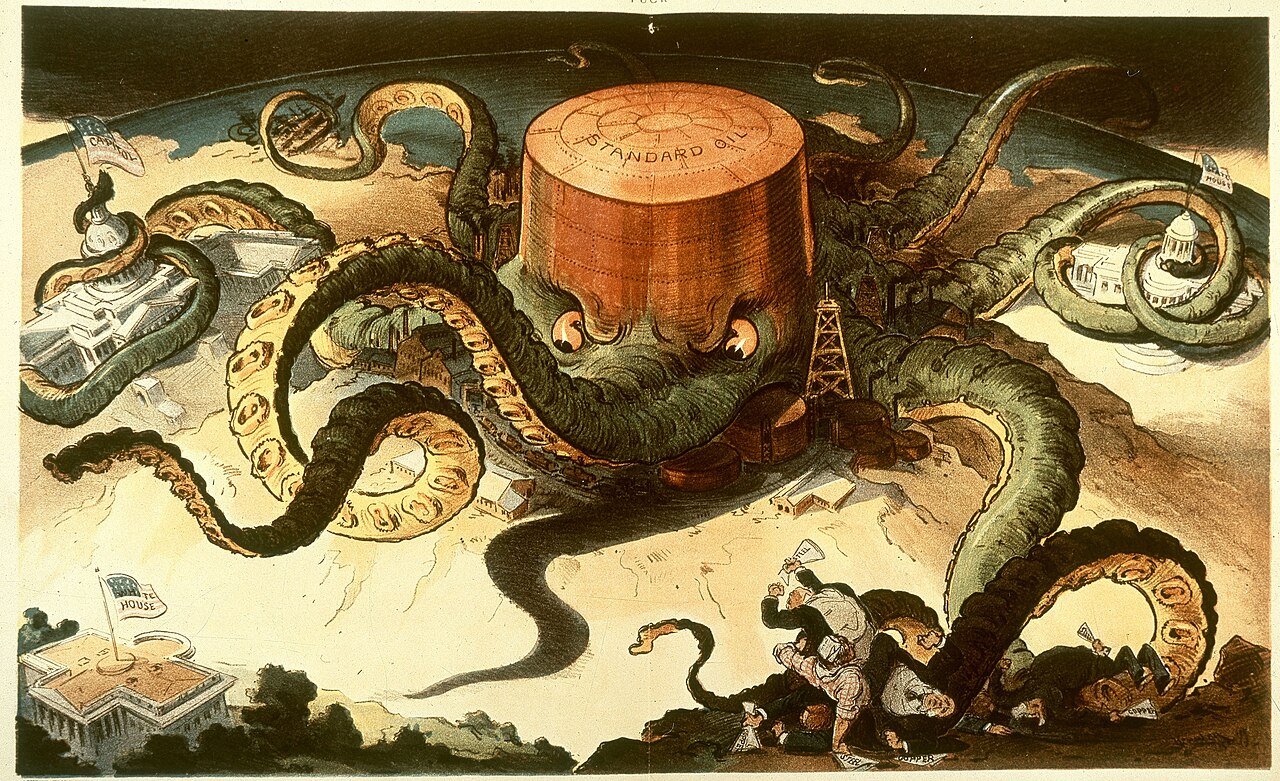
In the 1890s, many Americans concluded that industrial capitalism had outrun their politics. Great trusts like Standard Oil controlled whole industries, city machines sold favors to the highest bidder, and the gap between rich and poor reached levels the country had never seen. The response, roughly between the 1890s and the First World War, was the Progressive Era: a broad, many-sided movement to use active government to clean up corruption, regulate big business, and soften the harsh edges of industrial life.
Progressives came from every class and region. Journalists exposed wrongdoing in sensational detail; settlement house workers documented poverty; labor unions organized workers; and middle-class voters, especially women, demanded honest and efficient government. Their faith was in facts and expertise: investigate a problem scientifically, publicize it, then pass a law. At the state level, reform governors introduced direct primaries, the initiative, referendum, and recall to weaken party machines and give voters direct power.
National politics followed. Presidents Theodore Roosevelt, William Howard Taft, and Woodrow Wilson, rivals who disagreed on much, all expanded federal power over the economy, prosecuting trusts and creating new regulatory agencies. The movement wrote itself into the Constitution: the Sixteenth Amendment (1913) authorized a federal income tax, and the Seventeenth (1913) required direct election of United States senators. The era also passed landmark laws on food safety, working hours, and conservation.
Progressivism had blind spots, especially on race: most white reformers ignored or accepted segregation. Even so, by the time the United States entered World War I, the movement had permanently enlarged what Americans expected their government to do. Its campaigns for women's suffrage, Prohibition, and consumer protection were still unfolding as the era closed, and its basic idea, that government should actively manage industrial society, had become the common ground of American politics by 1924.
 Britannica: Progressivism
Britannica: Muckraker
 Library of Congress: The Progressive Era to New Era