 Go Back

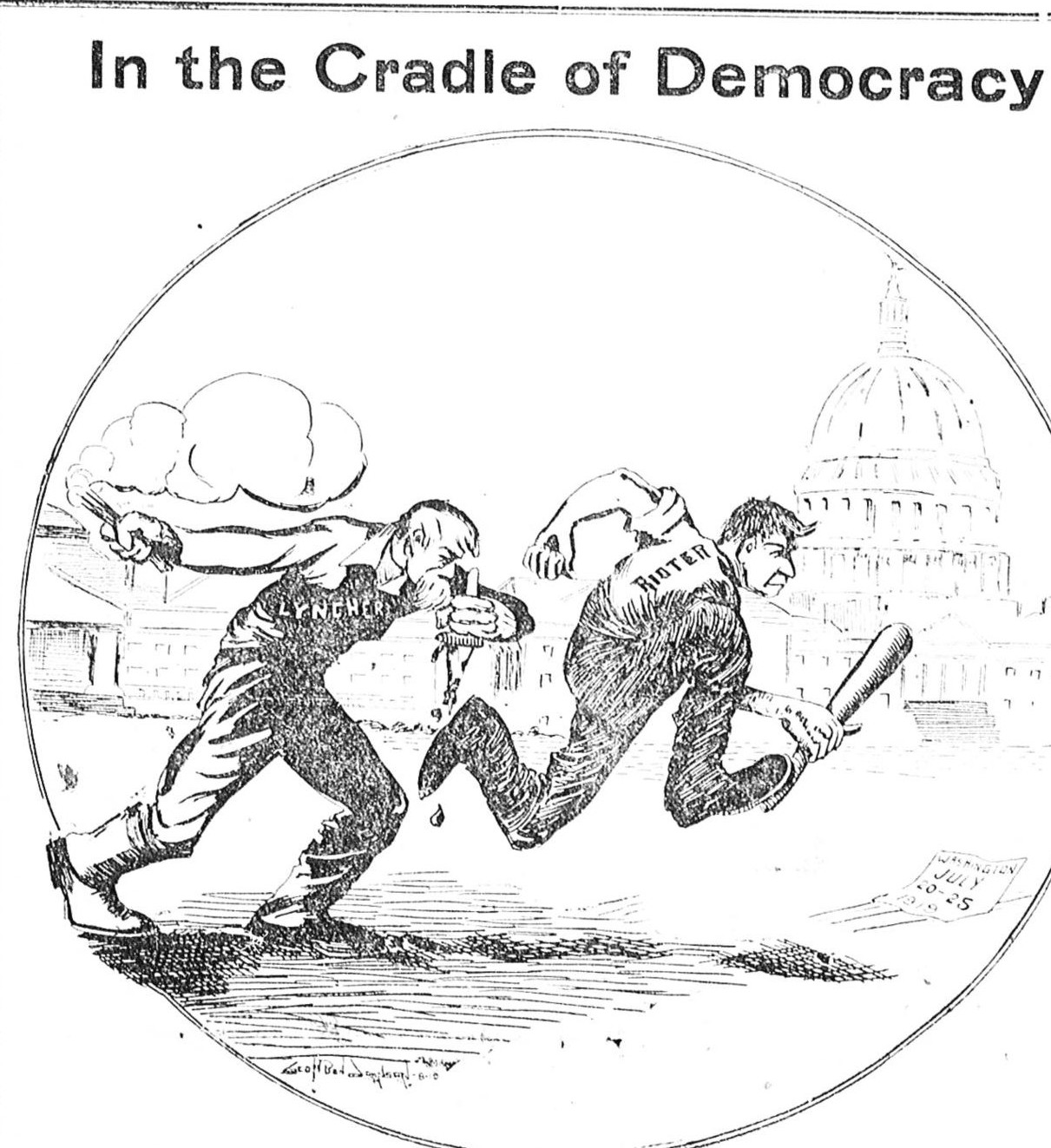
The summer and autumn of 1919 saw the worst outbreak of racial violence in American history to that time. Black veterans were returning from the First World War determined to claim the democracy they had fought for; Black workers who had migrated north for war jobs competed with whites for housing and work; and lynching, 64 victims in 1918 and 83 in 1919, kept pace. In more than three dozen cities and one rural county in Arkansas, white mobs attacked Black communities. Black Americans, many of them armed veterans, fought back, notably in Washington, D.C., and Chicago. The writer James Weldon Johnson gave the season its name: the Red Summer.
The worst urban riot began in Chicago on July 27, 1919, when a Black teenager, Eugene Williams, swimming in Lake Michigan, drifted across an invisible racial boundary at a segregated beach and was stoned and drowned. When police refused to arrest the white man blamed, crowds gathered, distorted rumors swept the city, and for days gangs fought through the South Side despite the calling out of the state militia. By the end, 38 people were dead, 23 of them Black, hundreds were injured, and a thousand Black families were left homeless by arson.
Violence took different forms elsewhere. In Washington, D.C., white soldiers and sailors attacked Black neighborhoods until residents organized their own defense. In Omaha, a mob stormed a courthouse and lynched a Black prisoner. In Elaine, Arkansas, Black sharecroppers who had met to organize a union were attacked, and in the massacre and reprisals that followed, scores, perhaps hundreds, of Black people were killed, the deadliest episode of all.
The Red Summer exposed the cost of asking Black Americans to fight abroad for freedoms denied at home, and it changed Black politics. The NAACP grew rapidly as it publicized and investigated the violence, and a new spirit of open resistance, soon voiced by the poets and organizers of the 1920s, took hold. The violence of 1919 remained a raw memory in 1924 and a warning of what unresolved injustice could ignite.
 Wikipedia: Red Summer
 Britannica: Chicago Race Riot of 1919