 Go Back

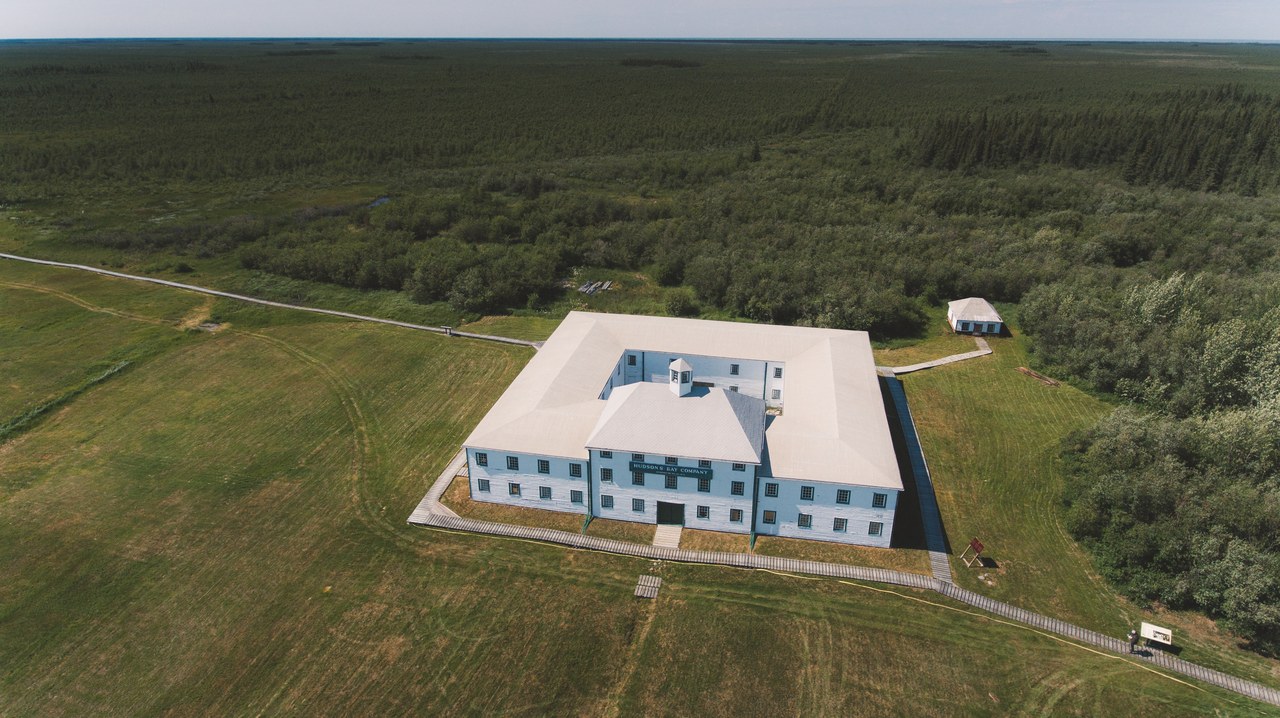
Rupert's Land and the Hudson's Bay Company. Rupert's Land (1670-1870) was the vast territory of northern North America granted by King Charles II to the Hudson's Bay Company, the oldest chartered company in Canadian history. In 1670 the king gave his cousin Prince Rupert and his fellow adventurers a monopoly over all the lands draining into Hudson Bay, nearly four million square kilometers, almost half of modern Canada. From a string of trading posts on the bay, beginning with York Factory, the Company drew the furs of a continent.
The Company's empire rested on partnership with the First Nations. Cree, Assiniboine, and other Indigenous hunters and traders brought beaver and other furs to the bay posts or to company traders inland, exchanging them for guns, cloth, metal tools, and brandy, and the fur trade tied the peoples of the north into the commerce of Europe. Competition with French traders from Montreal, and later with the North West Company, drove the HBC inland up the great rivers, until in 1821 the two rivals merged under the Hudson's Bay name.
The trade transformed the region. New mixed-descent peoples, the Metis of the Red River, emerged as buffalo hunters, traders, and farmers, while the company ruled its territory like a government, with courts, forts, and a governor. But the settlement of the prairies and the pressure of Canada could not be resisted forever, and in 1870 the Company surrendered Rupert's Land to the new Dominion of Canada, keeping its posts and rich land grants.
The legacy of Rupert's Land is Canada itself: the fur trade drew the map of the northern half of the continent, its routes became the paths of settlement, and its conflicts live on in the history of the First Nations and the Metis, who rose at Red River to defend their land and rights. The Hudson's Bay Company still trades today, the oldest company in North America.
 The Canadian Encyclopedia: Rupert's Land
 Canada's History: Rupert's Land
 Rupertsland Institute: What is Rupert's Land
 Wikipedia: Rupert's Land