 Go Back

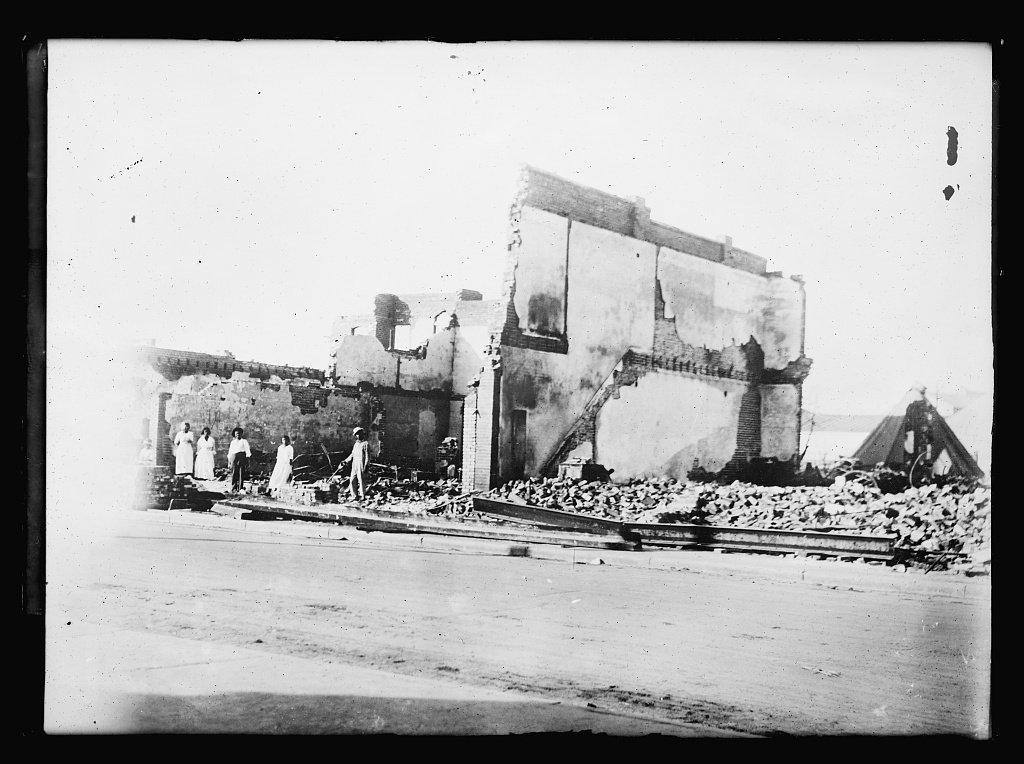
The Tulsa Race Massacre. Greenwood, in Tulsa, Oklahoma, was the most prosperous Black community in America - 'Black Wall Street,' Booker T. Washington had called it: a thirty-five-block district of shops, theaters, hotels, doctors' and lawyers' offices, owned by the thirteen thousand Black residents of a segregated oil-boom city. On 30 May 1921, a nineteen-year-old Black shoe-shiner, Dick Rowland, stepped into an elevator with a white operator, Sarah Page; something - a trip, a grab - made her cry out; he was arrested. The evening paper headlined an assault, and by nightfall a lynch mob gathered at the courthouse.
Armed Black veterans came down from Greenwood to defend the prisoner; a shot was fired; and in the early hours of 1 June white mobs - thousands strong, many of them deputized and armed by the police - invaded Greenwood. For eighteen hours the district burned: homes and businesses looted and torched block by block, defenders shot, and private airplanes circling above, dropping incendiaries and, survivors said, gunfire. When the National Guard finally restored order, thirty-five blocks of Black Wall Street were ashes; up to three hundred people were dead - the official count of thirty-six was never believed - and six thousand Black Tulsans were interned in camps while the ruins smoldered.
Then Tulsa forgot. The grand jury blamed the victims; no one was ever prosecuted; insurance claims were denied as riot losses; the newspapers' records were purged; and for seventy-five years Oklahoma did not teach it. The massacre entered the nation's memory only in the century's turn: the state commission of 1997-2001, the survivors' testimony and lawsuits, the 2021 centennial, and the search for the mass graves that ground-penetrating radar now confirms under the city.
Tulsa stands as the worst single act of racial violence in American history - the destruction not only of lives but of Black wealth, the thing Greenwood had built against every rule of the Jim Crow era. Its rediscovery forced a national question that outlived its century: not only how it happened, but how it was made to disappear.
 Britannica: Tulsa Race Massacre of 1921
 Encyclopedia.com: Tulsa Riot