 Go Back

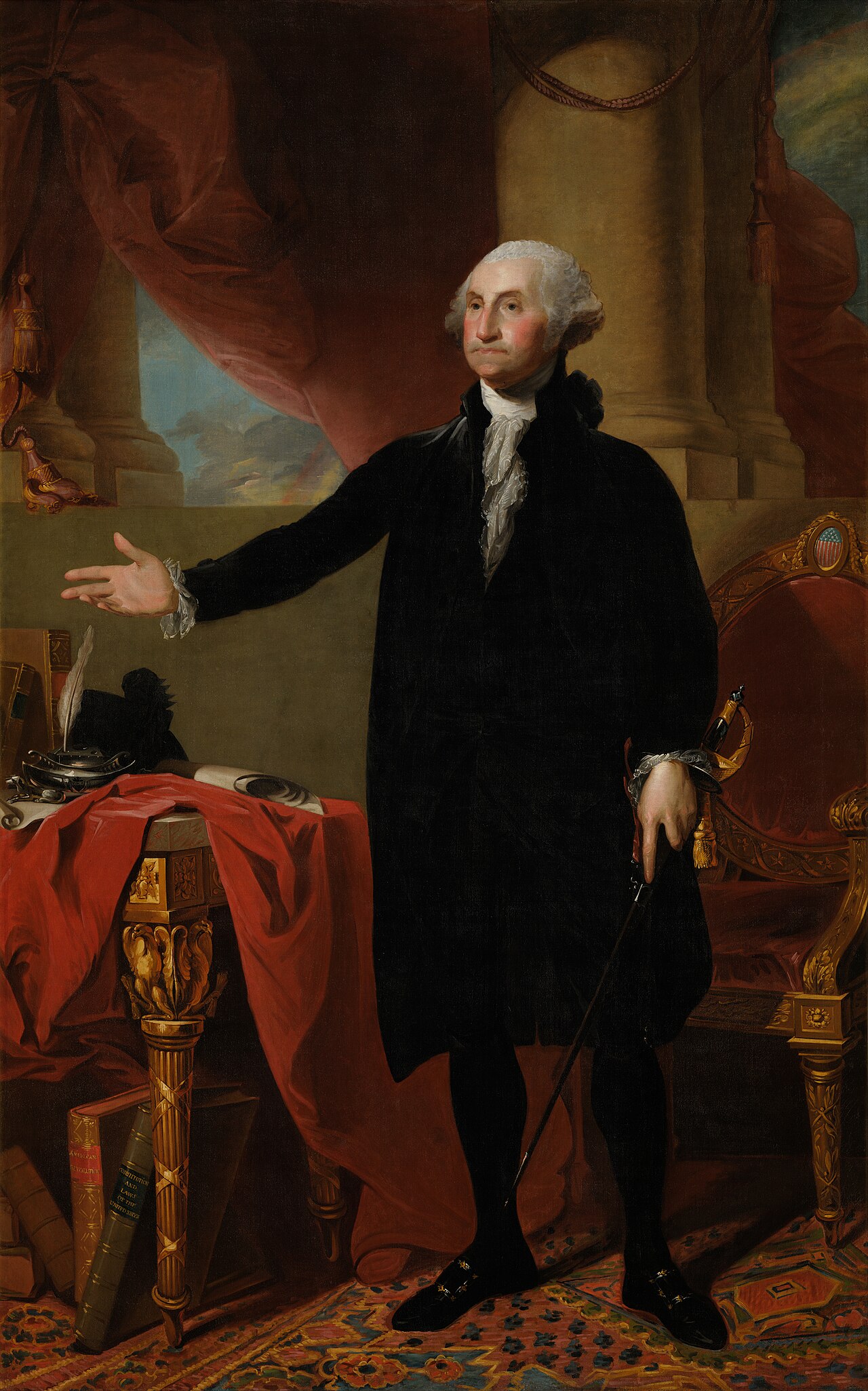
When George Washington became president in 1789, the Constitution supplied an outline rather than a complete working government. Congress and the executive had to create offices, appoint officials, organize finances and establish a federal judiciary. Washington's reputation helped give authority to institutions that were still unfamiliar. His administration's importance lies partly in these practical beginnings: choices about daily procedure could become precedents for later presidents.
Washington assembled advisers around the major departments, creating the practice that developed into the cabinet. He balanced consultation with an insistence that executive authority belonged to the president rather than to individual secretaries. Public ceremony also required care. The office needed dignity without resembling a monarchy. Forms of address, receptions and official conduct therefore became political questions in a republic wary of the power it had recently assigned to one person.
The administration faced difficult choices over public debt, revenue and the proposed national bank. Hamilton's financial program strengthened federal institutions but also deepened opposition from Jefferson and Madison. Foreign affairs created further divisions as European war raised questions about neutrality and American obligations. These disputes showed that a constitutional framework did not remove political conflict. The government had to function while its leaders disagreed over how broadly its powers should be interpreted.
Washington's presidency helped establish the executive as an effective branch of the new government, but it did not produce lasting political unity. Organized parties developed despite his concern about faction. His decision to leave office after two terms supplied another influential precedent, while a peaceful succession demonstrated that presidential authority could pass to another person. The first administration made the Constitution operational through cooperation, argument and experiment. Its legacy was a set of institutions and practices that later leaders would use, contest and sometimes change. Congress also had to organize the machinery of justice and revenue, making the creation of the federal state a legislative task as well as a presidential one. The first administration depended on that continuing cooperation to turn constitutional language into offices that could operate.
 Library of Congress: Forging a Federal Government
 Smithsonian: Establishing the Presidency
 Britannica: George Washington