 Go Back

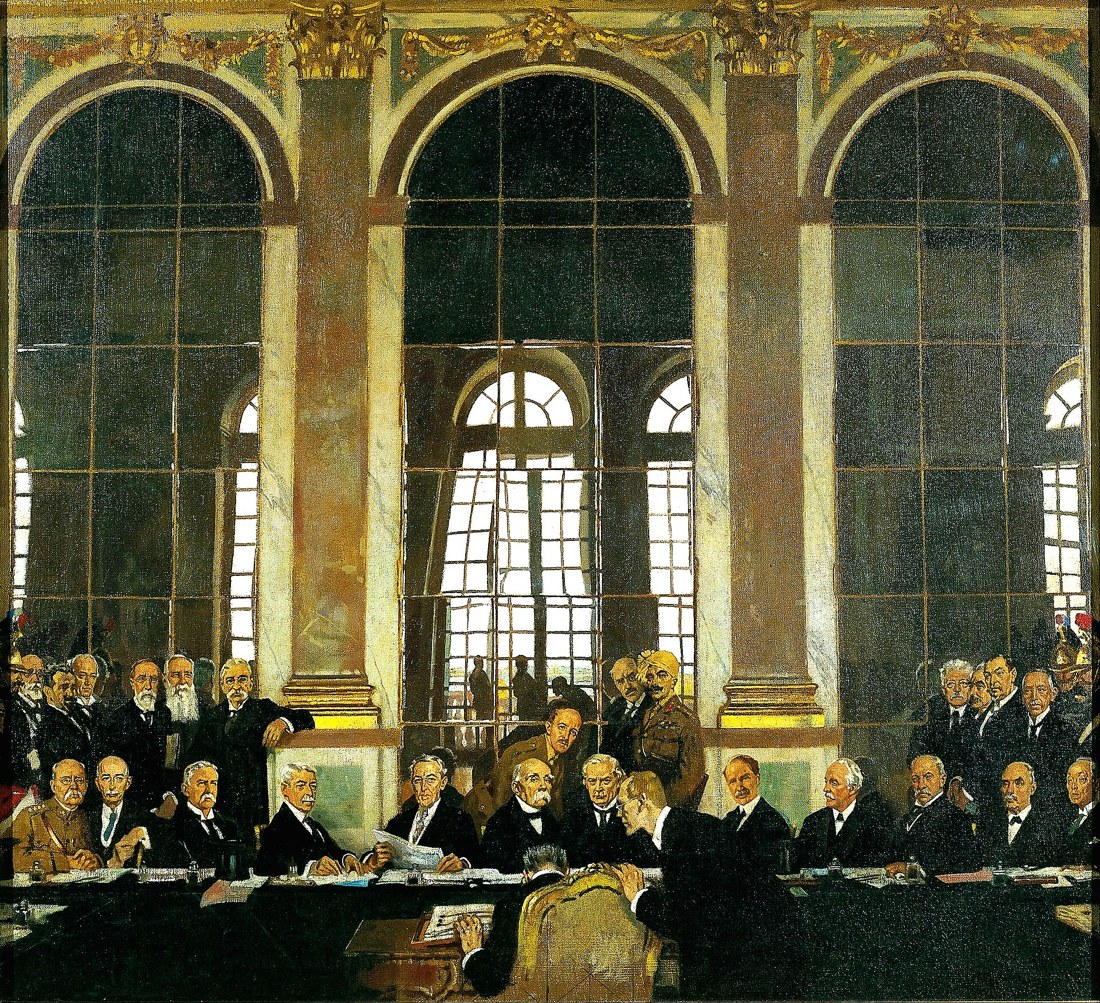
Woodrow Wilson went to the peace table carrying an idealistic program. In his Fourteen Points, set out to Congress on January 8, 1918, he called for open diplomacy, freedom of the seas, free trade, reduced armaments, self-determination for nations, and, above all, a general association of nations to guarantee the peace. When the armistice came, Wilson sailed to Europe in person, the first sitting American president to do so, and was cheered by enormous crowds.
At Paris in 1919, idealism met the Allies' demands for security and revenge. Wilson accepted compromise after compromise on his other points, colonial claims, reparations, and territory, in exchange for the one thing he would not trade: the League of Nations, whose Covenant he helped draft and which was written into the Treaty of Versailles signed on June 28, 1919. He brought the completed treaty home in July 1919 and asked the Senate to approve it.
The Senate refused. Republican leader Henry Cabot Lodge, Wilson's bitter personal enemy, objected above all to Article X of the Covenant, fearing it would oblige American troops to fight foreign wars without Congress's consent, and offered reservations limiting American obligations. Wilson rejected all reservations and took his case to the people on an exhausting speaking tour, but he collapsed and suffered a severe stroke in October 1919. Without compromise, the treaty failed in the Senate, finally defeated 49 to 35 in March 1920.
The United States never joined the League of Nations. The League opened in Geneva in 1920 without the power whose president had created it, and Republican presidents of the 1920s kept America outside while cooperating with it selectively. The defeat became the defining cautionary tale of American foreign policy as the era closed: a president's grand design destroyed by the constitutional requirement of Senate consent, leaving the postwar order unsettled in 1924.
 Britannica: Fourteen Points
 Office of the Historian: The League of Nations, 1920
Britannica: League of Nations
Britannica: Woodrow Wilson