 Go Back

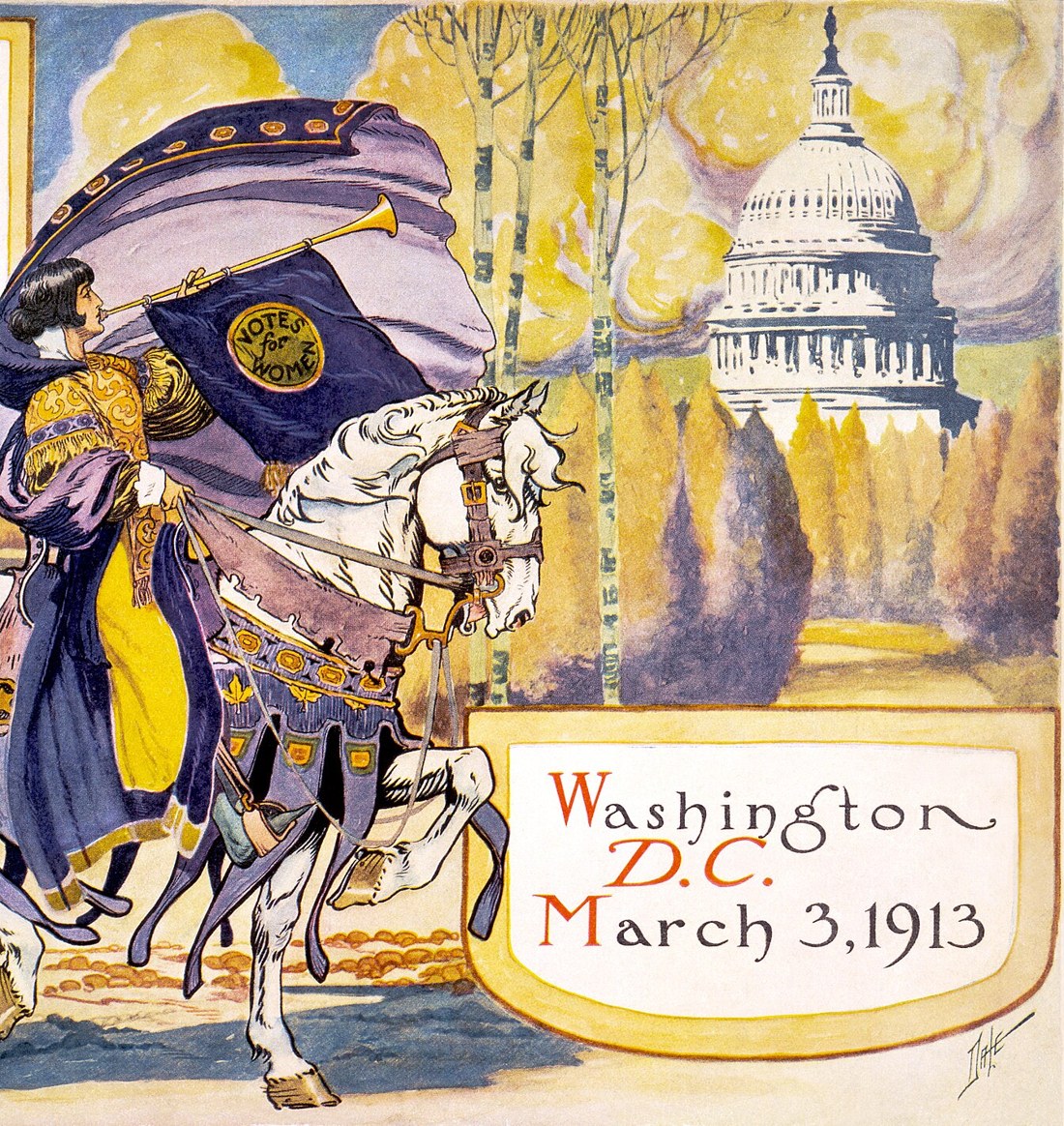
The organized demand for women's right to vote was already more than half a century old when the final campaign began. The movement had grown from the Seneca Falls Convention of 1848 through decades of petitioning, state referendums, and repeated, unsuccessful drives for a federal amendment. After 1890 the National American Woman Suffrage Association pursued a state-by-state strategy, and its greatest victories came in the West, where, beginning with Wyoming in 1869, territories and states granted women the vote one by one.
A younger generation grew impatient. Alice Paul, who had studied in Britain and learned from the militant suffragettes there, founded the Congressional Union for Woman Suffrage in 1913, later the National Woman's Party. Her followers organized mass parades, and beginning in 1917 mounted the first pickets ever sustained at the White House. When the picketers were arrested and imprisoned, and some went on hunger strike, public sympathy for their cause grew.
The First World War turned the balance. Women staffed factories, farms, offices, and hospitals while President Wilson, once an opponent, came out for the amendment as a war measure. On May 21, 1919, the House of Representatives passed the Nineteenth Amendment 304 to 89, and on June 4 the Senate followed, 56 to 25. Ratification came down to Tennessee, which on August 18, 1920, became the thirty-sixth state to approve; the amendment was proclaimed part of the Constitution on August 26, 1920.
The Nineteenth Amendment enfranchised some twenty-six million American women, the largest single expansion of the electorate in the nation's history. It did not end the struggle: many Black women in the South remained barred by the same poll taxes and tests that blocked Black men. But by 1924 women were voting in every state, organizing through the new League of Women Voters, and pressing, without success, for further constitutional change.
 Britannica: Women's Suffrage
Britannica: Nineteenth Amendment
Britannica: Alice Paul