 Go Back

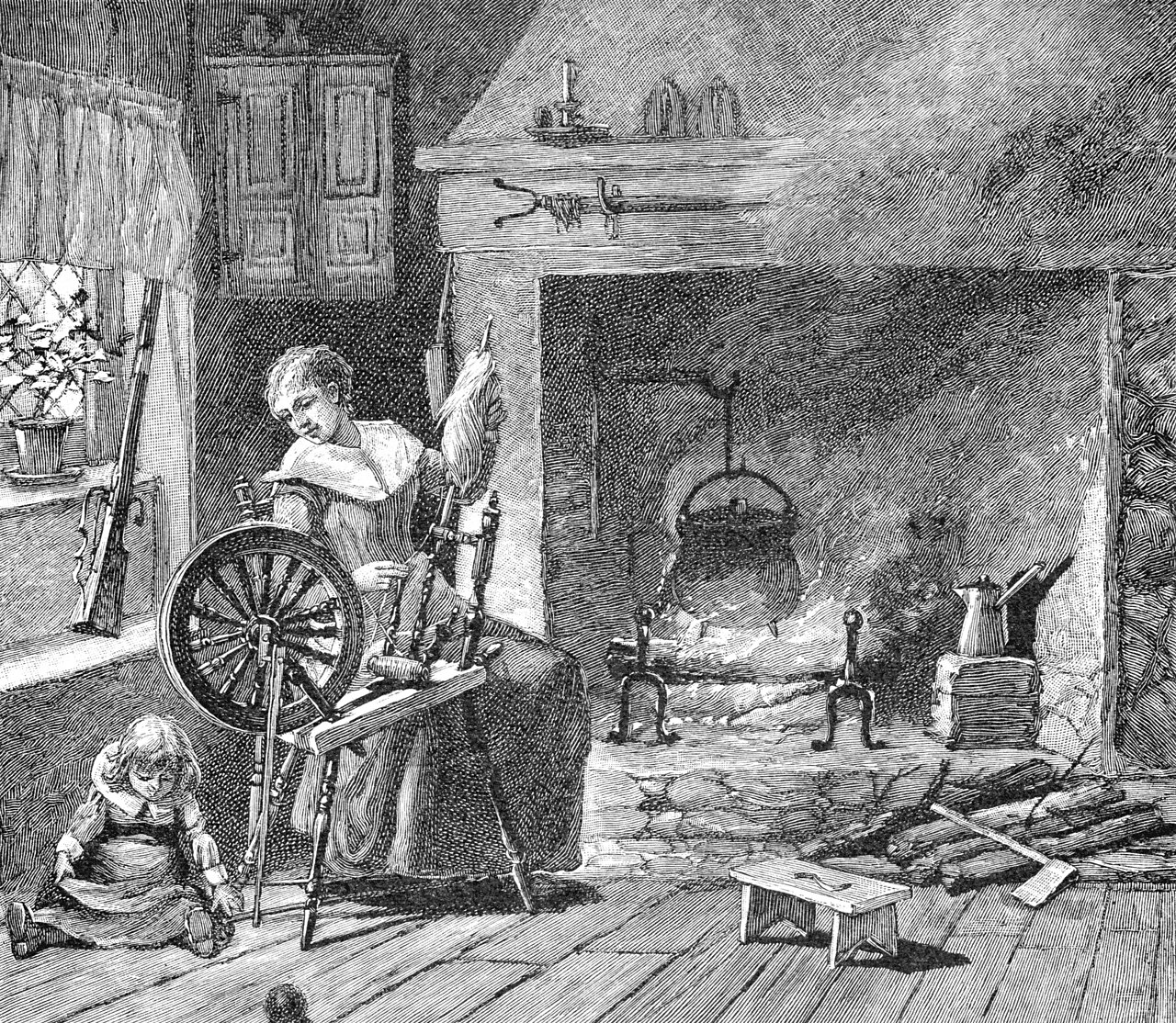
Colonial households were workplaces as well as places to live. Women prepared food, cared for children, made and repaired clothing, tended gardens and performed other work that sustained families. Their experiences varied with wealth, region, legal status and community. A merchant's household in a port, an inland farm and a plantation required different kinds of labor. Describing women simply as dependants hides the time, skill and economic value of their contributions to colonial life.
In European settler communities, marriage generally placed a wife under her husband's legal authority. Household production nevertheless required considerable practical responsibility. Women managed supplies, preserved food, cared for the sick and sometimes helped operate shops or trades. Widows could have more room to conduct business in their own names than married women. Training often took place through work within the household rather than through the formal apprenticeships and advanced schooling more commonly available to boys.
Neither these restrictions nor the opportunities were shared equally. Enslaved women performed forced agricultural and domestic labor while also trying to protect families vulnerable to sale and separation. Servant women worked under contracts that limited their freedom and could expose them to exploitation. Indigenous women belonged to societies with their own systems of property, family and authority. As European settlement expanded, some acted as traders and intermediaries, while war, disease and dispossession placed their communities under increasing pressure.
Women were therefore participants in the making of colonial economies, not merely observers of men's activities. Their work linked production, consumption and family survival. At the same time, much of it left fewer written records than the public actions of officials or merchants, making its scale harder to reconstruct. The evidence that survives must be read with attention to whose lives it records and whose it leaves out. Colonial family history is a history of cooperation and unequal power, shaped by law, labor and the different circumstances in which women lived. These differences make regional comparisons essential: the work expected of women and the resources they could command depended on the structure of each household.
 Encyclopedia.com: Colonial Women
 World History Encyclopedia: Women in the American Revolution