 Go Back

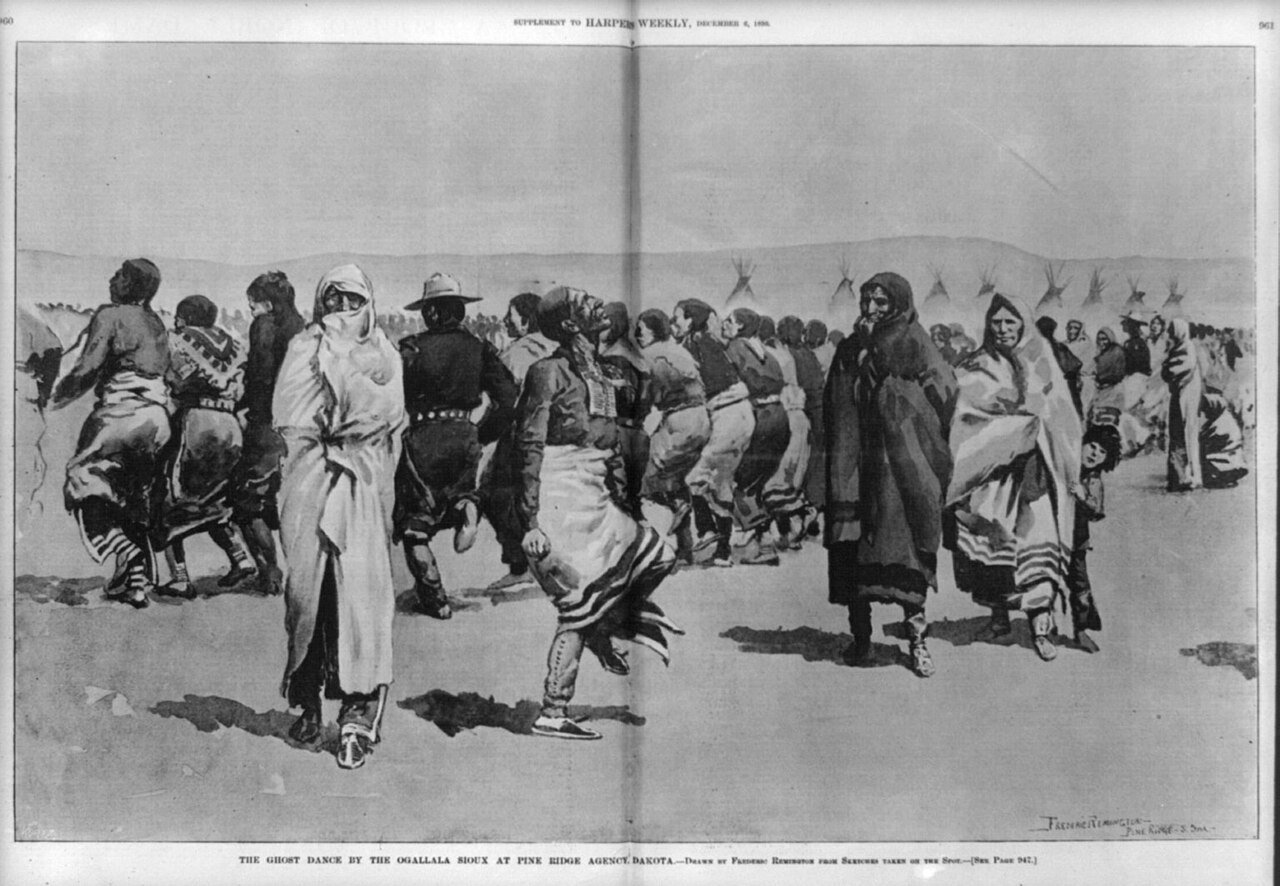
The Ghost Dance and Wounded Knee. In 1889, as the reservation system crushed the old life of the Plains, a Paiute prophet in Nevada named Wovoka preached a new dance: the world would be made new, the white man's flood would recede, the buffalo would return, the dead ancestors would come back - if the people danced the Ghost Dance and lived in peace. The dance spread through the starving reservations of the Dakotas like fire in dry grass. Sitting Bull's Lakota, allotted, rationed and hopeless, danced through the winter of 1890 - and the agents and the Army saw in the dance the makings of war.
On 15 December 1890, Indian police sent to arrest Sitting Bull killed him at his cabin on the Standing Rock Reservation, in a scuffle that left his son and a dozen more dead beside him. His followers fled; some joined the band of Big Foot, whom the Seventh Cavalry - Custer's old regiment - intercepted and escorted to an encampment on Wounded Knee Creek, under four Hotchkiss guns on the surrounding ridge.
On the morning of 29 December, as the soldiers moved to disarm the camp, a young man resisted, a rifle fired - and the guns on the ridge opened up. When the firing stopped, between 250 and 300 Lakota lay dead, nearly half of them women and children, many shot as they fled up the frozen draws; twenty-five soldiers died, most by their own crossfire. Twenty soldiers were later awarded the Medal of Honor - awards Native Americans have sought for a century to see revoked.
Wounded Knee was the last armed encounter of the Plains wars, and it has stood ever since as the symbol of the conquest's end: not a battle but a massacre, marking the close of the frontier and three centuries of war for the continent. In 1973 the American Indian Movement's occupation of the same hamlet made Wounded Knee the symbol of Native resurgence as well; and in 1990 Congress formally expressed 'deep regret' - a century after the guns on the ridge.
 Britannica: Wounded Knee Massacre
Britannica: Ghost Dance