 Go Back

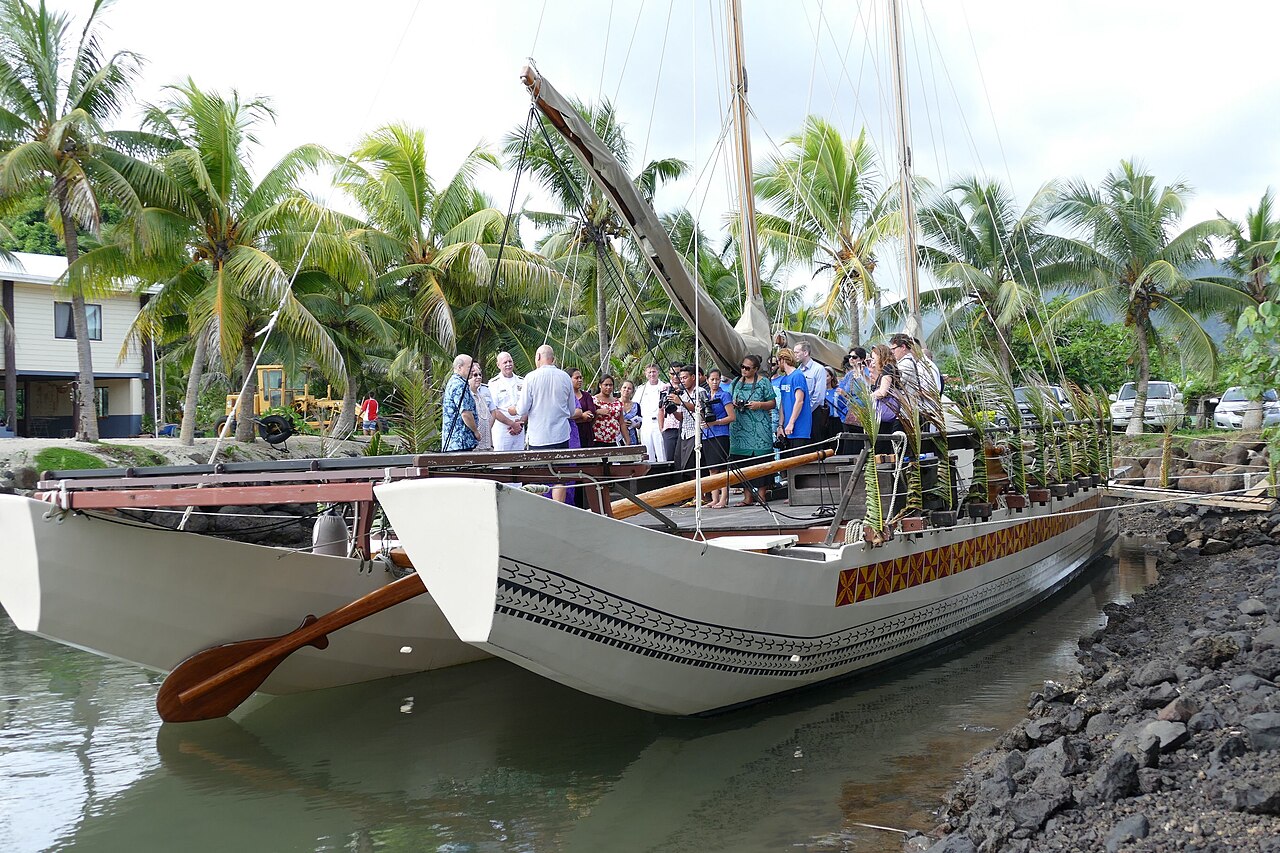
Early Polynesian Voyaging. Early Polynesian voyaging carried the descendants of the Lapita - Austronesian-speaking seafarers whose ancestral homeland was Taiwan - from western Polynesia out across the largest body of water on Earth. Having reached Fiji, Tonga, and Samoa by around 1000 BCE, Polynesian navigators went on to settle the far corners of the Polynesian triangle - Hawaii, Easter Island, and Aotearoa, an expanse encompassing more than 1,000 islands. This era matters profoundly because these seafarers developed the oceanic technologies and survival strategies that enabled humanity to inhabit the Pacific, deliberately migrating with crops like taro and yam and domestic animals to found permanent new colonies across the open ocean.
Navigators crossed thousands of miles in outriggers and double canoes - like the ndrua of Fiji, with its unequal hulls - guided by a highly developed system of star paths, memorized sky charts, ocean swells, winds, and currents; knowledge so precious it was a closely guarded secret within navigator families, taught from an early age in places like the maneaba of Kiribati. Traditions like the legend of Kupe, who set off from Hawaiiki around 1300 CE to discover Aotearoa, encoded real navigational information - references to stars, wind patterns, and currents. Later voyagers have proved the methods work, recreating long open-ocean passages in traditional double-hulled craft guided only by stars, swells and winds. And the sweet potato, which entered Polynesian horticulture around 1000 CE, stands as strong evidence that these voyagers even reached the shores of South America and returned across the open Pacific.
 Wikipedia: Polynesian navigation
 World History Encyclopedia: Polynesian Navigation & Settlement of the Pacific: Migration in Oceania
 Humanities LibreTexts: 1: Terracotta fragments, Lapita people
 Smithsonian Institution: Early Voyages