 Go Back

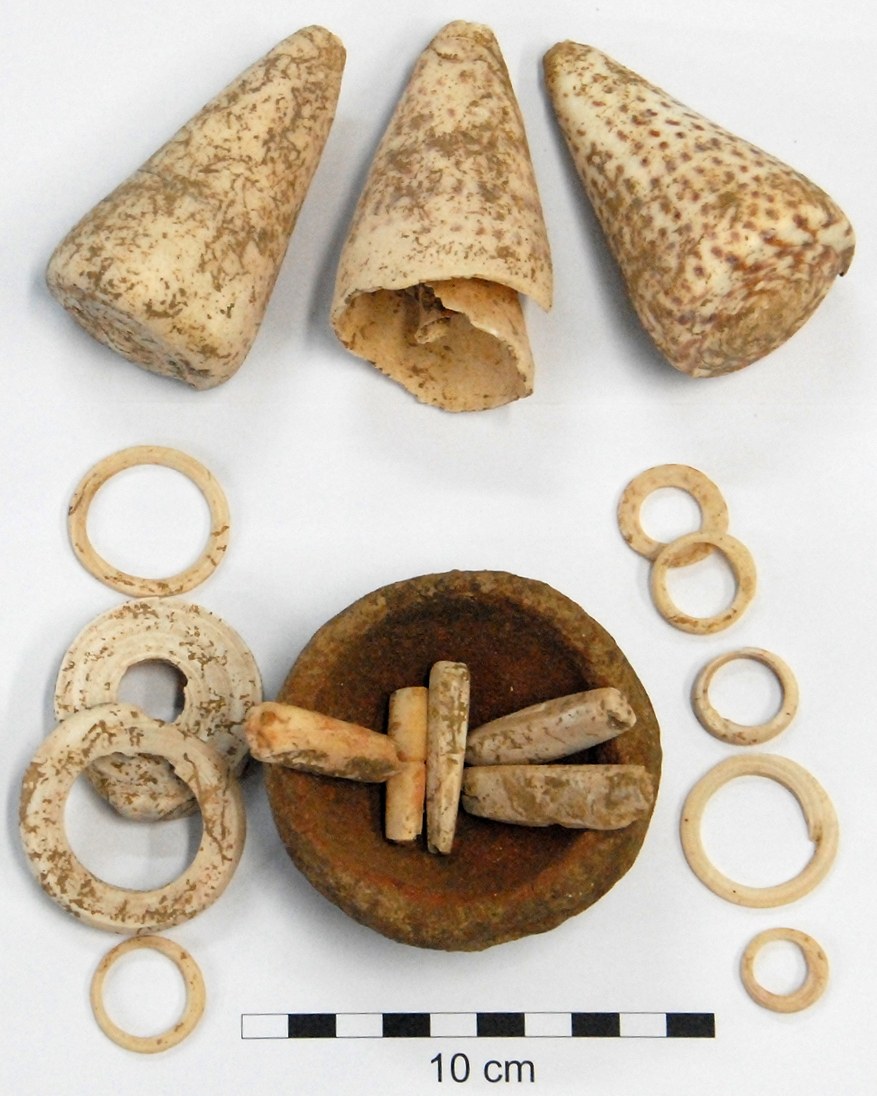
The First Settlement of Fiji and Samoa. The first settlement of Fiji and Samoa, beginning around 1300 BC, carried humanity across the last great water barrier of the southwest Pacific. The settlers were the Lapita people, seafarers from the islands southeast of New Guinea, whose distinctive pottery marks their trail. At sites such as Bourewa and Natunuku on the Fijian island of Viti Levu, archaeologists have found the remains of their beachside villages: decorated pottery, shell ornaments, obsidian traded over hundreds of kilometers of sea, and the bones of the animals they carried with them.
These first Fijians and Samoans were skilled farmers, fishers, and sailors. They planted taro and yams in gardens cleared from the coastal forest, fished the reefs with hooks of shell, and kept pigs and chickens, while maintaining ties with the islands they had come from. In Samoa, Lapita settlements such as the Mulifanua site on Upolu mark the western edge of the same great dispersal, which reached Tonga at about the same time as Fiji.
Over the following centuries the settler societies grew and changed. Pottery styles evolved and then faded away, populations expanded inland and into the hills, and long-distance exchange networks slowly contracted as the islands became self-sufficient. Out of these Lapita communities emerged the ancestors of the Fijian, Tongan, and Samoan peoples, and the foundations of the chiefly societies that later Europeans would encounter.
The settlement of Fiji and Samoa was a turning point in Pacific history. It completed the colonization of the island groups within reach of inter-island voyaging, and it paused on the edge of an even greater ocean: after a long standstill of perhaps two thousand years, the descendants of these first settlers would sail on to discover and settle the remote islands of Polynesia, from the Marquesas to Hawaii, Easter Island, and New Zealand.
 Te Ara Encyclopedia of New Zealand: Into Remote Oceania: Lapita People
 ANU Press: Colonisation and Culture Change in Early Fiji
 University of Waikato: Radiocarbon Dating the Earliest Settlers of the Pacific
 Oxford Handbook of Prehistoric Oceania: Ancient Fiji