 Go Back

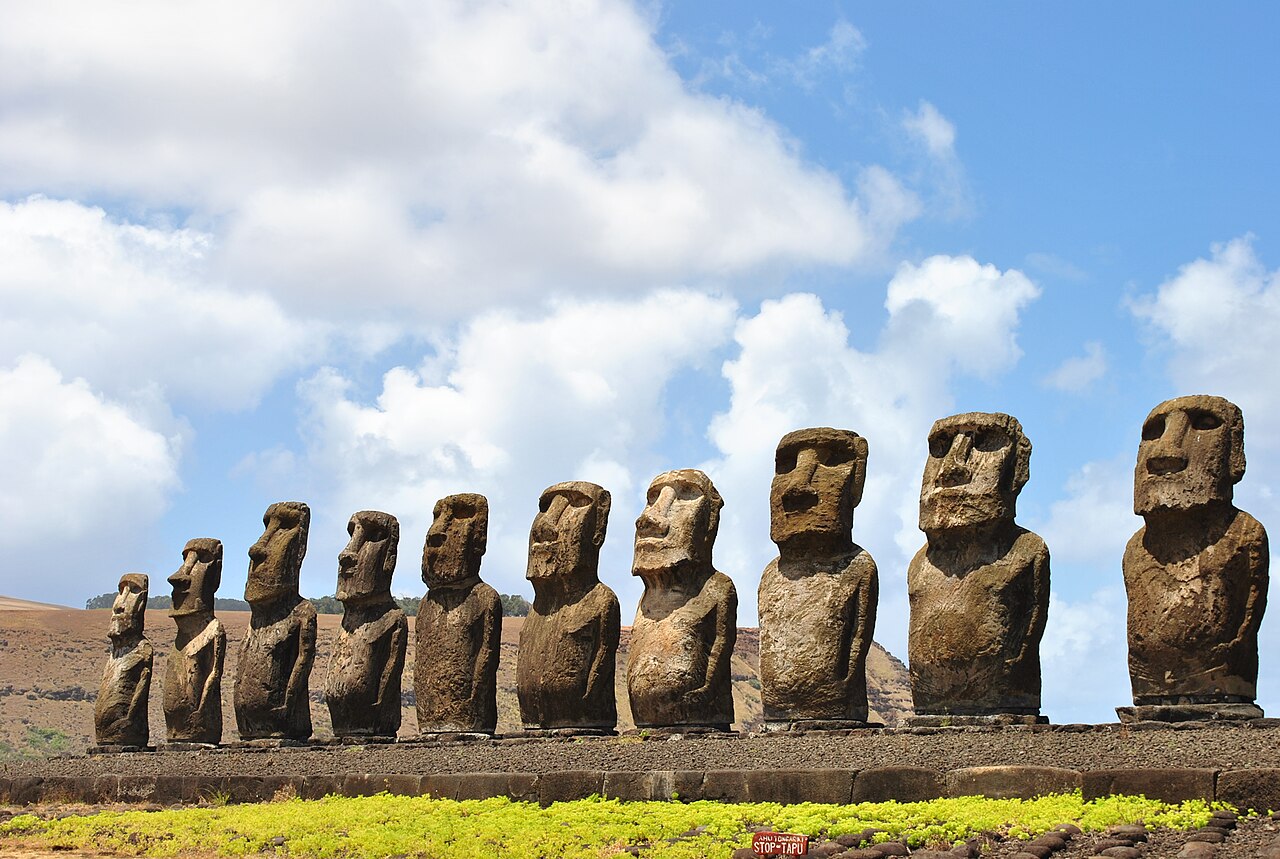
Rapa Nui (Easter Island) Culture. Rapa Nui is one of the most remote inhabited places on Earth - a volcanic island in the southeastern Pacific, some 1,400 miles west of South America. The date of its first settlement is actively debated: older accounts placed colonization between 400 and 800 AD, but newer radiocarbon analyses of the earliest layers - notably the work of Terry Hunt and Carl Lipo - point to settlement around 1200 AD, a shorter chronology reinforced by a meta-analysis of more than 1,400 dates across East Polynesia, though some researchers still question the dismissal of the older dates. What is agreed is that colonists from an unidentified homeland in Eastern Polynesia reached the island after sailing in a southeasterly direction for many weeks. There they created a highly organized ceremonial culture centered on ancestor veneration, famous worldwide for the moai: colossal stone figures carved as images of ancestral chiefs whose supernatural power protected the community. This society matters because its artistic achievements - and the pressures that later transformed it - offer one of the most compelling studies in human adaptation and resilience in the entire Pacific.
Most moai were carved from soft volcanic tuff at Rano Raraku, an extinct crater that served as the primary statue quarry, then moved to their final destinations on wooden sleds or rollers - a feat modern archaeologists have experimentally recreated - and erected on temple platforms (ahu) along the coast, facing inland to keep watch over the local communities; they range from 8 feet to an unfinished example over 70 feet high. When Europeans arrived in 1722 the moai tradition was already in decline, and by the mid-nineteenth century all the statues had fallen. The islanders also invented rongorongo, a system of writing first described by the missionary Eugene Eyraud in 1864 and never deciphered - research suggests it was invented independently, without influence from European writing systems. A devastating Peruvian slave raid in 1862, followed by smallpox epidemics, reduced the population catastrophically; Chile annexed the island in 1888 and leased it to a sheep-ranching company that confined the islanders to one village for decades - yet they held fast to their language, their memory, and their pride in the ancestors who raised the moai.
 Britannica: Easter Island - Rapa Nui, Moai, Polynesian
 Humanities LibreTexts: 6.14: Rapa Nui Island (7th CE est. – ongoing)
 The Metropolitan Museum of Art: Easter Island
 Smithsonian Magazine: Did the People of Easter Island Invent a Writing System From Scratch?