 Go Back
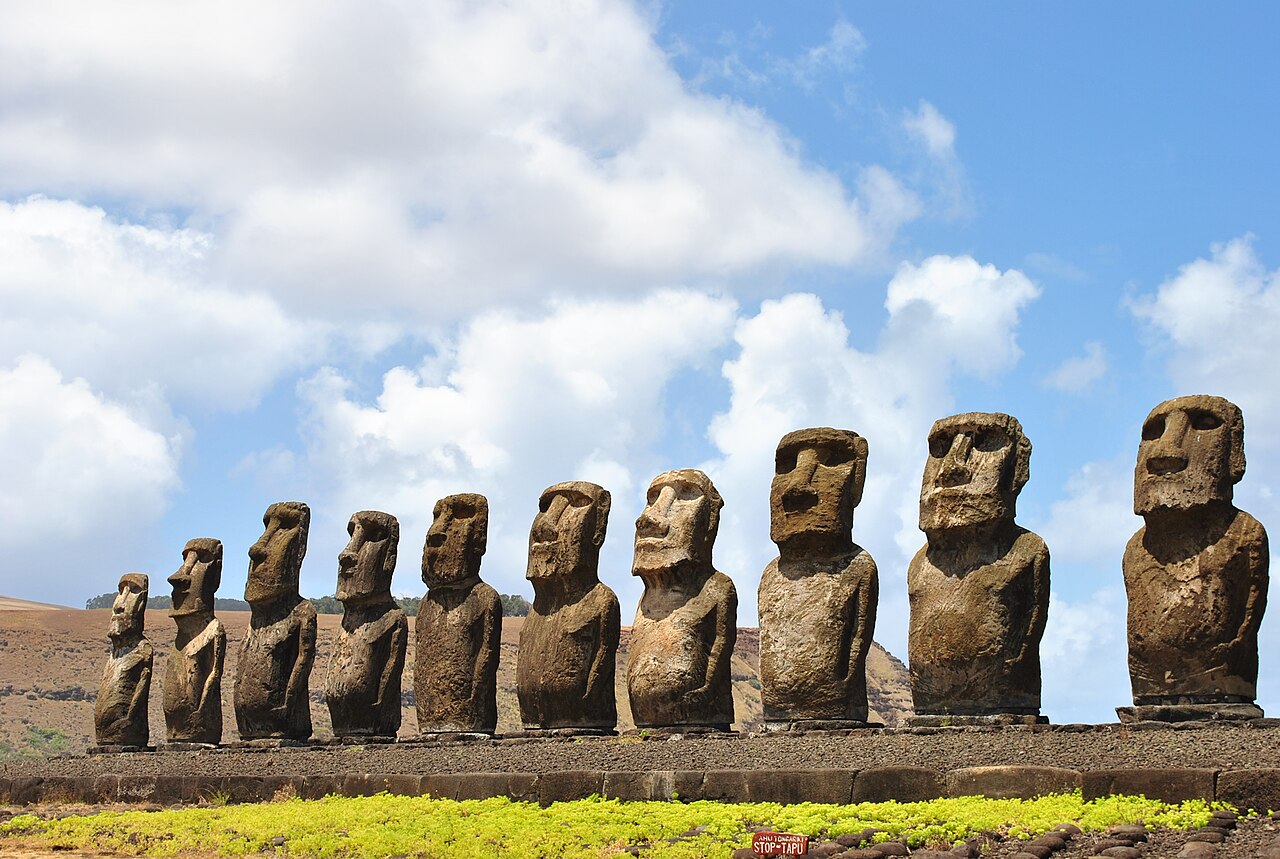
Rapa Nui (Easter Island) Culture. Rapa Nui culture was an isolated Polynesian society that developed on a remote volcanic island in the southeastern Pacific Ocean, flourishing from roughly 1200 CE onward. Famous worldwide for carving massive stone statues called moai, the Rapa Nui people created a highly organized ceremonial culture centered around ancestor veneration and chiefdom competition. This society matters because its artistic achievements and subsequent ecological pressures provide a compelling study in human adaptation and resilience.
The islanders carved nearly one thousand moai out of volcanic tuff, transporting them miles to elevate them onto massive stone platforms (ahu) facing inland to protect villages. Overreliance on palm forests for moving statues, combined with rat infestations and environmental isolation, severely depleted the island's timber resources. Despite these severe ecological strains and social transformations—such as the emergence of the Tangata Manu (Birdman) cult—the Rapa Nui culture endured until European contact and catastrophic 19th-century slave raids.