 Go Back

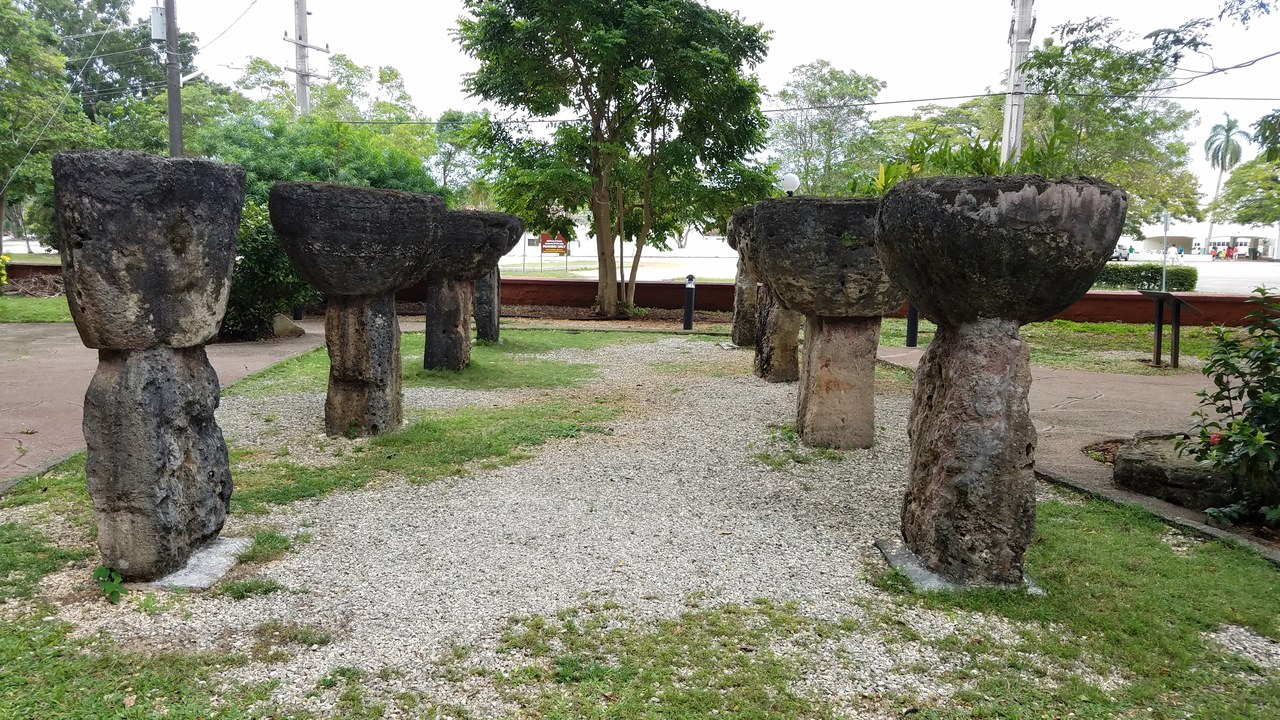
The Chamorro and the Marianas. The Chamorro (c. 1500 BC - 1721) are the indigenous people of the Mariana Islands in the western Pacific, the first humans to settle so far into the open ocean. They reached the Marianas around 1500 BC, voyaging thousands of kilometers from Island Southeast Asia, and for three thousand years they developed one of the most distinctive societies of the Pacific in isolation, farming, fishing, and sailing between their islands in swift outrigger canoes that astonished the first Europeans.
Ancient Chamorro society is best known for its monumental stone pillars, the latte. Rows of these pillars, capped with heavy bowl-shaped stones, supported the wooden houses of chiefs and important families in villages across the islands; the largest latte stones, on Tinian, tower over five meters high. The latte period, from about a thousand years ago until Spanish contact, was the classical age of Chamorro culture, a ranked society organized in matrilineal clans, rich in shell ornaments, red-slipped pottery, and stone and shell tools.
The arrival of Europeans shattered this world. Magellan reached the Marianas in 1521, and in 1668 Spanish missionaries and soldiers began the conquest and conversion of the islands. The Chamorro resisted in a series of wars, but superior weapons and, far more terribly, newly introduced diseases destroyed them: the Chamorro population, perhaps fifty thousand at contact, collapsed to a few thousand by 1720, and the survivors were concentrated in mission villages on Guam.
The Chamorro survived the catastrophe and rebuilt their identity. Their language, their latte stones, their clan traditions, and their memory of resistance endure among their descendants in the Marianas today, and the story of their settlement and survival is central to the history of the Pacific.
 Guampedia: Latte
 Structures
 Micronesica Journal: An Overview of Latte Period Archaeology
 Guam Visitors Bureau: Ancient Latte Stones of Guam