 Go Back

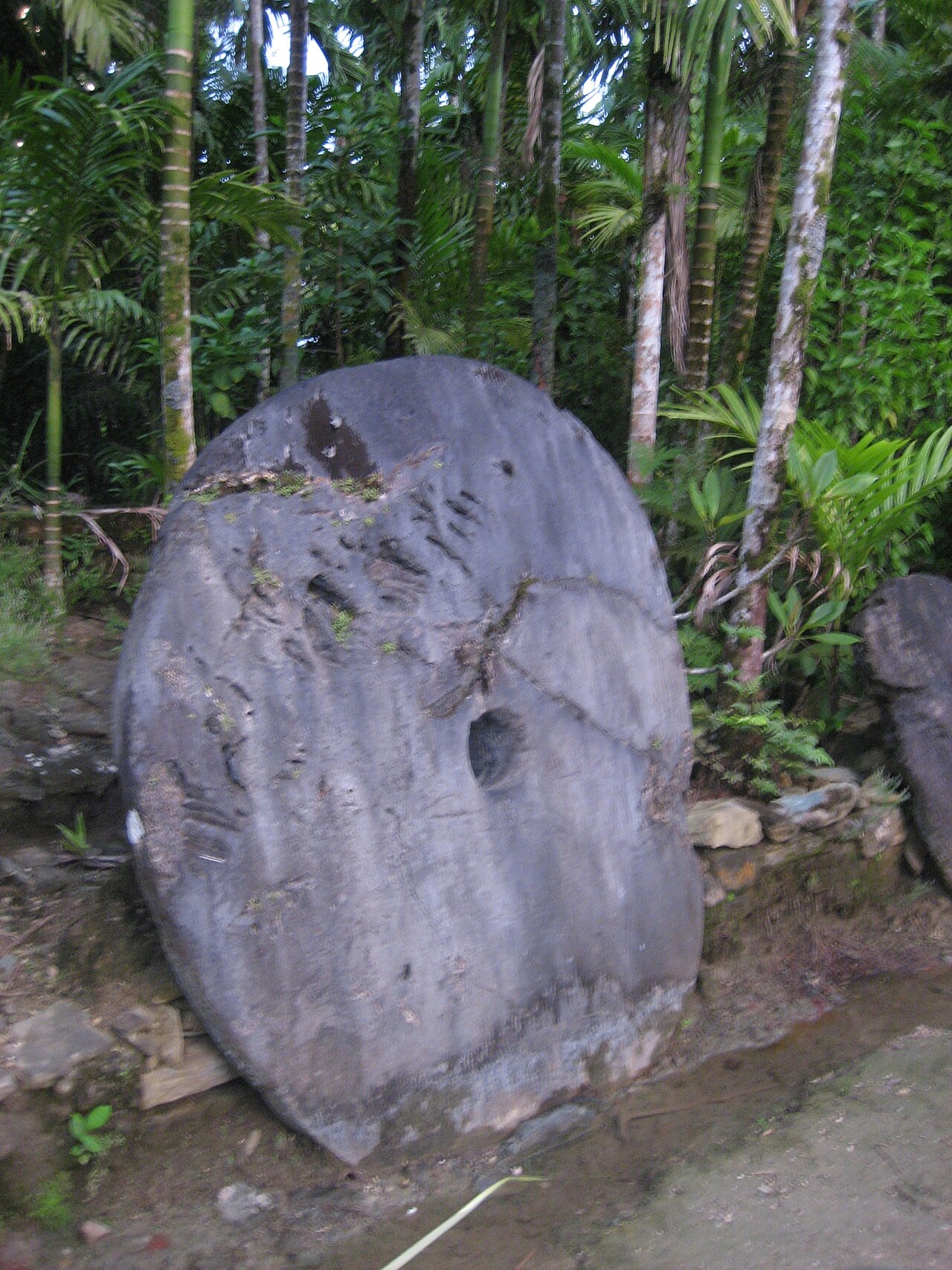
The Yap Empire. The 'Yap Empire' was the name given to a maritime trading and tribute network centered on the island of Yap in Micronesia, which from around 950 AD - when the village of Gatcheper became its seat - held suzerainty over islands and atolls stretching over 1,300 kilometers to the east, from Ngulu to Ulithi and from Fais to Namonuito. Small and informal compared with other marine empires, it was held together not by garrisons but by the sawey tribute system: regular tributes known as pitigil tamol, presented to the chief of Wanyan village and to the chief of Gatchaper, the paramount chief of Gagil, traveled from east to west - from as far as Namonuito to Ulithi and finally to Yap - in the form of lavalava cloth and other island wealth. Yap is equally famous for its rai, the great stone money: discs so large that when they were exchanged within the island, people hardly bothered to move them - they simply remembered who owned what, and the rai stayed put.
The outer islanders of the network held the same social ranking as Yapese serfs on the main islands and were expected to show deference to their Yapese overlords, while smaller, localized systems of trade and tribute among Lamotrek, Satawal, and Elato persisted into the 1950s. Yap itself was drawn into the colonial world: rediscovered by the Spanish galleon captain Francisco Lazeano in 1686, it passed to Germany in 1899 - the era when the American trader David O'Keefe built his own trading empire by importing stone money from Palau in return for copra - and after the First World War passed to Japan as a League of Nations mandate, administered from Japan's South Seas headquarters at Koror. When the great canoe fleets that once assembled at Ulithi to carry the tribute could no longer sail, the old network faded and the sawey system declined - but the rai remain the enduring symbol of Yap's singular place in Pacific history.
 Britannica: Yap Islands
 Smithsonian Institution: Yap Island's stone-cold cash National Museum of Natural History
Britannica: Caroline Islands
 ANU: Political Relationship Between Yap and the Outer Islands