 Go Back

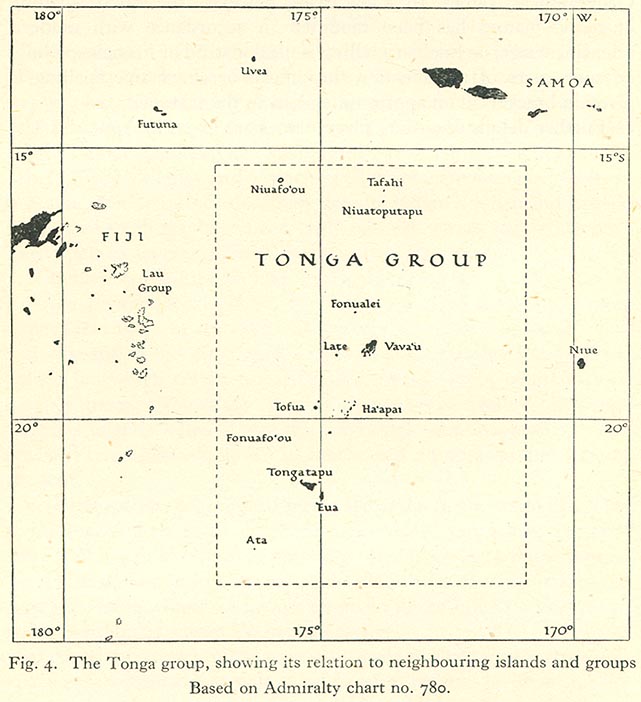
The Kingdom of Tonga. The Kingdom of Tonga was forged by Taufa'ahau, a chief converted to Christianity in 1831 by Methodist missionaries, who became Tu'i Kanokupolu and took the title King George Tupou I. During his long reign Tonga became a unified and independent country with a modern constitution in 1875, a legal code, and an administrative structure, and a series of treaties - including one with the United States in 1888 - recognized Tonga's sovereignty. The kingdom matters because it achieved what almost no other Pacific state did: it modernized entirely on its own terms as a sovereign state, and its monarchy is unique in the Pacific Islands for having been a constitutional monarchy since 1875. The missionaries had not found it easy - the London Missionary Society and a Methodist mission failed in 1797 and 1822 before a renewed Methodist effort succeeded in 1826 - but Christianity became central to Tongan national identity.
In 1900, during the reign of George Tupou II, Tonga became a British protectorate to discourage German advances, though it kept its own king, flag and laws and was never formally colonized. Tupou II's extravagance strained the treasury, and on his death in 1918 his eighteen-year-old daughter succeeded as Queen Salote Tupou III. Her early reign joined the old chiefly lines by marriage, healed the long schism between the crown's Free Church and the Wesleyan mission, and won the young queen her people's deep affection - Tonga in 1924 a Polynesian kingdom still ruled by its own dynasty, unique in the Pacific.
 UNESCO: Tonga
 UNESCO World Heritage Centre: Tonga - UNESCO World Heritage Convention
 UNESCO: Lakalaka, dances and sung speeches of Tonga - UNESCO Intangible Cultural Heritage
 Britannica: Tonga