 Go Back

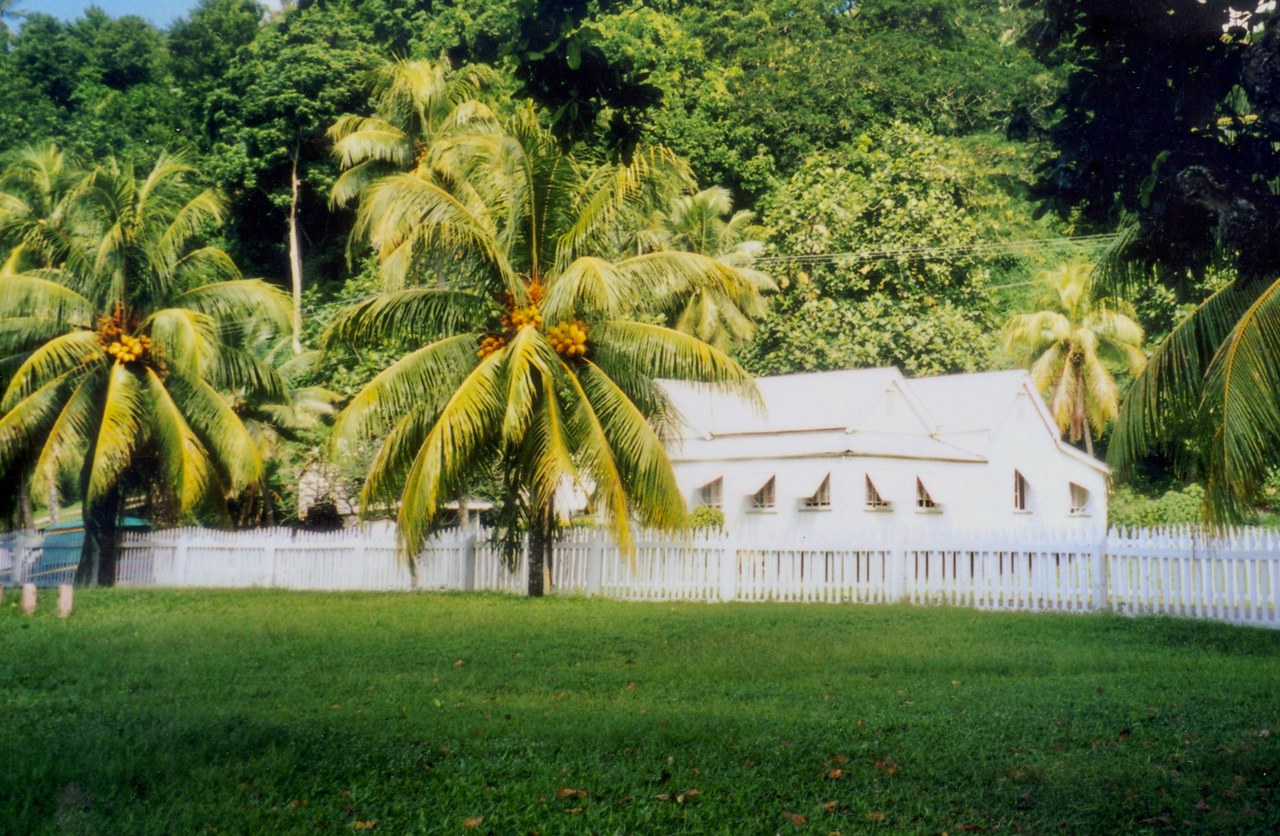
The Colony of Fiji. The Colony of Fiji (1874-1970) was born of a unique bargain: in 1874 the high chief Cakobau, self-proclaimed King of Fiji, and the other leading chiefs ceded their islands to Queen Victoria by the Deed of Cession, seeking order, protection, and the payment of Cakobau's debts. Fiji was one of the few places where British rule began by treaty with a reigning local monarch, and the deed remains the founding document of the Fijian state.
The early colonial government, under the first governor Sir Arthur Gordon, reshaped the islands with lasting consequences. Gordon protected Fijian land from sale, governed the villages through the chiefs, and, seeking labor for the sugar plantations, turned to India: between 1879 and 1916 some sixty thousand Indian indentured laborers, the girmitiyas, were brought to Fiji under harsh contracts to work the cane fields. Their descendants, the Indo-Fijians, came to make up nearly half the population, giving Fiji its distinctive and sometimes troubled two-community society.
The colony grew on sugar and copra, its towns filling with Indian merchants and its politics dominated by the great chiefs. After the Second World War, Fijian and Indian leaders pressed toward self-government, and after constitutional talks in London, Fiji became independent on 10 October 1970, exactly ninety-six years after the cession, under the chiefly leadership of Ratu Sir Kamisese Mara.
Colonial Fiji left a double legacy: a strong chiefly establishment that has dominated the country's politics, and a multi-ethnic nation whose Indian and indigenous communities have struggled to share power. Coups in 1987, 2000, and 2006 all turned on that inheritance, making the century of British rule the key to understanding modern Fiji.
 Museum of Archaeology and Anthropology, Cambridge: Chiefs and Governors
The Fiji Times: 150th Anniversary: The Letter to the Queen
 Wikipedia: Colony of Fiji
UK Parliament Hansard: The Fiji Islands: Cession to the British Crown