 Go Back

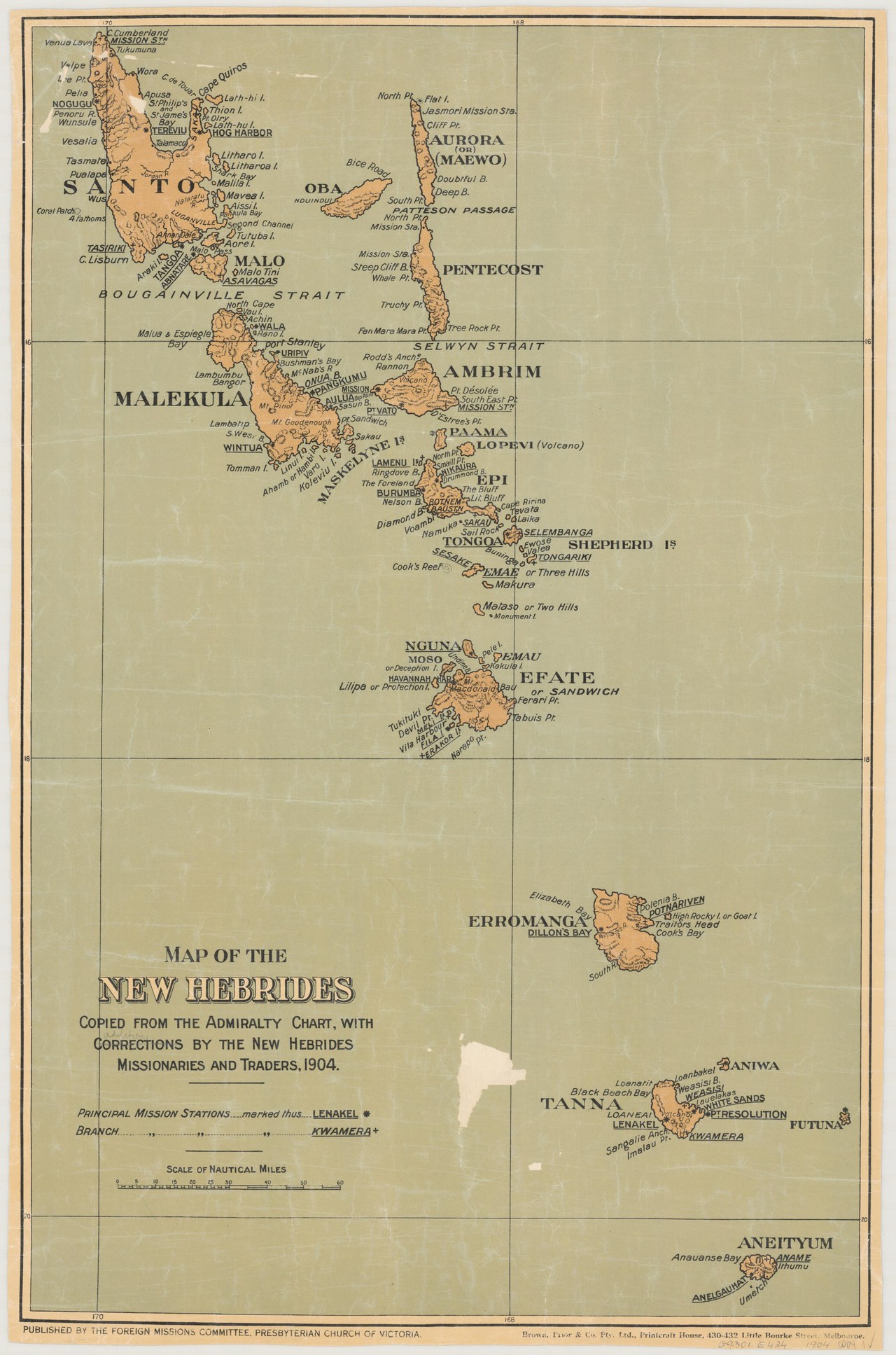
The New Hebrides Condominium. The New Hebrides Condominium, established in 1906, was one of the strangest colonial arrangements in history: a single territory governed jointly, and separately, by Britain and France. The two powers had watched each other in the islands since the nineteenth century, and rather than let either take them alone, they agreed in 1906 to share them. The result was a bizarre dual system, known with affection and exasperation as Pandemonium, in which two governors, two police forces, two legal systems, and two currencies operated side by side.
For the islanders, the ni-Vanuatu, the condominium meant the worst of both colonial worlds. Settlers and companies, mostly French, took over large areas of the best land for copra and coffee plantations, while labor recruiting, disease and dispossession had already shrunk the island populations catastrophically. The two administrations competed and failed to cooperate in almost everything: each power's nationals answered to their own courts, and joint regulation was so cumbersome that the simplest dispute could become an international incident.
Missions were the islands' third power: Presbyterian and Anglican evangelists in the south and center, French Catholic fathers in the north, competing village by village for converts, schools and influence. Around them the old world contracted and adapted - the grade-taking societies of the northern islands, the kastom of Ambrym and Malakula, the small trading stores and the first village copra plots.
By 1924 the Pandemonium was eighteen years old and set in its strange ways: two flags over one harbor, planters' concessions spreading along the coasts, mission stations dotting the islands, and the Melanesian people whose land and labor underwrote the whole arrangement beginning, quietly, to find ways to answer back - in the churches, in the first cooperatives, and in movements of their own.
 Wikipedia: New Hebrides
 Journal of Pacific History: Co-Imperialism in the New Hebrides
 ANU Press: A Political Memoir of the Anglo-French Condominium
 Palgrave Macmillan: From the New Hebrides to Vanuatu