 Go Back

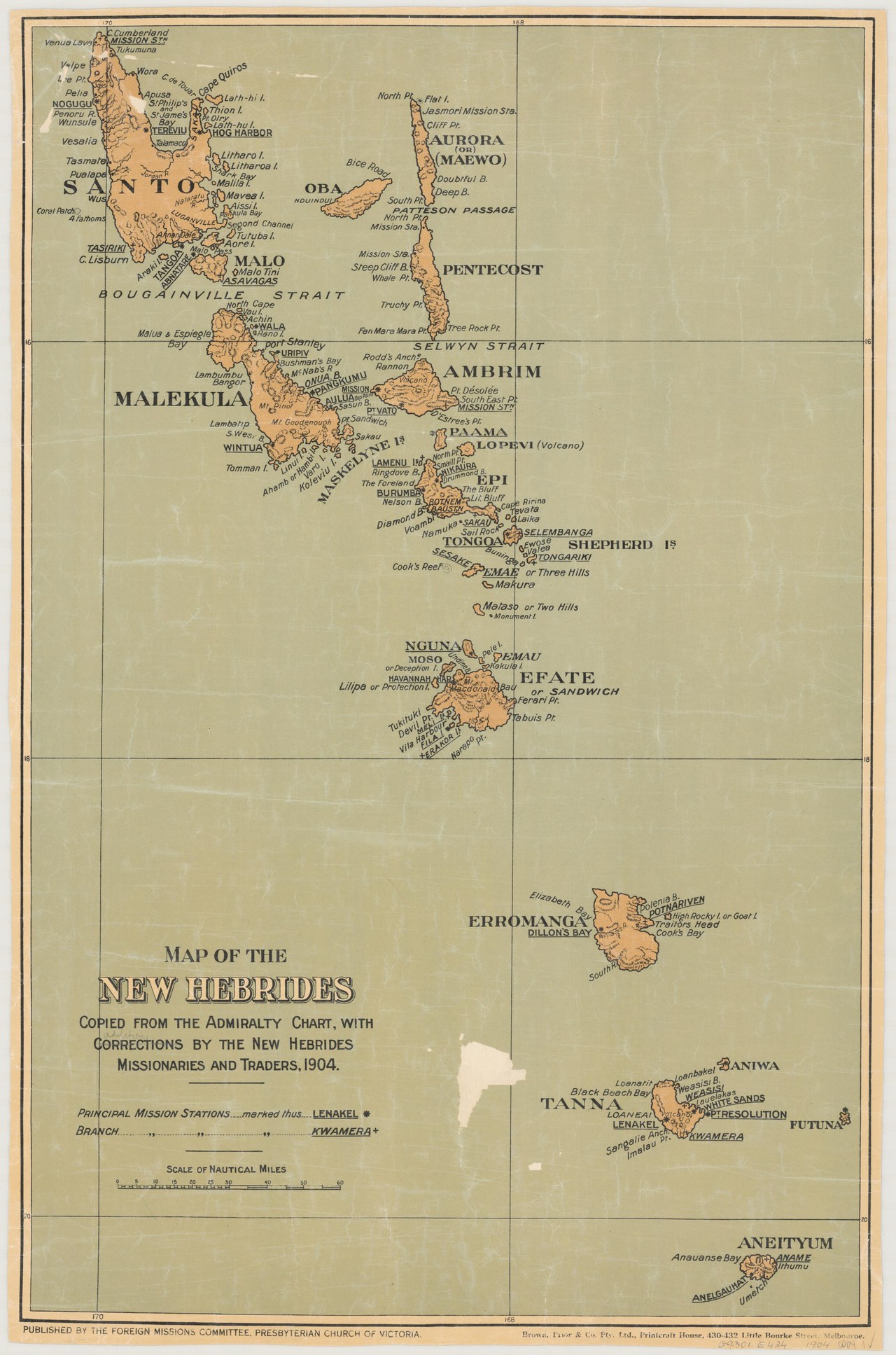
The New Hebrides Condominium. The New Hebrides Condominium (1906-1980), which ruled the islands now called Vanuatu, was one of the strangest colonial arrangements in history: a single territory governed jointly, and separately, by Britain and France. The two powers had watched each other in the islands since the nineteenth century, and rather than let either take them alone, they agreed in 1906 to share them. The result was a bizarre dual system, known with affection and exasperation as Pandemonium, in which two governors, two police forces, two legal systems, and two currencies operated side by side.
For the islanders, the ni-Vanuatu, the condominium meant the worst of both colonial worlds. Settlers and companies, mostly French, took over large areas of the best land for copra and coffee plantations, while the two administrations competed and failed to cooperate in almost everything. During the Second World War the islands became a vast American base, and the wealth and equality of the Americans, including Black American troops, unsettled colonial assumptions and planted new ideas.
After the war, change came slowly. The Santo Rebellion of 1980, led by Jimmy Stevens and backed by foreign right-wing interests, attempted to break the island of Espiritu Santo away just as independence approached; it was put down with the help of Papua New Guinean troops. On 30 July 1980 the condominium finally ended and the Republic of Vanuatu was born, under its first prime minister, Father Walter Lini.
The condominium left Vanuatu a dual inheritance: English and French both remain official languages alongside Bislama, and the memory of the Pandemonium years, when two empires shared one set of islands and pleased neither, remains a curiosity of colonial history and a foundation story of the nation.
 Wikipedia: New Hebrides
 Journal of Pacific History: Co-Imperialism in the New Hebrides
 ANU Press: A Political Memoir of the Anglo-French Condominium
 Palgrave Macmillan: From the New Hebrides to Vanuatu