 Go Back

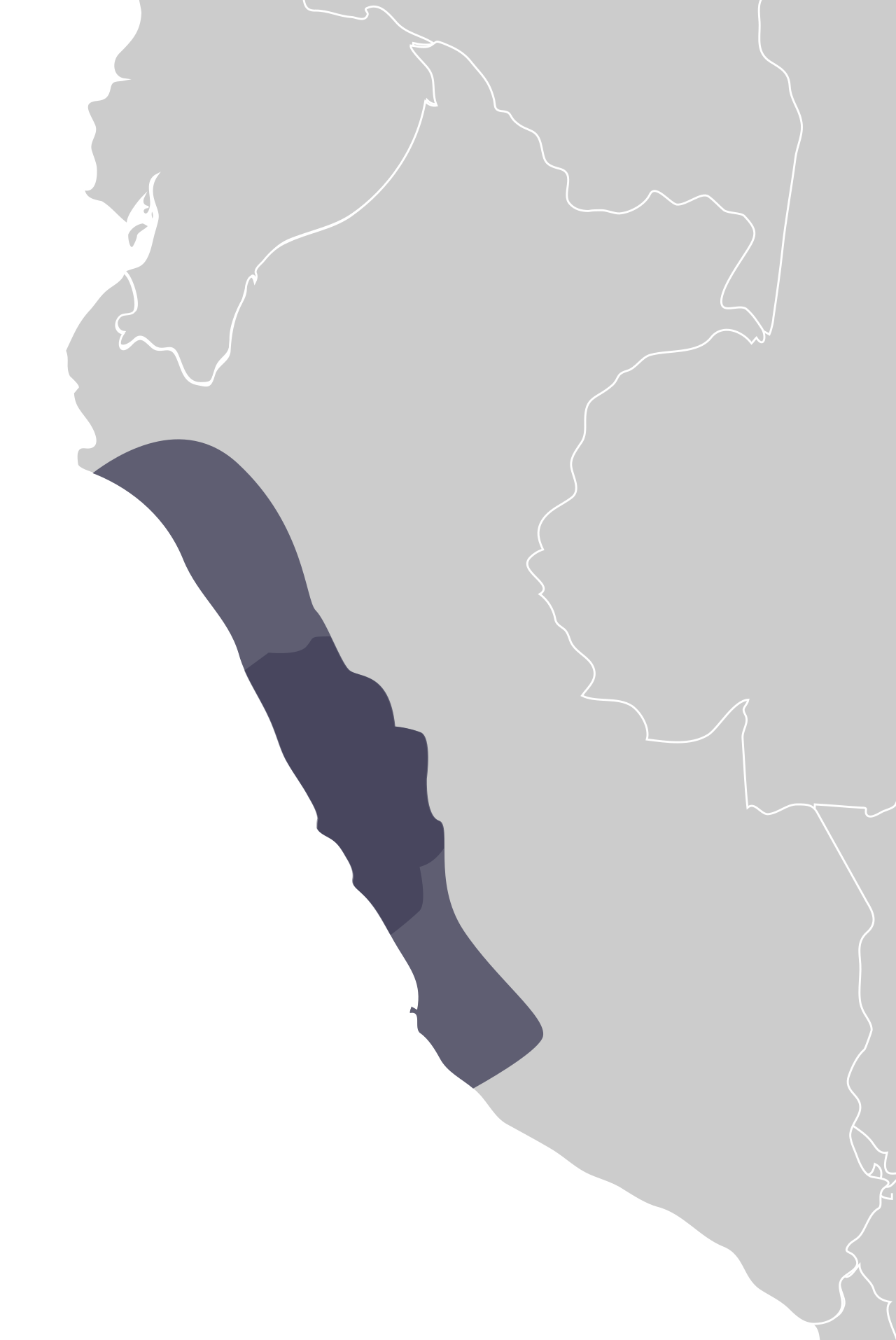
The Chavin Culture. The Chavin culture was a highly developed civilization of pre-Columbian Peru that flourished between about 900 and 200 BCE, its artistic influence spreading throughout the northern and central Andes. Its great religious center, Chavin de Huantar, became an important Andean pilgrimage site - though the site may not have been the actual center of origin of the culture and its style, whose roots lie in the Initial Period (about 1800-900 BCE), when a sedentary agricultural way of life became fully established; important regional manifestations of the style are found at sites such as Kotosh. The significance of Chavin is that for the first time, many of the local and regional cultures of the area were unified by a common ideology or religion - a shared spiritual horizon whose imagery, from the Paracas to the Incas, helped spread Chavin ideas across the Andes and into later empires.
At the heart of the religion stood the Staff Deity, associated with agricultural fertility and usually shown holding a staff in each hand - a forerunner of the Andean creator god Viracocha - celebrated in works like the Raimondi Stela, a two-metre granite slab with the god incised in low relief, and in carvings that form a transformational series changing progressively from human to jaguar form. The temple at Chavin de Huantar, measuring a hundred metres in length, enclosed its rites in complex interiors: an important feature of the cult was a priesthood of shamans who put themselves into trances with hallucinogens. Votive offerings from distant lowland jungles confirm the far-reaching influence of the cult. The site and the culture entered into decline sometime in the 3rd century BCE, for reasons that remain unknown.
 Britannica: Chavín
 World History Encyclopedia: Chavin Civilization
 Humanities LibreTexts: 4.2.3: Chavín culture
 UNESCO World Heritage Centre: Chavin (Archaeological Site)