 Go Back

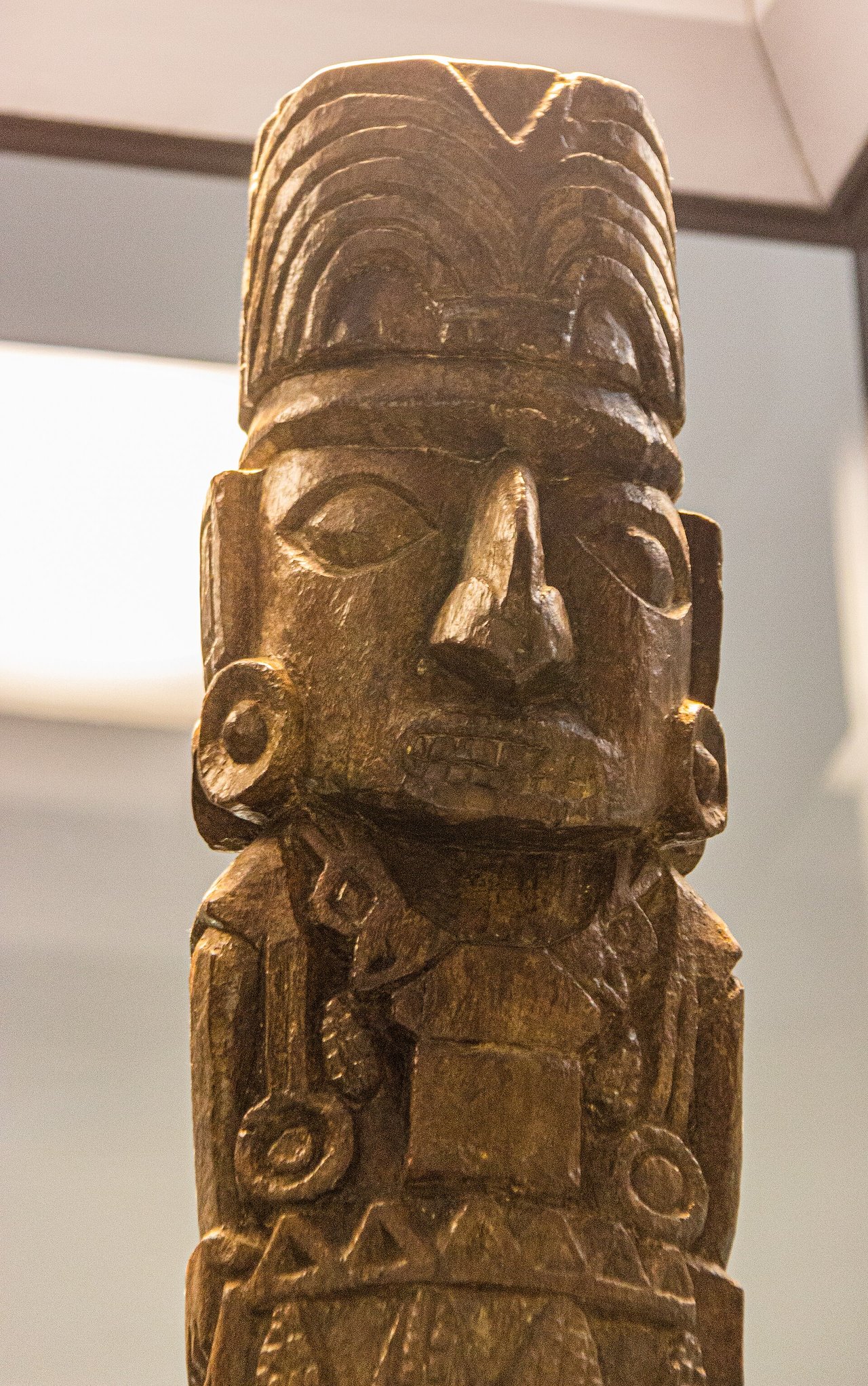
The Lima Culture. Between about AD 200 and 700, while the Moche ruled the northern coast of Peru, the central coast - the valleys of the Chillon, Rimac and Lurin, the ground on which the city of Lima now stands - was home to its own civilization: the Lima culture. It was a society of farmers and priests fed by irrigation canals drawn from the rivers, organized around great stepped pyramids of adobe brick, each raised in stages over the centuries, each the temple of its valley.
The greatest of these monuments survive inside the modern city: Huaca Pucllana, the vast stepped platform of adobe that towers over the Miraflores district, was the ceremonial heart of a Lima-culture town, a place of offerings and ritual banquets where the priesthood received the labor and tribute of the valleys. At its altars the Lima people sacrificed fine pottery, woven textiles, and - as the excavated tombs show - human victims and great jars of sharks and other offerings to the sea that fed them.
Lima-culture art has a style all its own: pottery painted with the interlocking, serpentine figures scholars call the interlocking style, and above all the cult of the sea-bird and marine life that runs through its iconography. Its people wove superb textiles, fished the Humboldt Current, and buried their dead in the platforms with offerings of food, cloth and ceramics. They traded and contended with their neighbors - the Nazca to the south, the rising highland powers of Wari.
By about AD 700 the Lima culture was absorbed into the expanding Wari sphere, and its valley temples passed to later peoples. The adobe pyramids remained - some fifty huacas still stand within metropolitan Lima, and Huaca Pucllana, excavated since the 1980s, is now the most visited pre-Columbian monument of the Peruvian capital: a temple of the civilization on whose ground, quite literally, the city was built.
 Britannica: Lima - History
 World History Encyclopedia: Pachacamac