 Go Back

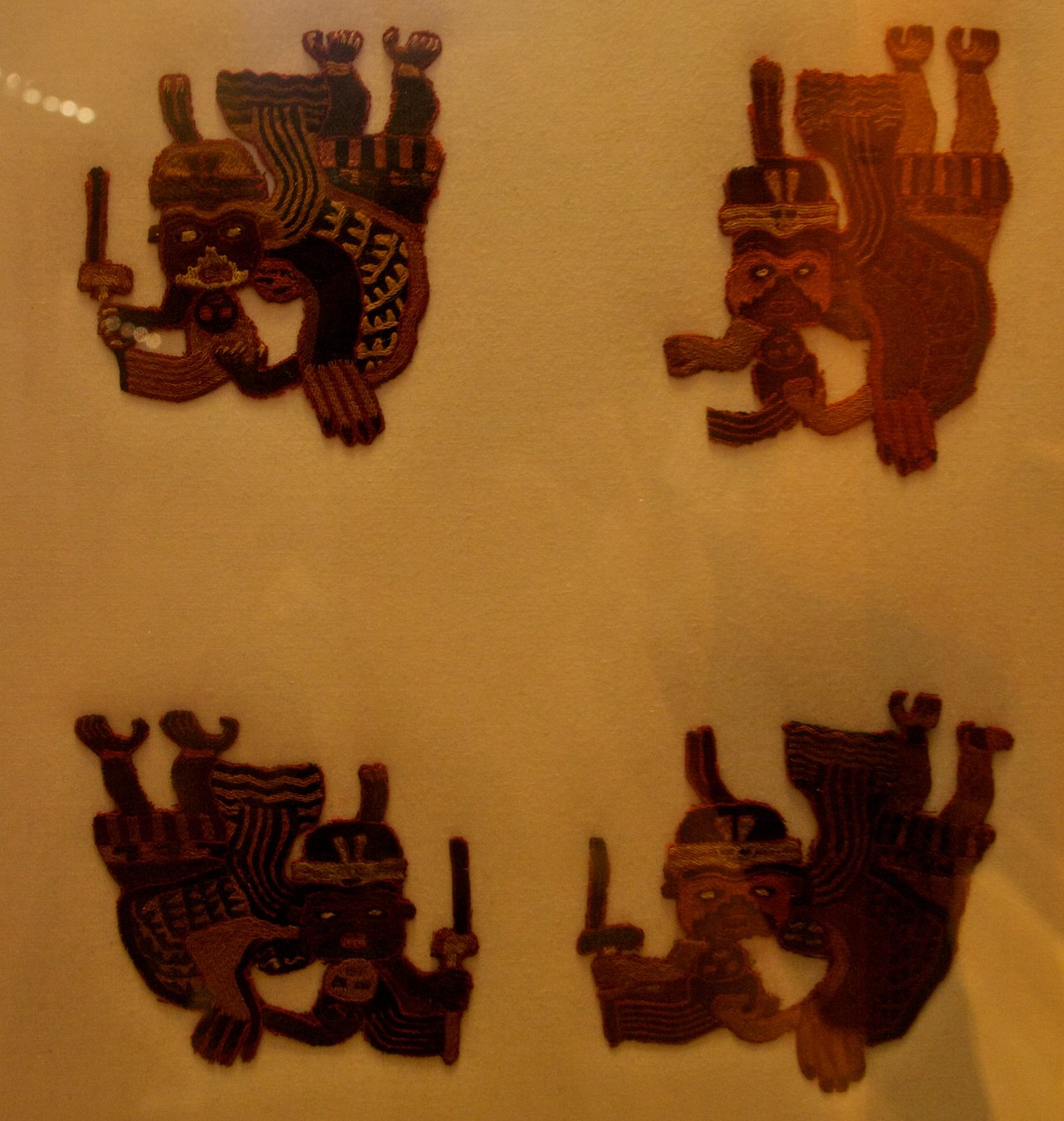
The Paracas culture of Peru's south coast produced what many consider the finest textiles of the ancient Americas, woven masterpieces that preserved their brilliant colors for two thousand years in the dry desert soil. Occupying the Paracas Peninsula and the neighboring valleys from about 800 to 100 BCE, the Paracas people lived in one of the driest environments on Earth, where rain almost never falls. That extreme aridity, which made life hard, proved a gift to archaeologists, preserving textiles, mummies, and organic objects that would have rotted anywhere else.
Paracas society is known mainly from its burials. The dead were wrapped in many layers of finely embroidered mantles, shirts, and headbands, then seated in baskets and placed in underground chambers. In 1925 the Peruvian archaeologist Julio C. Tello excavated the famous necropolis of Wari Kayan on the peninsula, finding 429 funerary bundles. Some elite individuals were wrapped in dozens of garments, forming conical mummy bundles. The embroidery depicts dazzling repeated figures: flying shamans, bird-men, felines, and supernatural beings with streaming appendages, worked in vividly dyed camelid fibers.
Textiles were clearly central to Paracas life and belief, and their production involved huge communal labor: a single mantle could contain years of work. Scholars believe the embroidered images encoded religious ideas and myths that we can no longer read directly, since the Paracas left no writing. The culture also practiced cranial deformation, binding infants' heads to produce elongated skulls, and trephination, the surgical removal of sections of the skull, which many patients survived, as healed bone edges show.
The Paracas peninsula's importance continued after the culture faded. Around 100 BCE the region gave way to the related Topará and then the Nazca culture, which inherited Paracas textile and ceramic traditions and later etched the famous Nazca Lines nearby. Julio Tello, Peru's first great Indigenous archaeologist, made the Paracas discoveries a cornerstone of Peruvian national identity, arguing that Andean civilization had deep coastal roots independent of outside influence. Many of the finest Paracas textiles are preserved today in museums in Lima and in collections around the world.
 Smarthistory: Paracas, an introduction to Paracas textiles
 DigitalCommons @ University of Nebraska-Lincoln: Paracas Textiles (Textile Society of America)
 Dumbarton Oaks: Anne Paul Paracas Textile Archive
 Andean Arts: Paracas: Textiles