 Go Back

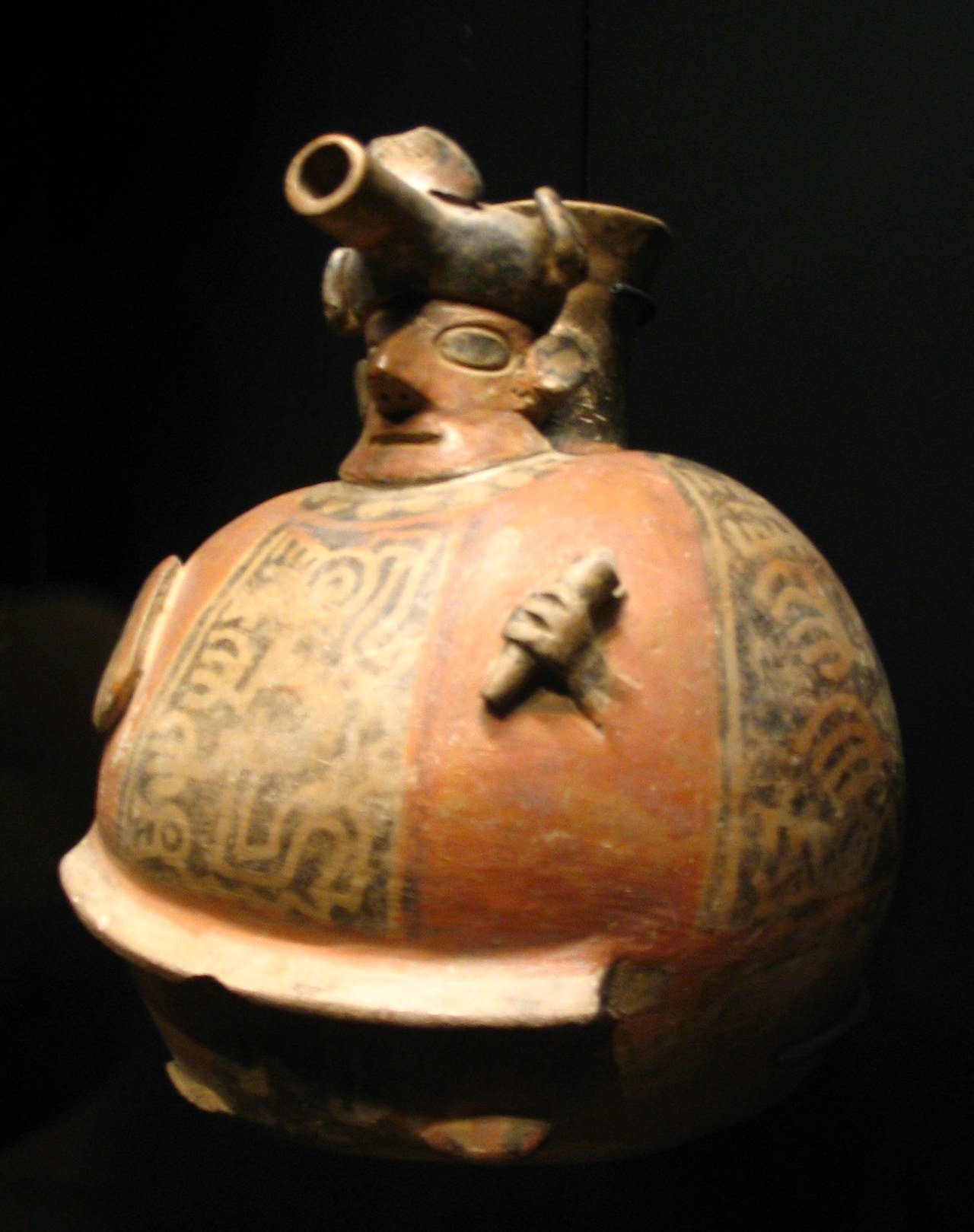
In the highlands of northern Peru, between the fall of the great Chavín cult and the rise of the Wari empire, two distinctive cultures flourished in the mountain basins: Recuay in the Callejón de Huaylas of Ancash, and Cajamarca in the fertile valley further north. Both developed during the Early Intermediate Period, roughly 200 BCE to 800 CE, when no single power ruled the Andes and regional styles blossomed in art and architecture. Though they never built empires, these highland societies produced remarkable stone buildings and ceramics and laid foundations later absorbed into larger states.
The Recuay people lived in small hilltop settlements in the shadow of the Cordillera Blanca, Peru's highest mountain range. Their architecture featured multi-roomed stone structures with high-pitched roofs, and they built underground galleries and raised stone tombs for their dead. Recuay potters created a striking ceramic style, using fine white kaolin clay for vessels painted in black and red, often shaped as warriors, llamas, and architectural models of houses. These lively, sculptural pots give us snapshots of Recuay life: chieftains on stools, musicians, and loaded llamas like the caravans that still cross the highlands today.
The Cajamarca culture developed in the valley of Cajamarca, which would centuries later become famous as the site of the Inca emperor Atahualpa's capture. Cajamarca potters perfected a brilliant cursive style, painting vessels with running, calligraphic designs of birds, flowers, and abstract motifs in black and orange on cream backgrounds. Their ceramics were so admired that they were traded widely across northern Peru and imitated by neighboring peoples. Cajamarca society was organized in small chiefdoms scattered across the valley, living from maize agriculture and llama herding in the high pastures.
Both cultures eventually came under the influence of the Wari empire around 700-800 CE, which spread its own styles and administration through the highlands. Their traditions did not vanish but merged into the evolving highland world that would later produce kingdoms the Inca absorbed. The Recuay heartland today draws visitors to the same snowcapped Cordillera Blanca, while Cajamarca remains a prosperous agricultural city. Museums in Lima and Huaraz hold outstanding collections of Recuay warrior vessels and Cajamarca painted bowls.
 The Metropolitan Museum of Art: The Art of the Recuay
 Journal of Field Archaeology: Cajamarca: A Synthesis of Research
 Wikipedia: Recuay culture
 Boletín de Arqueología PUCP: Investigaciones sobre Recuay y Cajamarca