 Go Back

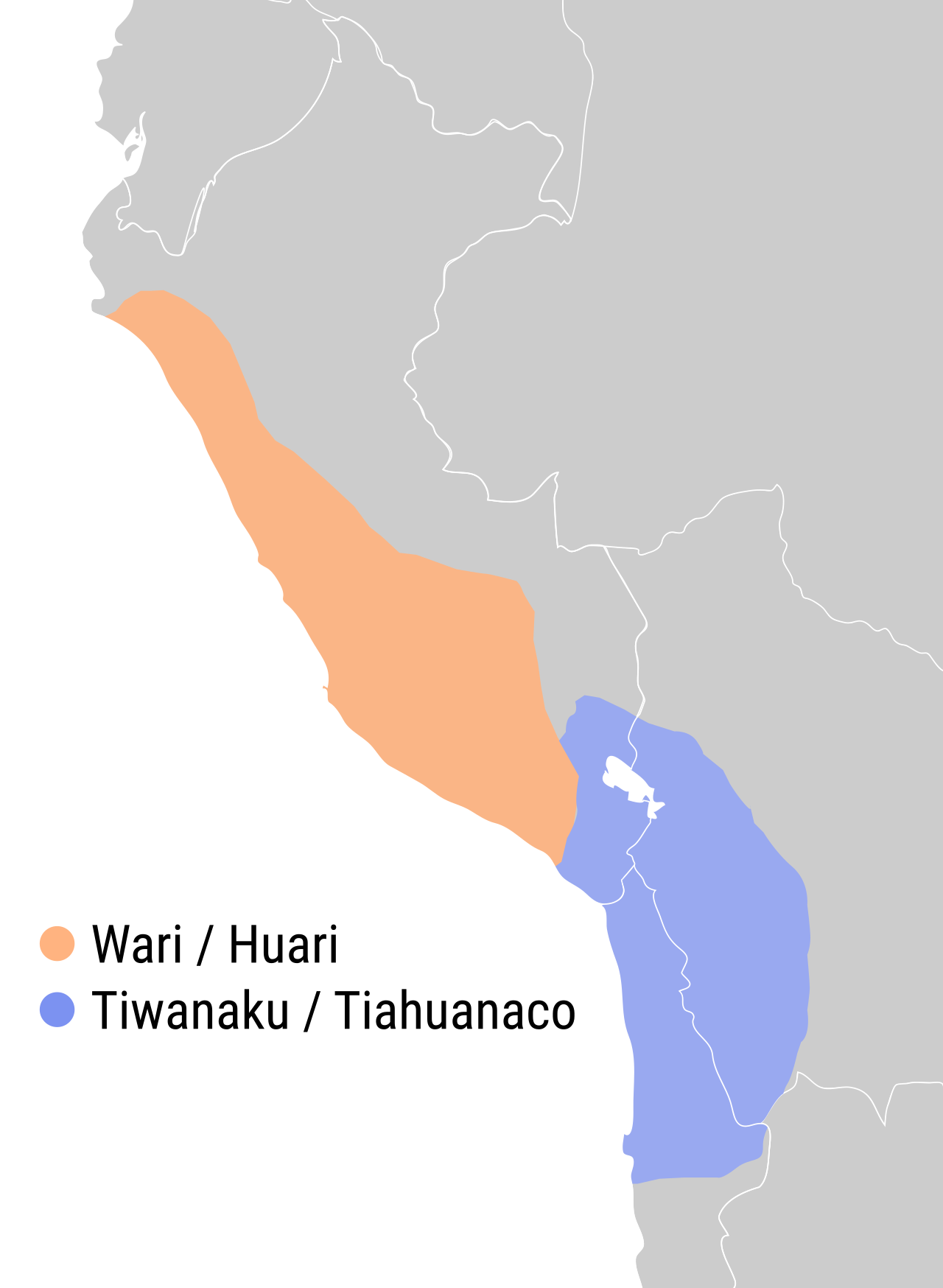
The Tiwanaku & Wari Empires. The Tiwanaku and Wari empires were the two great powers of the Andean Middle Horizon (600-1000 CE). Tiwanaku took its name from the ruins near the southern shore of Lake Titicaca in Bolivia - now a UNESCO World Heritage site - where its Kalasasaya platform and the structure known as the Palacio stand, the Kalasasaya holding the monolithic Gateway of the Sun, carved with a staff-carrying Doorway God flanked by winged figures, a god variously described as a Sun god or a thunder god. Wari, exploiting the diverse landscapes of Peru's coast and highlands as it flourished between about 450 and 1000 CE from its capital at Huari in the Peruvian highlands, constructed an empire administered by provincial capitals connected by a large road network - methods of maintaining an empire, and an artistic style, that would have a lasting influence on the Andes.
Both states were gifted agriculturalists. The Wari constructed canals to irrigate terraced fields, and the economic stability this brought allowed them to resist the thirty-year drought at the end of the 6th century CE that contributed to the decline of their neighbors; at their administrative site of Pikillacta, with its strictly controlled single winding entrance, archaeologists found forty miniature greenstone figures of elite citizens. Their art centered on the Staff Deity, with plants, the San Pedro cactus flower, pumas, condors, and above all llamas - testimony to the importance of the herds. Why these empires fell is still debated: theories range from over-extension to another extended drought in the 9th century, but whatever the reasons, the region returned to a world of competing local powers until the rise of the Inca.
 Britannica: Tiwanaku
 World History Encyclopedia: Wari Civilization
 Humanities LibreTexts: 7.8: Wari 500 CE – 1000 CE
 The Metropolitan Museum of Art: Central and Southern Andes, 500–1000 A.D.