 Go Back
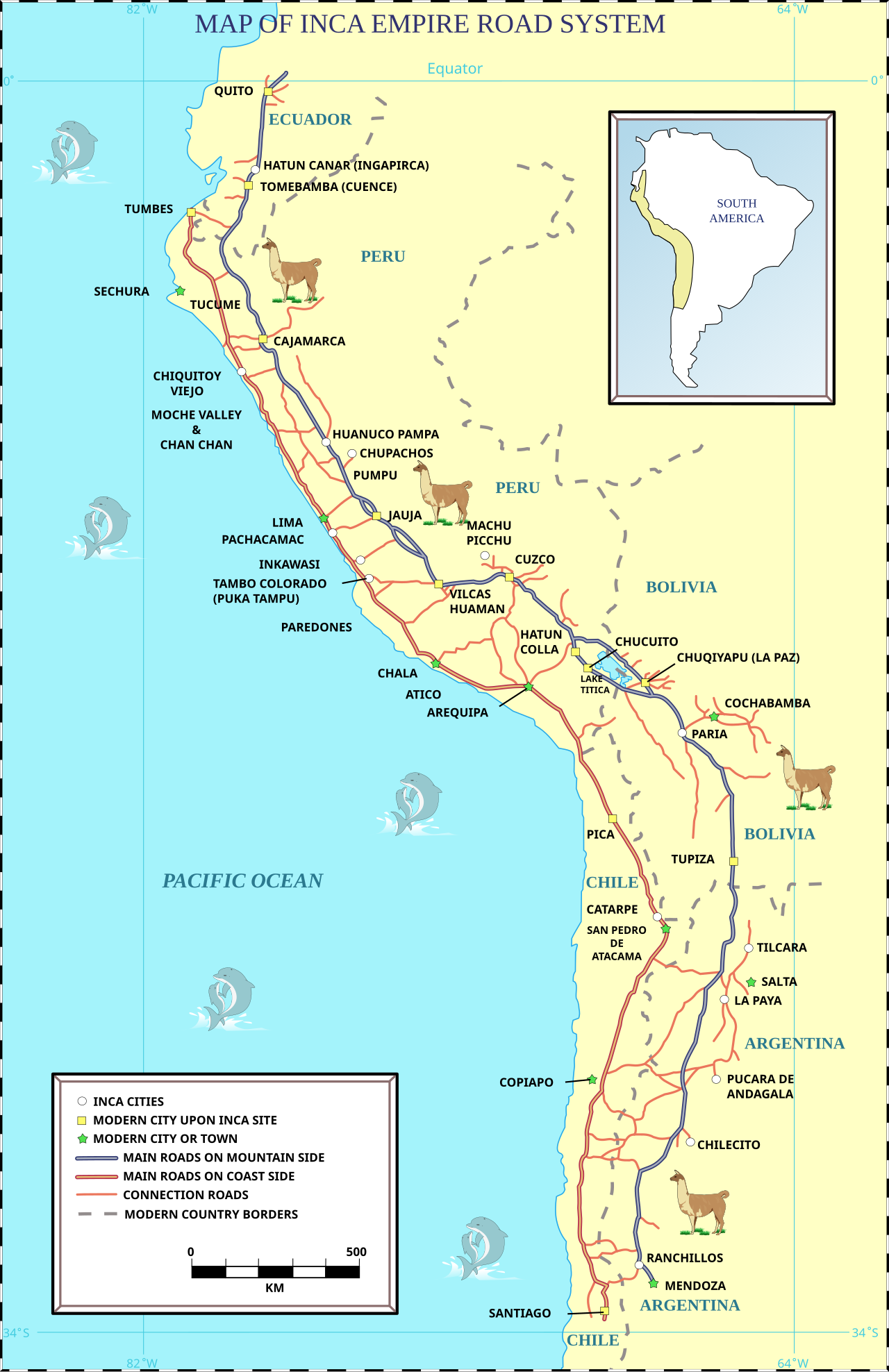
The Inca Empire (Tahuantinsuyu). The Inca Empire was the largest empire in pre-Columbian history, flourishing across the Andean region of South America from 1438 to 1533 CE. Originating in the high valley of Cusco under the legendary ruler Pachacuti, the realm expanded to encompass modern-day Peru, Ecuador, Bolivia, Chile, Colombia, and Argentina. This empire matters deeply because it created a highly organized state administration, master architectural stonemasonry constructed without mortar, and an impressive sixteen-thousand-mile highway network (Qhapaq Ñan).
The Incas adapted to extreme mountain topography by constructing vast agricultural terraces, storehouses, and high-altitude administrative centers like Machu Picchu. Lacking a formal writing system, they relied on knotted cords called quipus for detailed record-keeping and population censuses. Imperial authority was maintained through forced population migrations and mandatory labor tribute (mita). Following a brutal civil war between rival brothers Huáscar and Atahualpa, the empire was fatally weakened, allowing a small force of Spanish conquistadors under Francisco Pizarro to capture and execute Atahualpa in 1533.