 Go Back

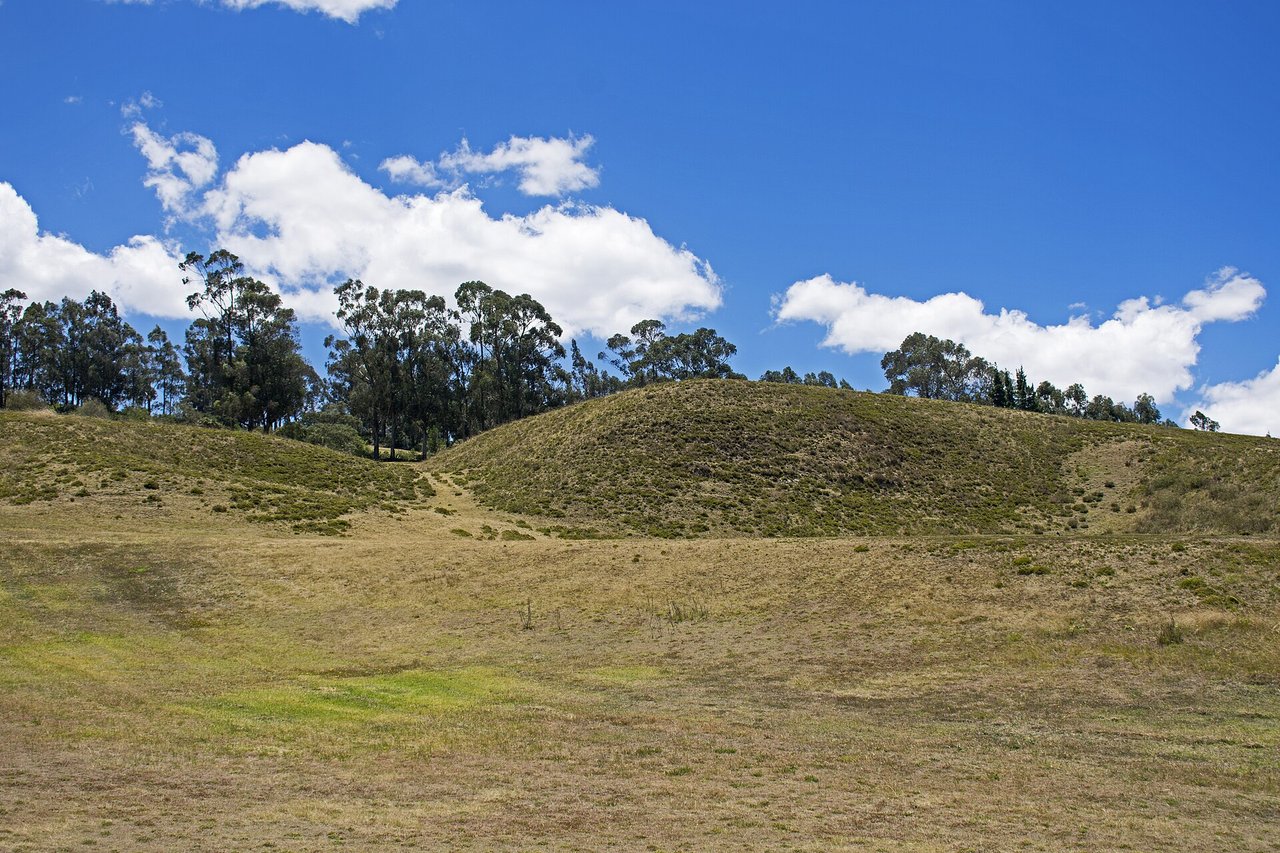
The Kingdom of Quito. High in the northern Andes, on the plateau where the equator crosses the mountains, the city of Quito was old before the Incas came. The people the Spanish chroniclers called the Quitu had farmed the valley from the first millennium, and by about the eleventh century their chiefs had joined with the migrating Cara people - conquerors or allies from the coast, the traditions differ - to form the realm remembered as the Kingdom of Quito, or the Kingdom of the Caras, with its lords styled shyri.
The shyris ruled from their ceremonial center at Caranqui and, later, from Quito itself, over a valley grown rich on maize and the trade of the mountain corridor. Their realm was no empire but a confederation of chiefdoms - Cayambe, Otavalo, Puruha, Canari to the south - whose lords acknowledged, married into, or fought the shyri's house as advantage turned. The kingdom's astronomers watched the sun from the equator line itself, and the monument at Cochasqui, with its pyramids and its alignment of ramps, still marks where they measured the passing year.
The kingdom's fate was bound to the Inca advance. From the late fifteenth century the armies of Tupac Yupanqui and then Huayna Capac pressed north past the Canari and into the plateau; the northern peoples resisted in a long and bitter war, remembered in Ecuadorian tradition as the struggle of the Caras against the invaders, before Quito itself fell around the turn of the century. Huayna Capac made the conquered city his own - he rebuilt it as an Inca administrative capital, mothered his heir Atahualpa with a Quitu princess, and ruled the northern empire from it.
When civil war split the Inca world, Atahualpa held Quito against his brother in Cusco, and it was the northern, Quitu-based army that won him the empire - months before Pizarro's landing destroyed them both. The conquistadors found Quito already burned by its own defenders, and refounded it in 1534 on the ashes of the shyris' city. The Kingdom of Quito left no chronicles of its own, but its name still carries the memory of a sovereign Andean realm before the Inca.
 Britannica: Quito
 UNESCO: City of Quito