 Go Back

The Peoples of Patagonia. At the cold bottom of the inhabited world, where the Andes drown in the channels of Tierra del Fuego and the steppe runs a thousand miles to the Atlantic, human beings made a home at the uttermost edge. The peoples of Patagonia were among the last on earth to be reached by outsiders, and among the most wrongly remembered: the tall Tehuelche hunters of the steppe, whom Magellan's sailors called Patagones - big-feet - and Europe turned into giants; the Yamana and Selk'nam of the Fuegian channels, who went nearly naked in the sub-Antarctic wind and kept fires in their canoes; the Kawesqar, nomads of the fjords.
Each people had solved an impossible environment. The Tehuelche of the open steppe lived by the guanaco and the rhea, hunting with the boleadora, the three-stoned throwing weapon of the plains, and following the herds in great seasonal gatherings where marriages were made and the dead remembered. The canoe peoples of the channels - Yamana, Kawesqar, Chono - lived from the sea entirely: shellfish, sea lions, beached whales, their bark and later plank canoes carrying whole families through waters where no land life was possible. The Selk'nam of northern Tierra del Fuego hunted the guanaco and staged the Hain, the great initiation ceremony in which the young men confronted the painted spirits of the spirits' lodge.
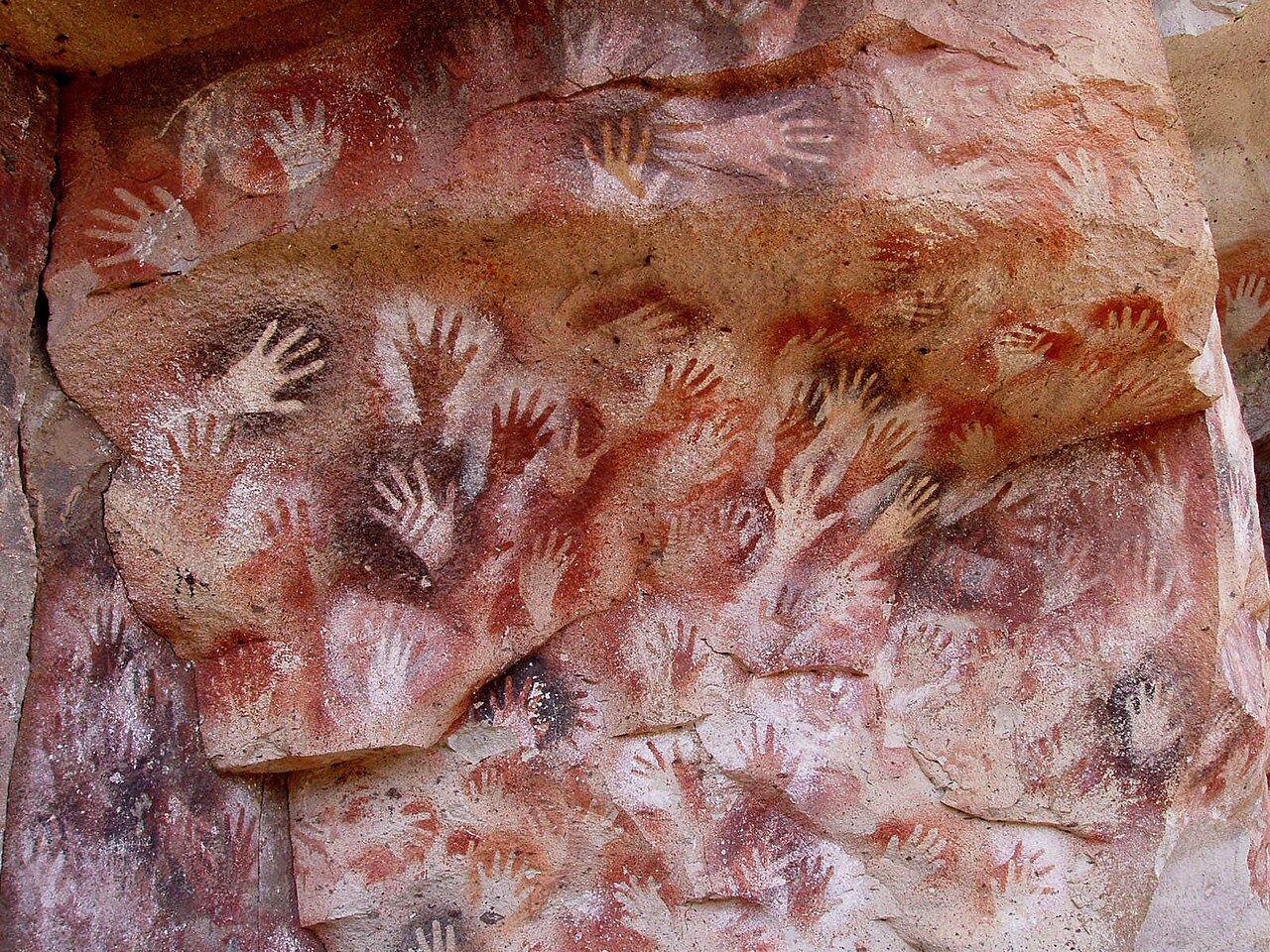
Their prehistory was ancient - the coastal middens and the cave paintings of the Rio Pinturas, the Cave of the Hands, were thousands of years old when Europeans came - and their contact with Europeans came late and disastrously: the sheep ranches that fenced the Tehuelche's hunting grounds in the 1880s, the gold rush and the bounty-hunting of the Selk'nam in Tierra del Fuego, and the epidemics that followed every contact. Within two generations of the Conquest of the Desert and the sheep, the nations of Patagonia were broken.
Yet the ending was not the story. For at least ten thousand years the peoples of Patagonia had thrived where almost no one else could live, and their descendants - Tehuelche, Yamana, Kawesqar, Selk'nam - survive to reclaim their names and histories today. The Cave of the Hands is a World Heritage Site, and the giant Patagons of Magellan's chronicler have given way to the memory of the most southerly nations of mankind.
 Encyclopedia.com: Tehuelches
 UNESCO: Cueva de las Manos, Rio Pinturas
 Britannica: Tierra del Fuego