 Go Back

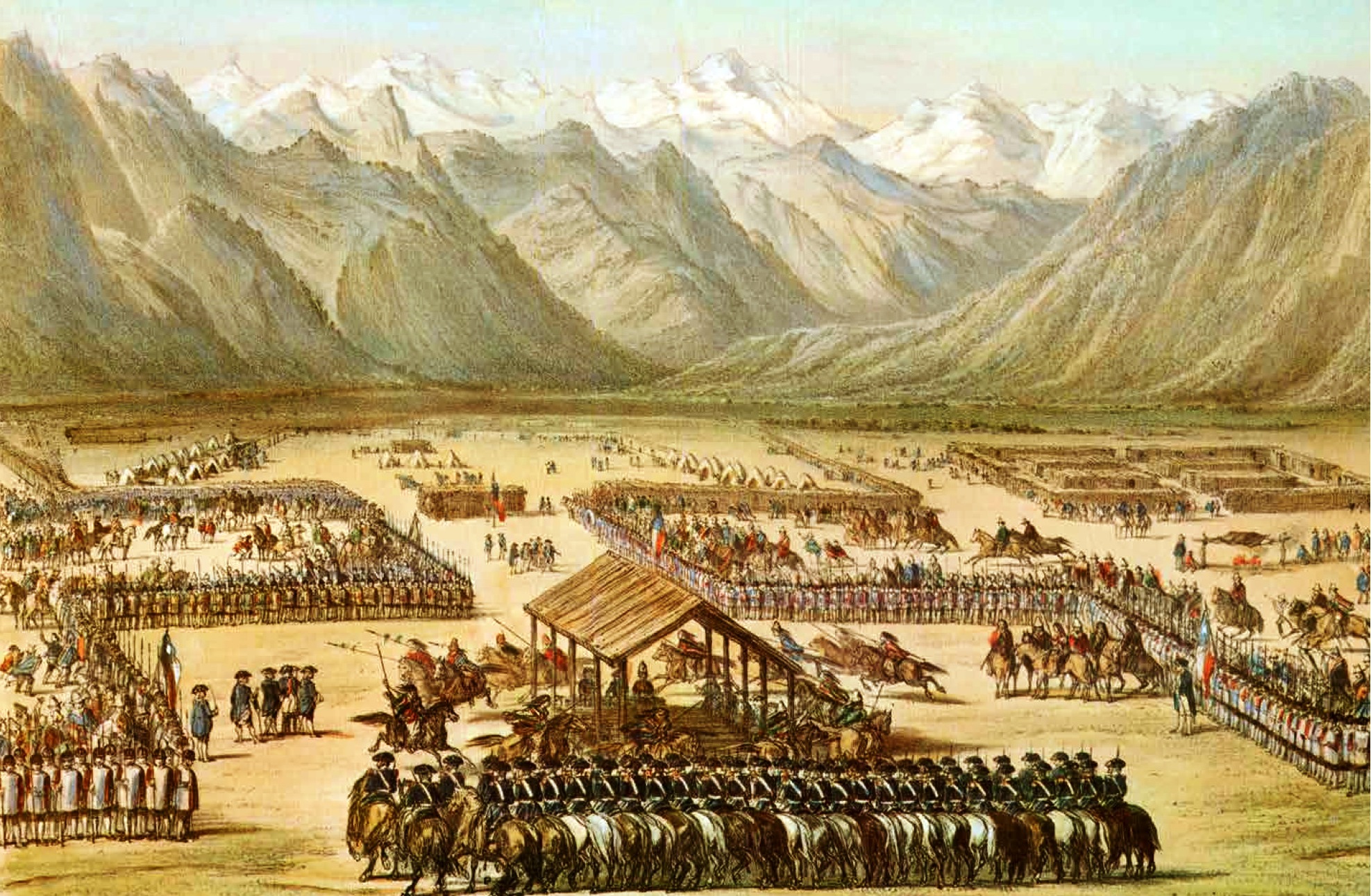
The Arauco War, the long struggle between the Spanish empire and the Mapuche people of south-central Chile, lasted nearly three centuries with periods of war alternating with diplomacy. The Mapuche had no kings or cities, but their decentralized communities, organized in local groups called lof and wider alliances, resisted Spanish conquest. When Pedro de Valdivia marched south in the 1540s and founded cities in Mapuche land, the toqui, or war leader, Lautaro studied Spanish cavalry and tactics, then turned them against the invaders. At Tucapel in 1553 the Mapuche destroyed Valdivia's force and killed him, and the war had begun.
The decisive turning point came in 1598 at Curalaba, where Mapuche warriors killed the governor and sparked a general rising that destroyed seven Spanish cities south of the Biobio River. Spanish control contracted sharply. The Biobio became the main frontier zone, though Spanish enclaves survived farther south. On the Spanish side stood a costly line of forts and a permanent frontier army; on the Mapuche side, an independent land the Spanish called the Araucania, where war leaders were elected for campaigns and assemblies made decisions.
War was only part of frontier life. From the seventeenth century, Spanish governors and Mapuche leaders held parlamentos, great treaty meetings that recognized Mapuche independence, regulated trade, and arranged the return of captives. Commerce in cattle, horses, ponchos, and salt flowed across the line, and so did people: settlers were captured and adopted, Mapuche worked on estates, and a mixed frontier culture emerged. Missionaries crossed in both peace and danger, while raids and reprisals periodically reignited open war. The Mapuche, meanwhile, spread their language and ways eastward across the Andes into the pampas.
The frontier outlasted the Spanish empire. The new Chilean republic negotiated with Mapuche leaders, including at Tapihue in 1825, but as Chile grew stronger its settlers and governments pressed south. Beginning in 1861 under Cornelio Saavedra, and advancing decisively in the early 1880s, Chilean armies occupied the Araucania with forts, railways, and colonies. By 1883 organized resistance had been crushed and the Mapuche confined to small communal reserves. Into the 1920s they struggled to defend those remaining lands. Their long resistance remained central to Mapuche historical memory.
 Wikipedia - Arauco War
 HAHR - Y asi nacio la frontera, book review listing
Wikipedia - Occupation of Araucania