 Go Back

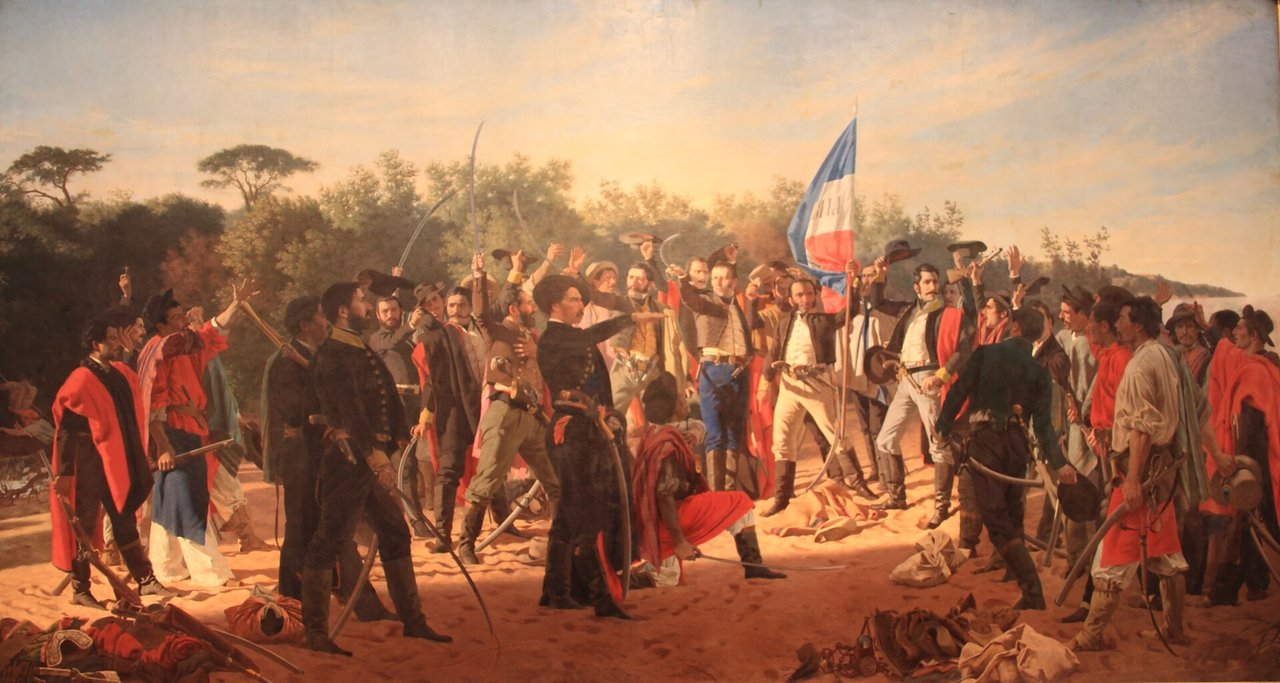
Artigas and the Banda Oriental. On the east bank of the River Plate, in the grassland province the Spanish called the Banda Oriental - the modern Uruguay - the revolution of 1810 found its own liberator: Jose Gervasio Artigas, a former soldier of the frontier, a smugglers' countryman, and the idol of the gauchos. In May 1811 his ragged army of horsemen beat the Spanish at Las Piedras and besieged Montevideo, and the Banda Oriental rose for the revolution - but not, Artigas insisted, for Buenos Aires.
That insistence made his tragedy. Artigas stood for a confederation of free provinces against the centralism of the porteno capital, and when Buenos Aires made peace with the royalists and ordered his people off the land to starve Montevideo, the Orientals answered with the Exodus of 1811: thousands of families abandoned their homes and marched into exile in Entre Rios rather than submit. For five years Artigas ruled the Banda Oriental from his leather tent at Purificacion, governing by handwritten regulation: his land decree of 1815, taking the land of enemies and giving the free poor - the gauchos, the blacks, the Indians - their share, was the most radical social measure of the American revolutions.
His republic of gauchos was crushed between empires. The Portuguese of Brazil, fearing his example on their own frontier, invaded in 1816; Buenos Aires abandoned him; and in 1820, after four years of war, his last army was destroyed at Tacuarembo. Artigas rode alone into exile in Paraguay, where he lived thirty more years on a farm, refusing every offer to return, and died in 1850, two years after his country's independence.
The nation he had dreamed rose without him: in 1825 the Thirty-Three Orientals landed to liberate the Banda from Brazil, and in 1828 Britain brokered the buffer state of Uruguay between Argentina and Brazil. But Uruguay's memory made Artigas its founder - the Protector of Free Peoples - and his gaucho army, his exodus and his land law stand at the root of the country's identity.
 Britannica: Jose Gervasio Artigas
Britannica: Uruguay - The Struggle for Identity
Britannica: Uruguay