 Go Back

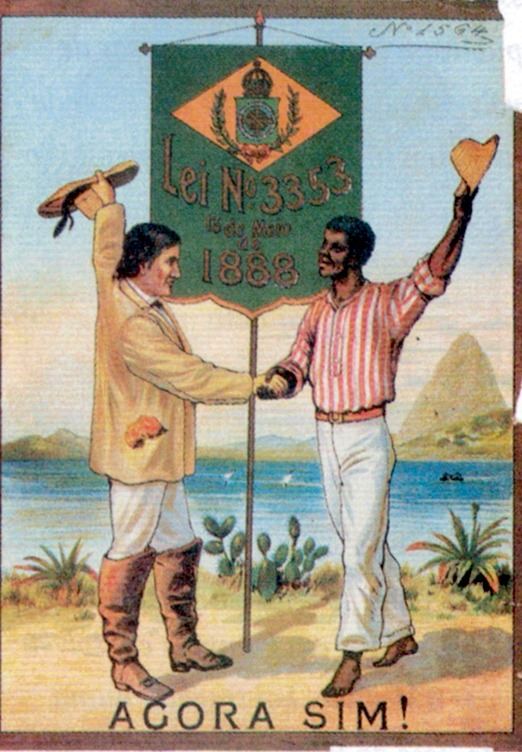
Brazil imported more enslaved Africans than any other country in history, nearly five million people, and slavery reached into every corner of its economy and society. Yet between 1850 and 1888 the institution was dismantled step by step. The first great blow came against the slave trade itself. Britain pressed Brazil for decades to stop importing Africans, and in 1850, after British warships began seizing slave ships in Brazilian waters, the government of Eusebio de Queiros enforced a real ban. The transatlantic trade ended, and from then on the slave population could only shrink.
Gradual emancipation laws followed. In 1871 the Law of the Free Womb declared that every child born to an enslaved mother was free, though such children still owed years of service to their mothers' owners. In 1885 the Sexagenarian Law freed enslaved people over sixty, a measure critics mocked as freeing those too old to work. Meanwhile an abolitionist movement grew into a mass crusade. The journalist Jose do Patrocinio, the statesman Joaquim Nabuco, the self-educated Black lawyer Luis Gama, and the engineer Andre Reboucas mobilized public opinion, while in the streets crowds blocked the recapture of runaways and whole provinces, like Ceara, freed their slaves ahead of the law.
By the 1880s slavery was collapsing from below as well as from above. Thousands of enslaved people simply walked away from the plantations, hiding in quilombos and in the growing cities, and the police increasingly refused to hunt them. Planters, facing the loss of their labor force, began hiring European immigrants. In May 1888, with the emperor abroad, the regent Princess Isabel signed the Lei Aurea, the Golden Law, abolishing slavery completely and unconditionally. Brazil was the last country in the Americas to end slavery, and it did so without a civil war.
Freedom came without land, compensation for the freed, or any plan for their inclusion, and the former slaves entered liberty with little more than the law on paper. Many continued to work the same estates for wages, while the coffee economy turned to European and later Japanese immigration. The abolitionist alliance with the monarchy also collapsed: the coffee planters, who blamed the crown for abolition, withdrew their support, and in November 1889 the empire fell. The Golden Law remained a source of pride, but by 1924 the descendants of the enslaved still faced the deep inequality that three and a half centuries of slavery had built.
 Wikipedia - Lei Aurea (Golden Law)
 Oxford Research Encyclopedia - abolition in Brazil - via DOI
 Britannica - Abolitionism