 Go Back

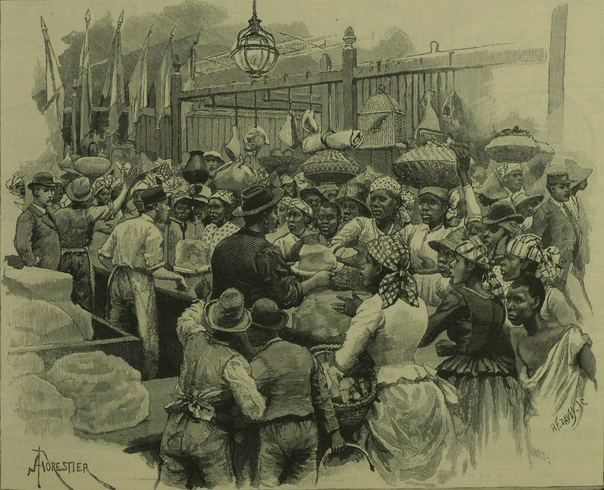
British Guiana, on the northern shoulder of South America, was stitched together from the former Dutch colonies of Essequibo, Demerara, and Berbice, which Britain seized during the Napoleonic Wars and kept after 1815. It was a plantation colony built on sugar and on slavery. Behind great dikes that held back the sea and the rivers, estates produced sugar with the labor of enslaved Africans, whose suffering provoked one of the largest uprisings of the Caribbean: the Demerara rebellion of 1823, in which more than ten thousand enslaved people demanded their freedom and were answered with mass executions.
Full emancipation came in 1838, after four years of a coerced apprenticeship that Britain imposed as a transition. The freed people moved quickly to build independent lives. Many left the estates and pooled their savings to buy abandoned plantations, founding free villages such as Victoria, purchased in 1839, which became centers of African-Guyanese farming, churches, and schools. The planters, facing the loss of their labor force, turned to a new solution: indentured immigration. Portuguese from Madeira came first, and Chinese laborers followed, but the great stream came from British India.
Between 1838 and 1917, when the indenture system ended, nearly 240,000 Indians were brought to British Guiana under five-year contracts. They crossed the ocean packed in depot ships, were allotted to estates, and worked under penal laws that punished absence with prison. Wages were low, housing miserable, and protest dangerous: in 1905, colonial forces opened fire on workers at Ruimveldt during a dock and estate uprising. Yet the indentured endured, saved, and stayed. Most never returned to India; they re-indentured, bought small plots, planted rice, and built villages, temples, and mosques that transformed the colony's culture.
By the early twentieth century British Guiana was a society of striking diversity held within a rigid colonial frame. Sugar, dominated by a few great firms like Bookers, still ruled the economy, though rice grown by small farmers was gaining ground, and bauxite mining began during the First World War. Political power rested with the planters and the Colonial Office, while a small educated class of African, Indian, Portuguese, and mixed descent pressed for reform. By 1924 the indenture era had closed, but its legacy, a multiracial population of Indigenous peoples, descendants of enslaved Africans, and families of Indian, Portuguese, and Chinese immigrants, defined the colony's future struggles.
 Wikipedia - History of Guyana
 Library of Congress Country Studies - Guyana: Postemancipation society
 Wiley Encyclopedia of Global Human Migration - via DOI