 Go Back

Colonial Brazil. Colonial Brazil began with a wide turn at sea: in 1500, Pedro Alvares Cabral, commanding an imposing armada bound for India on sailing directions drawn up by da Gama himself, bore so far to the west that on April 22 he sighted the mainland of South America. The Treaty of Tordesillas had divided the New World between Spanish and Portuguese claims, and the region Cabral sighted lay well within the Portuguese zone; the crown promptly claimed it. Whether the landfall was pure accident or quietly planned by the ever-secretive Portuguese, Cabral stayed eight days at Baia Cabralia, where he met Amerindians, before sailing on. Brazil matters because Portugal's accidental landfall grew into the largest colony of South America - a land that would be, at one time or another, the world's leading producer of sugar, diamonds, and tobacco.
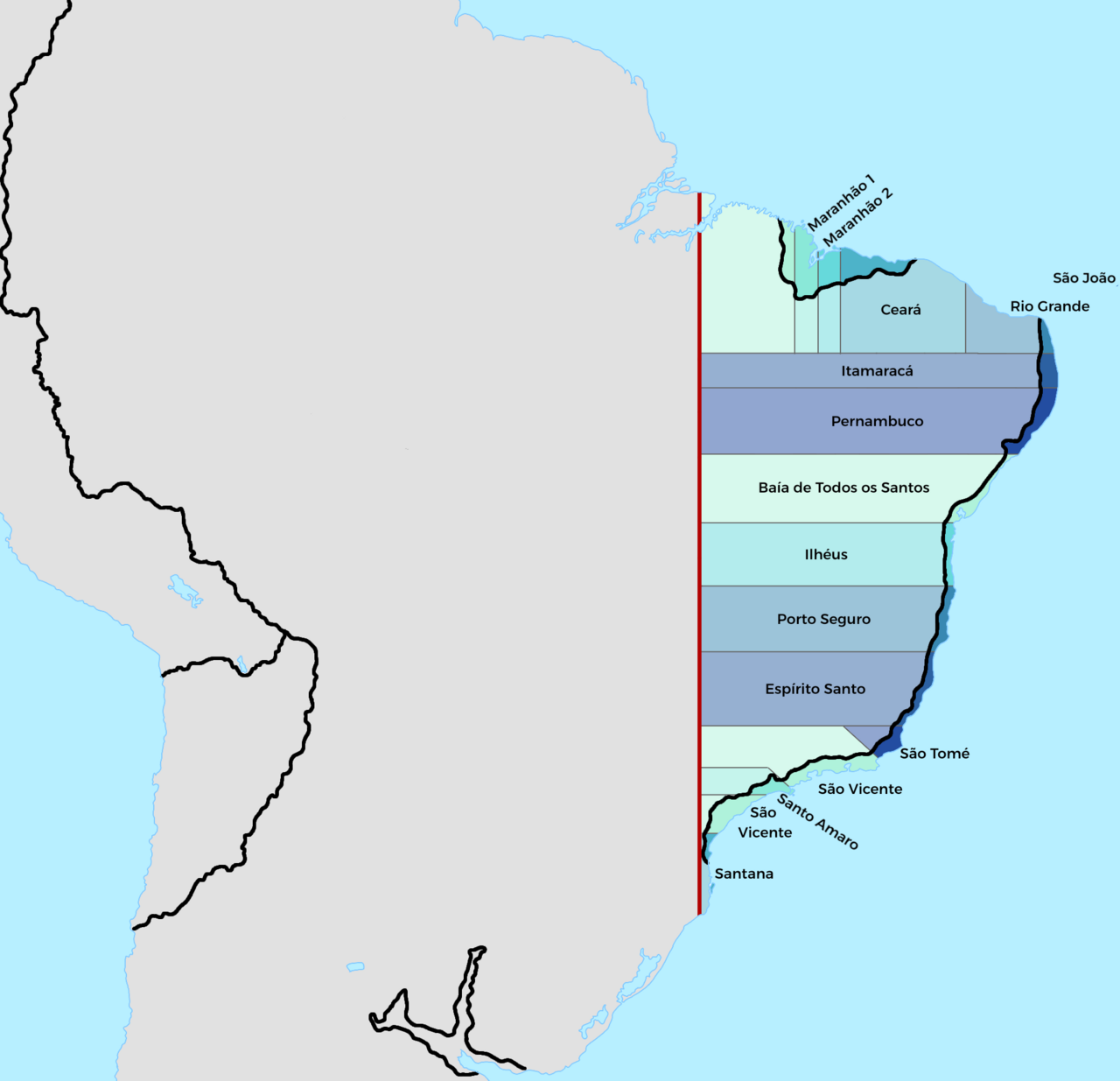
Colonized from the 1530s, Brazil was organized in 1533 into fifteen hereditary captaincies, or fiefs, each extending about fifty leagues along the coast; the captain-generals wielded extensive rights and privileges, but only two of the captaincies were ultimately successful - Sao Vicente, in present Sao Paulo state, and Pernambuco in the northeast. Pernambuco, centered on the town of Olinda, became under its donatario Duarte Coelho Pereira a great sugar-producing region, offering the first example of a profitable agrarian economy in the colony; by the mid-16th century the two successful captaincies had a combined population of only about 5,000. From those modest beginnings - sugar estates worked increasingly by enslaved Africans, coastal towns, and frontier expeditions - would grow the continent's Portuguese-speaking giant. The Crown appointed a governor in 1549 to bring order to the colony, which became an official viceroyalty later divided in two, with Salvador the capital of the north and Rio de Janeiro of the south. Sugar's labor demands drove the slave trade: after the enslaving of Amerindians was prohibited from 1570, most enslaved workers came by ship from Africa, particularly Portuguese Angola - 150,000 during sugar's peak from 1600 to 1625 alone - and the result was a great mixing of Europeans, Amerindians, and Africans, more so than in any other Portuguese colony.
 Britannica: Brazil - Colonialism, Independence, Republic
 World History Encyclopedia: Portuguese Brazil
 Humanities LibreTexts: 3.4: Colonial Brazil
 Smarthistory: Colonial Brazil