 Go Back

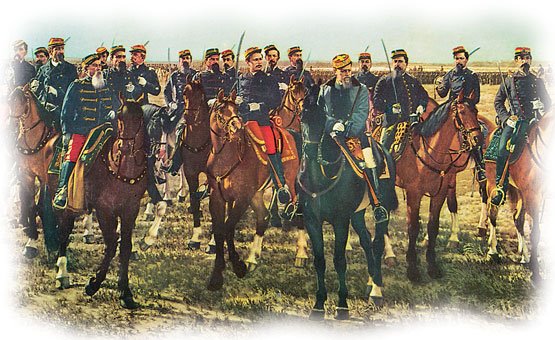
Through most of the nineteenth century, the pampas south of Buenos Aires remained Indigenous land. Mapuche, Ranquel, and Tehuelche peoples controlled the plains and hunted wild cattle, and their mounted raiding parties, the malones, periodically struck the frontier settlements, carrying off livestock and captives. Argentine governments built fort lines and signed treaties, but the frontier crept forward only slowly. By the 1870s the pressure became unbearable: the export economy needed the land for sheep and wheat, and landowners demanded that the state clear the pampas once and for all.
The instrument of conquest was Julio Argentino Roca, minister of war and then president. In 1878 he launched the campaign remembered as the Conquest of the Desert. Five army columns advanced methodically into the pampas, and in 1879 they swept south to the Rio Negro, breaking the military power of the Indigenous confederations. Follow-up expeditions in the 1880s pushed into Neuquen and Patagonia. Thousands of Indigenous people were killed, and thousands more taken prisoner; families were divided, and captives were distributed as servants and laborers in Buenos Aires and the provinces or confined on islands and in camps.
The conquered territory, an expanse larger than many European countries, was distributed with stunning speed. The state granted enormous tracts to officers, speculators, and land companies, laying the foundations of the great estates of Patagonia and the southern pampas. Sheep ranching spread over the grasslands, new towns and railway lines followed, and the newly won land fed the export boom that made Argentina rich. To the liberal elite, the campaign was a civilizing triumph that opened the desert to progress, and Roca rode its prestige to the presidency in 1880.
For the Indigenous peoples, the conquest was a catastrophe from which recovery took generations. Survivors lost their lands, their mobility, and often their families, and were reduced to laborers on the estates carved from their own territory or pushed onto marginal lands. In the decades that followed, the official story taught in Argentine schools celebrated the campaign and largely erased its victims. Yet Indigenous communities in the south endured, and by the early twentieth century their descendants were beginning to organize and to challenge the story of an empty desert, a reckoning that was still only beginning in 1924.
 Wikipedia - Conquest of the Desert
 Oxford Research Encyclopedia - Conquest of the Desert - via DOI
 CONICET - The Conquest of the Desert analysed from different sources