 Go Back

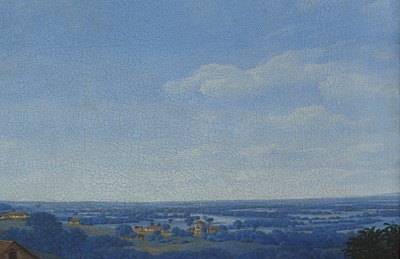
In 1630 the Dutch West India Company seized Recife and the sugar captaincy of Pernambuco, beginning a quarter-century of Dutch rule in Brazil. The Netherlands, then fighting Spain for its independence, wanted the sugar and slaves of the South Atlantic, and Brazil, ruled by Spain's king since 1580, was the richest target. An earlier Dutch squadron had briefly taken Salvador in 1624. The conquest of 1630 proved more durable, and by 1641 Dutch control stretched along a thousand miles of the Brazilian coast from Maranhao to the Sao Francisco River.
The golden age of Dutch Brazil came under Count Johan Maurits of Nassau-Siegen, governor from 1637 to 1644. He built a new capital, Mauritsstad, on islands beside Recife, with bridges, gardens, and palaces, and he governed with unusual religious tolerance for the era, allowing Catholics and Jews to worship openly. Recife's Jewish community built one of the first synagogues in the Americas. Johan Maurits also brought artists and scientists with him: Frans Post and Albert Eckhout painted the land and its peoples, while Georg Marcgraf and Willem Piso produced an influential early scientific study of Brazilian nature, the Historia Naturalis Brasiliae.
Dutch power rested on sugar and the slave trade. The company kept the plantations running by compromising with Portuguese planters, and it seized Elmina in West Africa in 1637 and Luanda in 1641 to supply enslaved Africans. But the costs of empire mounted, the planters fell deep in debt, and many resented their Protestant rulers. After Johan Maurits was recalled in 1644, Luso-Brazilian landowners rose in revolt in 1645 under Joao Fernandes Vieira and Andre Vidal. Dutch attempts to hold the interior failed, and colonial forces, including units of Indigenous and Black soldiers, defeated company troops at the two battles of Guararapes in 1648 and 1649.
Besieged in Recife, the Dutch surrendered in January 1654, and in 1661 the Treaty of The Hague confirmed the loss in exchange for compensation. The episode reshaped the Atlantic world. Dutch merchants carried Brazilian sugar techniques to the Caribbean, helping spark the sugar revolutions of Barbados and beyond, and Recife's Jews carried their community's memory to new homes from Amsterdam to North America. The paintings of Frans Post and the science of Marcgraf remained the most detailed European record of seventeenth-century Brazil, treasured long after Mauritsstad itself had vanished.
 Wikipedia - Dutch Brazil
Wikipedia - Mauritsstad
 Brill chapter on Dutch Brazil - via DOI