 Go Back

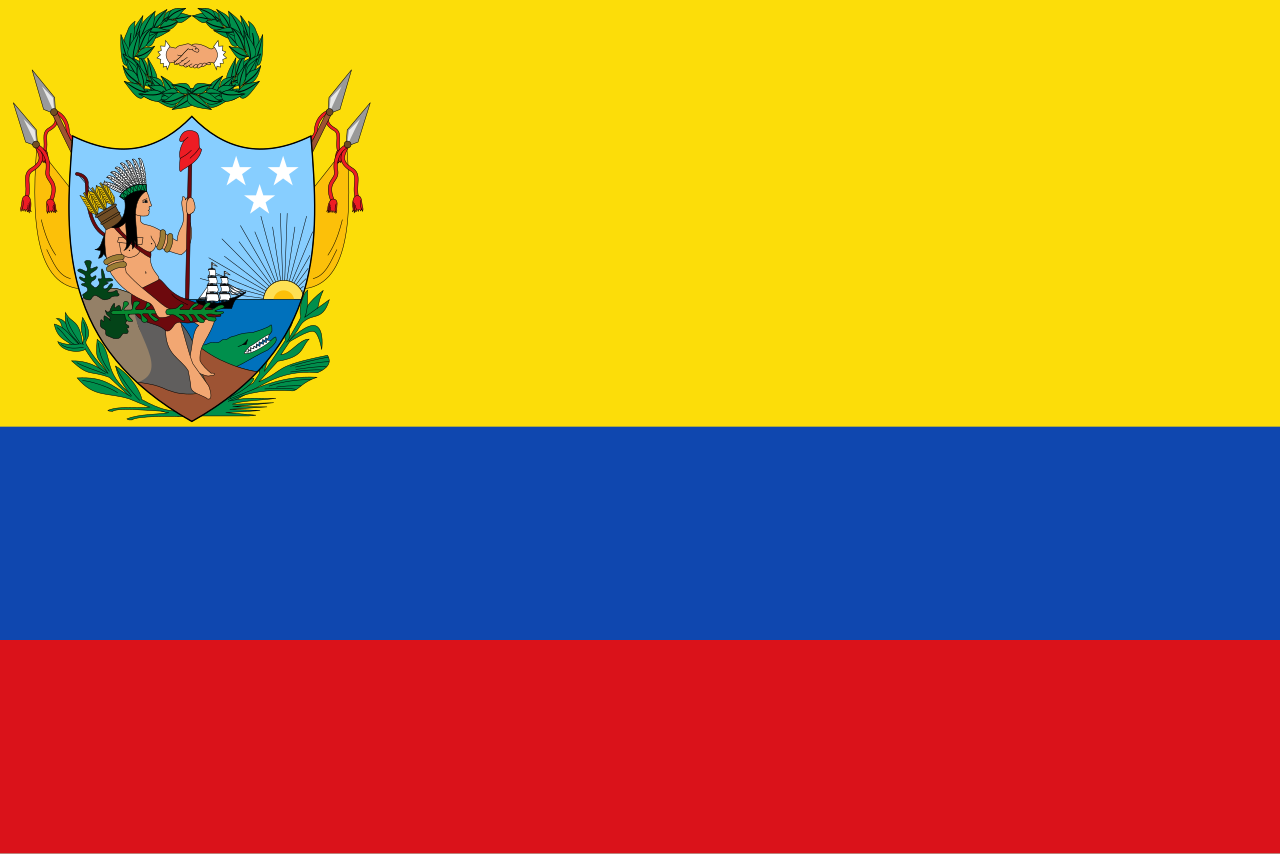
Gran Colombia. Gran Colombia was the republic formed in the heat of the independence wars from the territories of the Viceroyalty of New Granada - roughly the modern nations of Colombia, Panama, Venezuela, and Ecuador. In 1819, in the context of their war for independence, the patriots set up a regular government at a congress in Angostura - now Ciudad Bolivar, Venezuela - and the republic was definitely organized at the Congress of Cucuta on August 30, 1821 - a conglomerate of recently freed countries formerly part of the viceroyalty, liberated section by section, with its capital at Bogota: Simon Bolivar became president and Francisco de Paula Santander vice president, under a constitution calling for a bicameral legislature. Gran Colombia matters because it was the boldest experiment of the independence era - the dream of holding the liberated north together as one great nation.
The experiment did not hold. Rivalry for public office and regional jealousies led to a rebellion in Venezuela in 1826; after ruling as dictator from 1828 to 1830, Bolivar convoked a convention that produced a new constitution, but it was recognized only in Nueva Granada - Colombia and Panama - as Venezuela and Ecuador went their own way. Bolivar resigned and left for the northern coast, where he died, his uniform decorated with the medals of his campaigns: the Order of the Liberators of Venezuela, the Cross of Boyaca, and the Liberators of Cundinamarca. Gran Colombia dissolved in 1830, its member territories becoming the separate nations that stand today. Its short life left a lasting question for the continent: unity or fragmentation - a question the new republics answered differently, one by one.
 Britannica: Gran Colombia
 Humanities LibreTexts: 3.2: Simón Bolívar y la Gran Colombia
 Smarthistory: Independence from Spanish rule in South America
Britannica: Simon Bolivar