 Go Back

Throughout the seventeenth century, enslaved Africans in Brazil escaped the sugar plantations and built free communities in the forest. These settlements were called quilombos, and the greatest of them was Palmares, a confederation of villages hidden in the Serra da Barriga, in what is now the state of Alagoas. Founded around 1600, Palmares grew until it held thousands of people, with population estimates varying widely, organized in settlements called mocambos, protected by palisades, traps, and skilled warriors. Its people farmed, raised animals, traded with frontier towns, and raided the plantations, freeing captives and shaking the slave regime.
Palmares was not a single tribe but a new African-American society. Its population came from many African peoples, joined by Indigenous allies and even poor settlers. At its head stood kings and war captains. The best remembered are Ganga Zumba, the great king who ruled from the capital village of Macaco, and his nephew Zumbi, born free in Palmares, educated for a time by missionaries, and destined to become the most famous quilombo leader of all. Portuguese and Dutch colonial authorities sent expedition after expedition into the forest, but the quilombo's warriors, masters of ambush and terrain, destroyed or outlasted them.
In 1678, worn down by war, Ganga Zumba accepted a peace treaty with the governor of Pernambuco: the Palmarinos would keep their freedom but move to new land and return future runaways. Zumbi rejected any bargain that left others in slavery, and Palmares split. The king's peace collapsed, and by 1680 Zumbi led the war faction. For years he defied every army sent against him, becoming a byword for resistance along the whole coast. The colonists came to believe Palmares could only be broken by a massive, professional campaign.
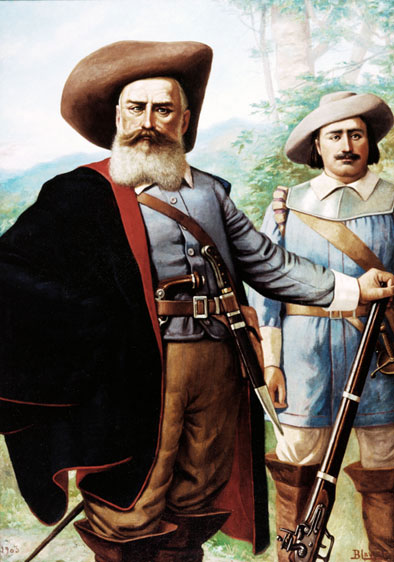
That campaign came in 1694, when the crown hired the feared frontiersman Domingos Jorge Velho, who stormed the fortified capital after a long siege. Zumbi escaped the fall of Macaco and fought on as a fugitive until November 1695, when he was betrayed, captured, and killed. The destruction of Palmares scattered its people. Quilombos continued to form wherever slavery existed in Brazil, keeping alive the practice of escape and independent settlement.
 Wikipedia - Palmares (quilombo)
 Cambridge University Press - JLAS: The Quilombo of Palmares
 Britannica - Palmares