 Go Back

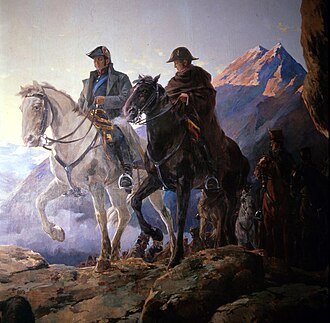
San Martin and the Crossing of the Andes. Jose de San Martin was a Spanish officer - born in the River Plate, raised in the armies of Spain against Napoleon - who came home in 1812 to offer his sword to the revolution in Buenos Aires. He quickly saw what the porteno generals would not: that the independence of the south could not be won by attacking up the spine of Peru, where every patriot army had died. He proposed instead to cross the Andes, liberate Chile, take the sea, and come at Peru by water - the boldest plan of the wars of independence.
He made it real at Mendoza. As governor of Cuyo, in the shadow of the mountains, San Martin spent two years building the Army of the Andes with a quartermaster's genius: five thousand men, made from freed slaves, frontier gauchos and Chilean exiles under Bernardo O'Higgins; forges casting cannon, women sewing uniforms by the thousand, mules and forage gathered pass by pass. In January 1817 the army marched - and in twenty days crossed the highest passes in the Americas, Uspallata and Los Patos, at altitudes that killed men and mules by the hundred, without losing a gun.
The royalists of Chile were destroyed before they understood what had come over the mountains: Chacabuco, 12 February 1817, broke them; the patriot defeat at Cancha Rayada the next year was redeemed at Maipu, 5 April 1818, which secured Chile forever. Then the second half of the plan: the Chilean squadron under the cantankerous British genius Lord Cochrane swept the Spanish navy from the Pacific, and in 1820 San Martin's army landed in Peru. Lima fell in 1821, and San Martin proclaimed Peru's independence, ruling as Protector.
The two liberators met at Guayaquil in July 1822 - alone, and no one recorded what passed. San Martin came out, resigned everything, and sailed for Europe, leaving the completion of the war to Bolivar: he never returned to power and died in Boulogne in 1850, in self-chosen obscurity. Argentina, Chile and Peru remember him as the greatest of their founders - the general who conquered three countries and refused to rule one.
 Britannica: Jose de San Martin
Britannica: Battle of Chacabuco
 Memoria Chilena: El Cruce de la Cordillera de los Andes (1817)