 Go Back

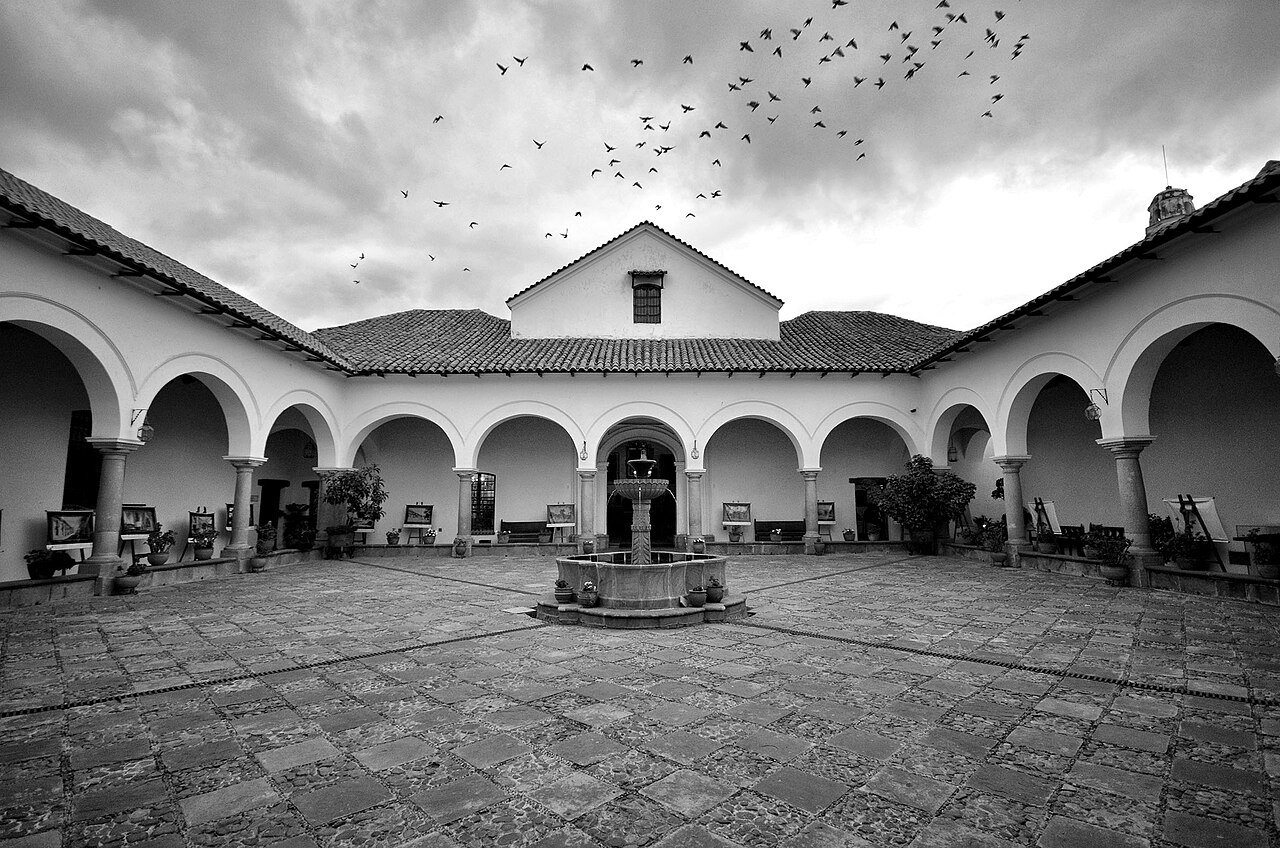
The Audiencias of Charcas and Quito. Spain governed its American empire through a web of courts: the audiencias, royal tribunals that were at once the highest courts of appeal, the councils of their capitals, and - whenever a viceroy or captain-general was absent or dead - the government itself. In Spanish South America two of them mattered above all: Charcas, seated at Chuquisaca - the city now called Sucre - ruling the vast interior of Upper Peru, today's Bolivia; and Quito, ruling the northern Andes between the viceroyalties of Peru and New Granada.
The Audiencia of Charcas, founded in 1559, sat over the richest district of the empire: the silver mountain of Potosi lay within its jurisdiction, and the wealth of the Cerro Rico paid for the finest baroque city in the interior. Its judges rode a territory that reached from the Lake Titicaca basin to the forests of the Chaco and the pampas of Tucuman, and Chuquisaca's university, founded in 1624, trained the lawyers who would one day make Bolivia's independence.
The Audiencia of Quito, founded in 1563, ruled the northern highlands from Pasto to the edge of Peru, a land of Indian market towns, textile workshops and great estates, with Guayaquil as its feverish Pacific port. Quito's judges contended with pirate raids on the coast, with the proud city council of the mountain capital, and with the distance from every superior: Bogota was weeks away, Lima weeks more. In 1717 the audiencia was transferred to the new Viceroyalty of New Granada, an administrative revolution the Quitenos never forgave.
Both audiencias ended in the wars of independence: Charcas gave its name to the revolutionary junta of 1809 - the first cry of freedom in South America, in the city's own memory - and its region became Bolivia in 1825; Quito rose in 1809 as well, was crushed, and was liberated at Pichincha in 1822, becoming Ecuador in 1830. The colonial court-districts drew the borders the new republics kept.
 Britannica: Audiencia
 UNESCO: Historic City of Sucre
Britannica: Bolivia - Early Period