 Go Back

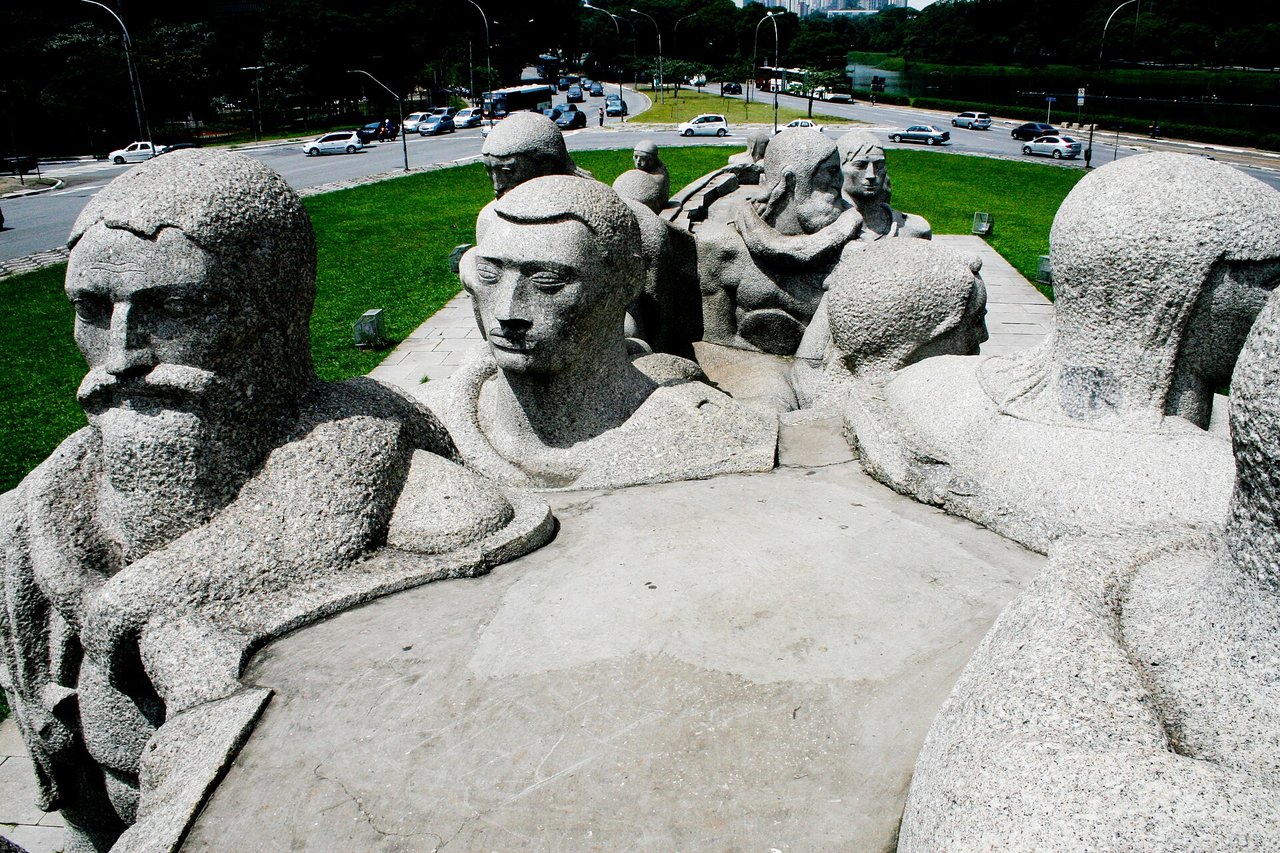
The Bandeirantes. From the half-Indian town of Sao Paulo, perched on its plateau above the coast of Portuguese America, there set out for two centuries the armed expeditions called bandeiras - flags - and their leaders, the bandeirantes, became the conquerors of the Brazilian interior. The Paulistas were a frontier people, mostly mestizo, speaking Tupi as readily as Portuguese, and their columns of hundreds of men - whites, mamelucos, and hundreds of Indian auxiliaries - marched for years at a time into a backland larger than Europe.
The first object of the bandeiras was slaves. Hunting Guarani for the sugar plantations, the Paulistas destroyed the Spanish Jesuit missions of Guaira and Tape in the 1620s and 1630s, carrying off thousands of Christian Indians in chains until the missions armed and fought back at Mborore in 1641. When Indian slavery was curbed, the bandeirantes turned prospector - and changed Brazil forever: in the 1690s their bands found gold in the mountains they called Minas Gerais, the General Mines, and later diamonds at Tijuco, triggering the greatest gold rush of the colonial world.
The bandeiras drew the map of modern Brazil. Hunting slaves and gold, they pushed far beyond the Line of Tordesillas that had divided the continent between Portugal and Spain, penetrating the basins of the Parana, the Paraguay and the Madeira, reaching the foothills of the Andes and the banks of the Amazon. When diplomats met to settle the boundaries, Portugal held the ground the Paulistas had walked: the Treaty of Madrid in 1750 recognized possession, and Brazil's continental size is the bandeirantes' doing.
Their memory is double. To later Paulistas they were the founders of the state's greatness, and their monuments stand in Sao Paulo to this day. To the peoples they enslaved and the missions they burned they were the terror of the interior. Both are true: the bandeirantes built Brazil's geography by violence, and the interior they opened became the country's economic heart.
 Britannica: Bandeirante
Britannica: Sao Paulo
 Encyclopedia.com: Treaty of Madrid (1750)