 Go Back

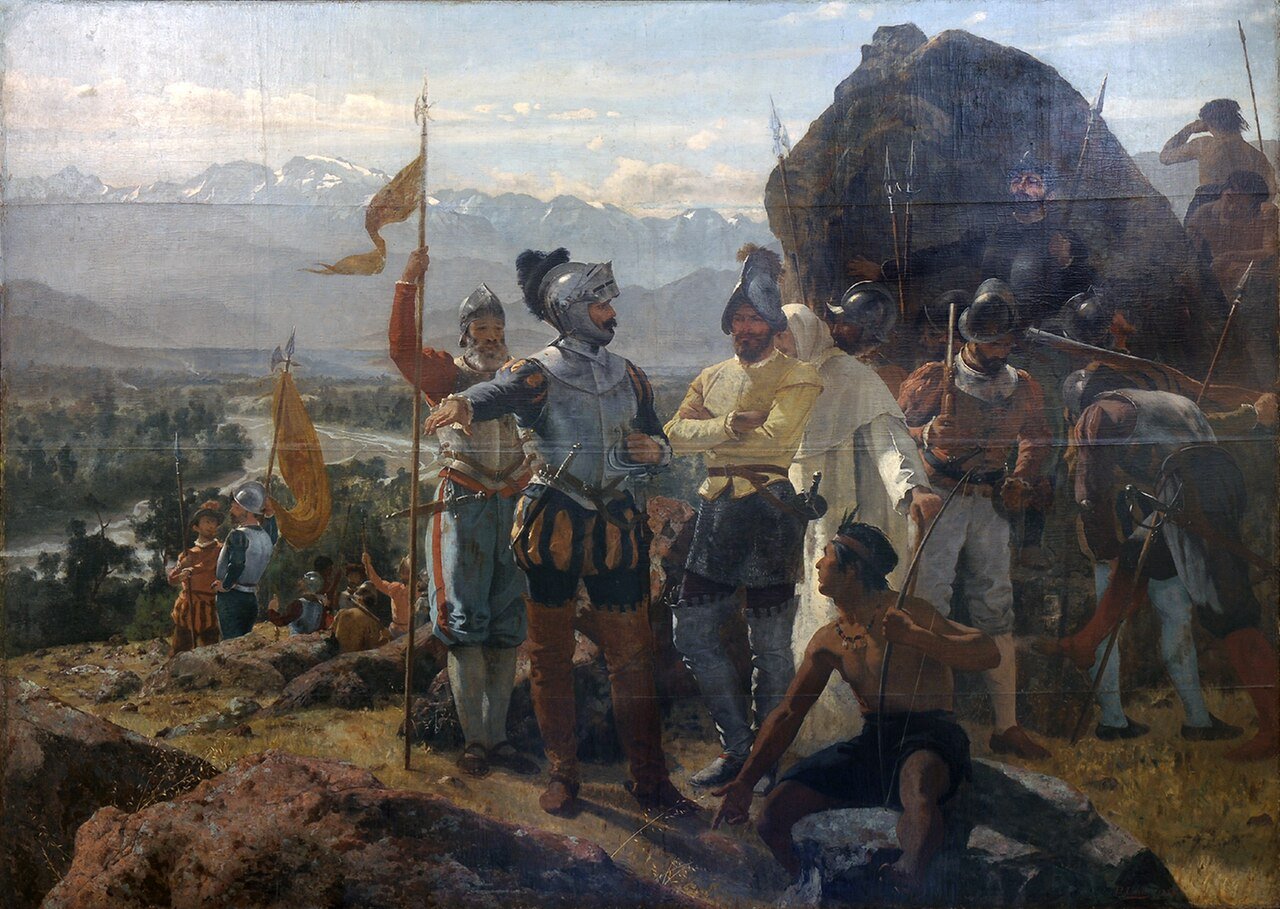
The Captaincy-General of Chile. Chile was the harsh frontier of the Spanish Empire in America: a long ribbon of settlements strung between the Atacama Desert and the forests of the south, separated from the viceroys of Peru by desert and from Spain by the whole world. Pedro de Valdivia conquered the central valley from 1541, founding Santiago at the foot of its hill and Concepcion, Valdivia and La Serena along the valley - but south of the Bio-Bio River the Mapuche nation stopped him, killed him at Tucapel in 1553, and held the frontier for three hundred years.
To hold the colony Spain made it a captaincy-general, a military governorship under the viceroy in name but largely self-ruled in fact, with its own audiencia - its high court - at Santiago. The Arauco War, the never-ending conflict with the Mapuche, shaped everything: the forts of the frontier consumed the colony's budget, its soldiers were the only standing army in Spanish South America, and the parlamentos - great frontier parleys where governor and Mapuche chiefs swore terms - made the Bio-Bio a recognized international border long before Chile was a nation.
Within its narrow valleys colonial Chile grew into a distinct society: a poor, proud landed aristocracy of Basque and Castilian stock on their haciendas; a mestizo people of tenant farmers, the huasos of the central valley, famous horsemen; wheat and wine for the Peruvian market; and a church and a university - San Felipe, from 1758 - that trained its creole elite. Earthquakes regularly threw down its cities, and the great remaking after the Concepcion and Valdivia earthquakes marked the colony's building stock.
When Napoleon broke Spain in 1808, the Santiago elite moved almost by reflex: a junta in 1810, the Patria Vieja, defeat at Rancagua in 1814, then liberation from across the Andes by San Martin and O'Higgins in 1817-18. The Captaincy-General became the Republic of Chile - a frontier society that had spent three centuries learning self-reliance, and carried it into independence.
 Britannica: Chile - Colonial Period
 Memoria Chilena: Gobernadores de Chile (1540-1810)
Britannica: Pedro de Valdivia