 Go Back

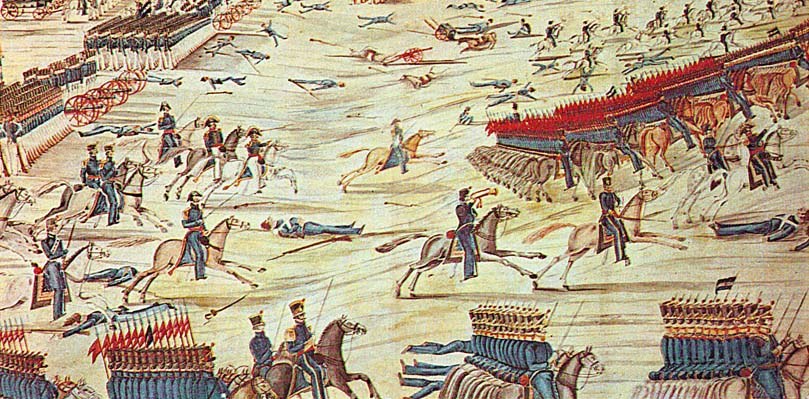
The struggle for control of the Río de la Plata, the River Plate estuary that gave the region its name, produced a series of wars among Argentina, Brazil, and the newly independent nations of Uruguay and Paraguay in the decades after independence. The Río de la Plata was one of the great trading arteries of South America, funneling the wealth of the interior to Buenos Aires and Montevideo, and whoever controlled its banks and navigation held the keys to regional power. The first and defining conflict was the Cisplatine War of 1825-1828 between the Empire of Brazil and the United Provinces of the Río de la Plata, as Argentina was then known.
The war began when the Banda Oriental, the east bank of the Uruguay River that Brazil had annexed as its Cisplatine Province, rose in revolt. Thirty-three exiled patriots, the legendary Treinta y Tres Orientales, crossed from Buenos Aires in April 1825 and raised the flag of rebellion, soon supported by Argentine troops. The decisive land battle came at Ituzaingó in February 1827, where an Argentine-Oriental army defeated a larger Brazilian force. At sea, the Irish-born admiral William Brown led a scratch Argentine fleet that harassed Brazil's far stronger navy and challenged its blockade of the Río de la Plata.
Neither side could win outright. Brazil's blockade strangled Buenos Aires's trade, while Argentina could not dislodge Brazilian power ashore, and both economies bled. British mediation, driven by London's interest in keeping the trade routes open, produced peace in 1828: the Cisplatine Province became the independent nation of Uruguay, a buffer state between the two giants. The outcome satisfied no one fully, and Uruguay's politics split into the Blancos and Colorados, parties backed by competing foreign patrons.
The struggle continued for decades through proxy wars and interventions. The Argentine dictator Juan Manuel de Rosas dominated the Plate through the 1830s and 1840s, blockading Montevideo in the long Great War, while France and Britain repeatedly intervened to force open the rivers. Rosas was finally overthrown in 1852 at the Battle of Caseros by a coalition of Uruguayans, Brazilians, and Argentine rebels under Justo José de Urquiza. The Platinum Wars set the pattern of rivalry and intervention that culminated a decade later in the devastating War of the Triple Alliance.
 Wikipedia: Cisplatine War
 Encyclopedia.com: Cisplatine War
Country Studies (Library of Congress): Uruguay: The Struggle for Independence