 Go Back

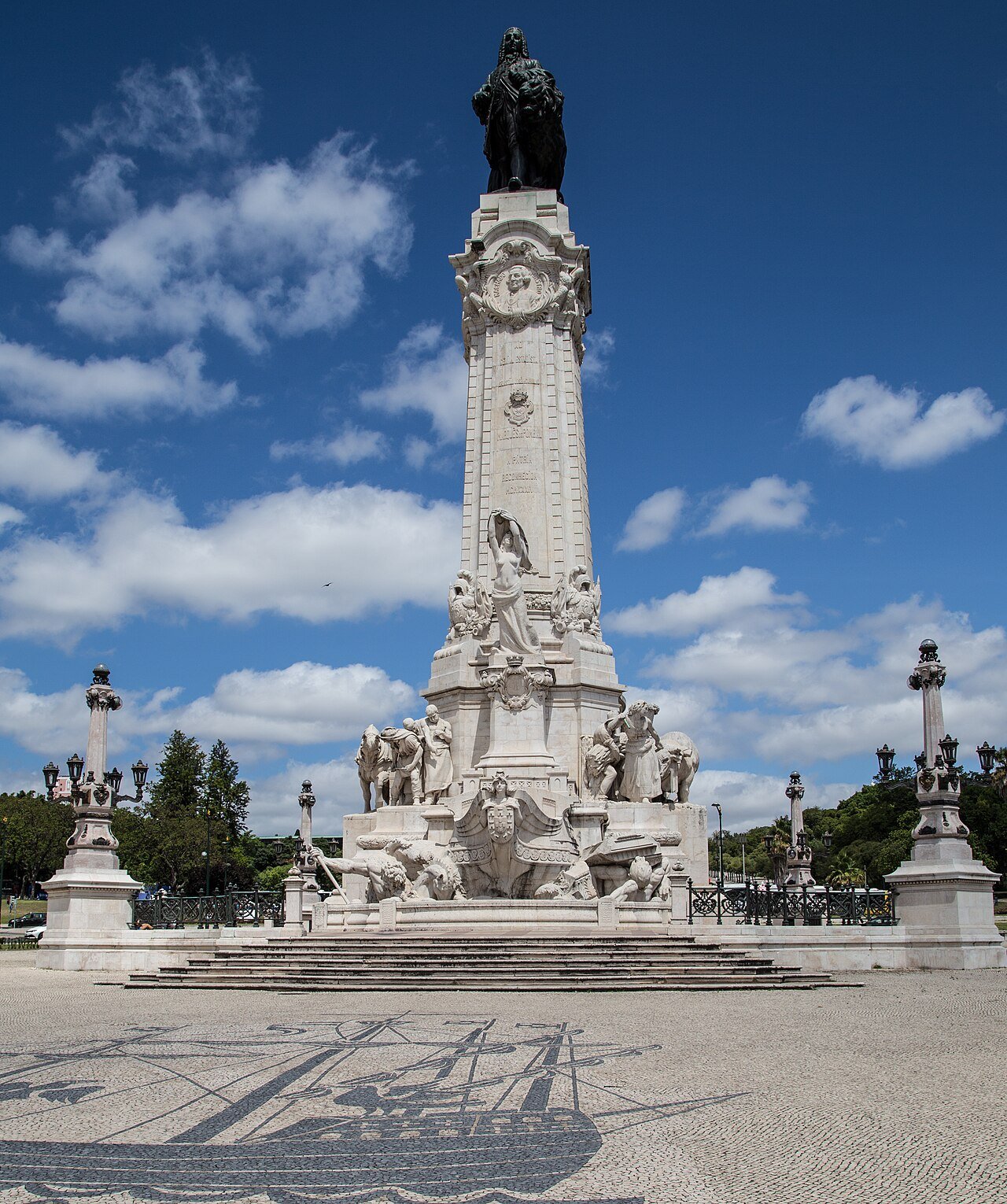
The Pombaline Reforms. Sebastiao Jose de Carvalho e Melo, the Marquis of Pombal, ruled Portugal for a generation (1750-1777) as the all-powerful minister of King Joseph I, and he ruled it as the age's most ruthless enlightened despot. When the Lisbon earthquake of 1755 destroyed the capital in minutes, Pombal's reply became the motto of his rule - bury the dead and feed the living - and he rebuilt Lisbon on a grid that still stands. Then he turned to the empire, and above all to Brazil.
Pombal set out to make Portugal rich on its colony and free of England. He created monopoly companies for the trade of Para and Pernambuco, broke the power of the great nobles and the Inquisition's old families, expelled the Jesuits from the whole Portuguese world in 1759 - the destruction of the Guarani missions of Paraguay followed within the decade - and took the missions' lands and the education of the empire into the state's hands. In Brazil he abolished Indian slavery, transferred the capital from Salvador to Rio de Janeiro in 1763, and reorganized the Amazon as the new state of Grao-Para e Maranhao.
The reforms shook Brazil's settled order. The expulsion of the Jesuits scattered the missions' hundreds of thousands of Indian charges; the new directors of the Indian villages tried to force assimilation; the monopoly companies and the new taxes fell heavily on the mining towns, feeding the discontent that erupted in the Inconfidencia Mineira of 1789. Yet Pombal's economic nationalism also built: new factories in Portugal, a modernized army, and in Brazil a tighter, richer, more centrally ruled colony whose trade boomed.
Pombal fell with his king in 1777, and the reaction undid his companies and softened his Indian laws, but his Brazil endured: Rio the capital, the missions gone, the Amazon opened, the colony's wealth and self-confidence grown past the point of return. When the Portuguese court itself fled to Rio before Napoleon in 1808, it was Pombal's centralized Brazil that received a king - and, in 1822, became an empire of its own.
 Britannica: Marquis of Pombal
Britannica: Lisbon Earthquake of 1755
 Encyclopedia.com: Reductions of Paraguay