 Go Back

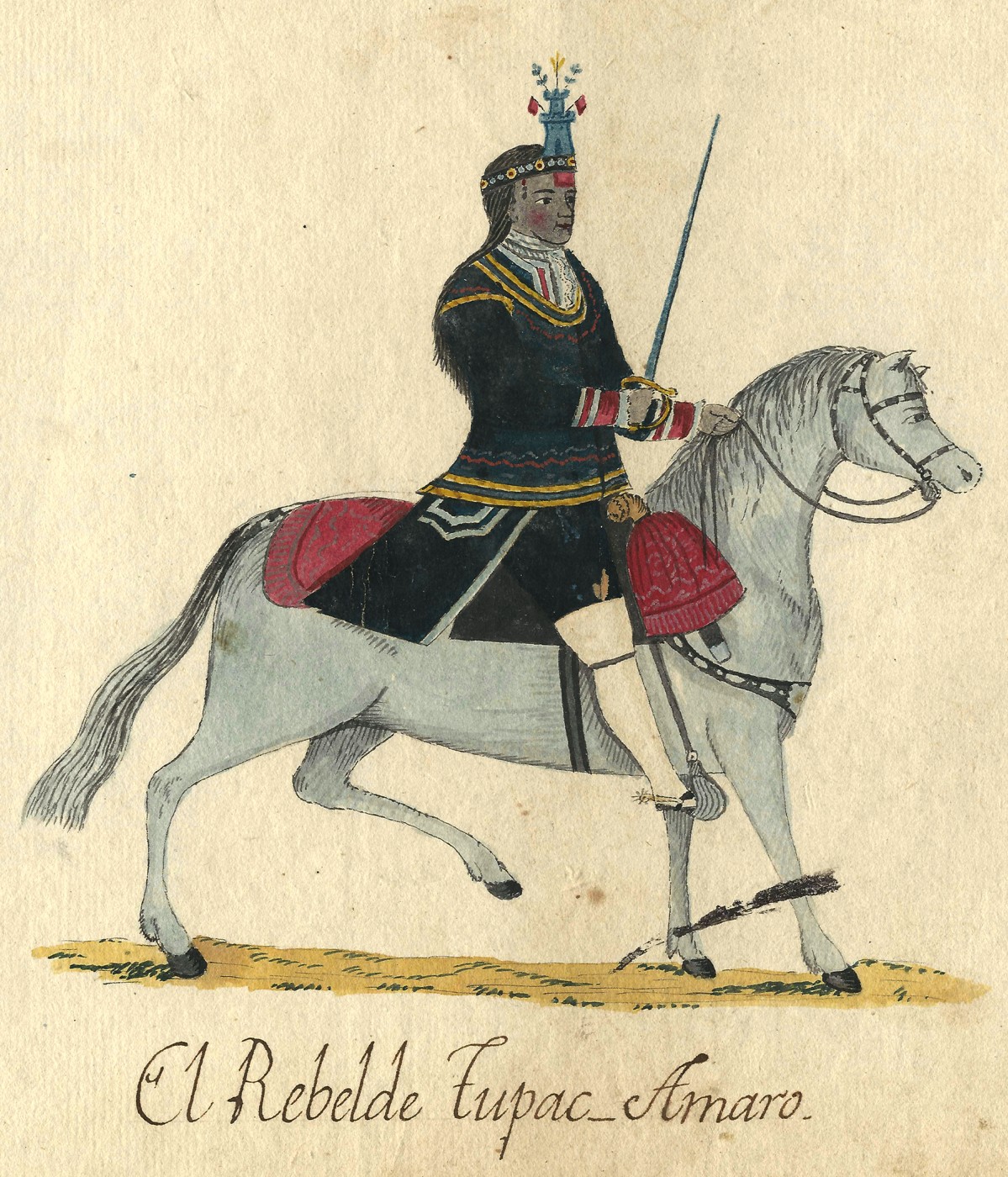
In 1780 the viceroyalty of Peru exploded in the largest Indigenous uprising in colonial American history. Its leader, Jose Gabriel Condorcanqui, was a well-off cacique, a hereditary Indigenous chief, of the town of Tungasuca, who claimed descent from the last Inca and took the name Tupac Amaru II. The grievances were real and widely shared. The Bourbon monarchy had raised taxes and tightened colonial control, while local officials called corregidores forced Indigenous communities to buy unwanted goods at inflated prices through the repartimiento system, and men were still dragged away to the deadly mines of Potosi under the mita.
The rebellion began in November 1780, when Tupac Amaru seized the corregidor Antonio de Arriaga, tried him before the community, and had him hanged at Tinta. He then proclaimed a program that mixed loyalty to the king with demands to end the repartimiento and the abuses of the mita, and he called on Indigenous people, mestizos, and even creoles to join him. Tens of thousands responded. His forces defeated a royal army at Sangarara and in January 1781 briefly besieged Cuzco itself, but they failed to take the city, and the colonial government rallied creole support by portraying the rising as a war of races.
Royal forces captured Tupac Amaru in 1781, after the failed siege. On 18 May, in the main square of Cuzco, the Spanish authorities forced him to watch the execution of his wife and closest followers before putting him to death by quartering, a punishment meant to erase his movement from memory. The rebellion did not die with him. His kinsman Diego Cristobal Tupac Amaru fought on, and in Upper Peru, present-day Bolivia, the Aymara rose under Tomas Katari, who was killed in January 1781, and then under Julian Apaza, called Tupac Katari, who twice besieged La Paz in 1781 with an army of tens of thousands before he too was defeated and executed.
By 1783 the last rebels had accepted amnesty or been crushed, at a cost of perhaps one hundred thousand lives. The crown responded with limited reforms, abolishing the corregidores and the repartimiento, but it also suppressed the Inca nobility's privileges and banned images and memories of the Inca past. The uprising was never forgotten. Rebels, reformers, and later independence movements invoked Tupac Amaru's name, and by the early twentieth century he had become a symbol of Indigenous dignity and resistance across the Andes.
 Britannica: Tupac Amaru II
 Encyclopedia.com: Tupac Amaru, Rebellion of
 Wikipedia: Rebellion of Tupac Amaru II