 Go Back

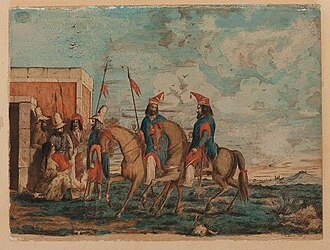
The Guerra Grande. The little buffer republic of Uruguay was born divided: between Montevideo, the port, liberal and commercial, and the interior of the cattle ranches; between the followers of the first president, Fructuoso Rivera - the Colorados - and those of his successor, Manuel Oribe - the Blancos. In 1839 Rivera, backed by the Argentine dictator Rosas's enemies and by French gold, declared war on Oribe, and the two Uruguayans and their foreign paymasters turned the country into a battlefield for thirteen years: the Great War.
Its siege became the sensation of the age. Oribe, supplied by Rosas from across the river, besieged Montevideo for nine years - the Troy of America, its defenders called it - while the city held out behind its walls, provisioned from the sea, defended by a legion of Italian volunteers under a young Garibaldi and by French and British squadrons that twice intervened against Rosas outright. The countryside belonged to the Blancos' gaucho cavalry; the city and the world belonged to the Colorados.
The war drew in the whole Plata: it was at bottom the long duel between Buenos Aires under Rosas and everyone who resisted him, and it ended only when Brazil, fearing Rosas's hegemony, joined the anti-Rosas alliance, and the Entre Rios strongman Urquiza turned on his master. In 1851 the allies crossed into Argentina; at Caseros, on 3 February 1852, Urquiza destroyed Rosas's army, and the siege of Montevideo was lifted. Oribe went into exile; the Colorados kept the capital.
The Guerra Grande cost Uruguay a generation and much of its people, and fixed its politics: the division into Colorado city and Blanco interior ran through every later conflict, down to the civil war of 1904, and the two parties still bear the names born in the war. And it taught the powers of the Plata that Uruguay's fate would always be decided as much in Buenos Aires, Rio and London as in Montevideo.
 Britannica: Uruguay - Civil War
 Encyclopedia.com: Fructuoso Rivera
Britannica: Giuseppe Garibaldi