 Go Back

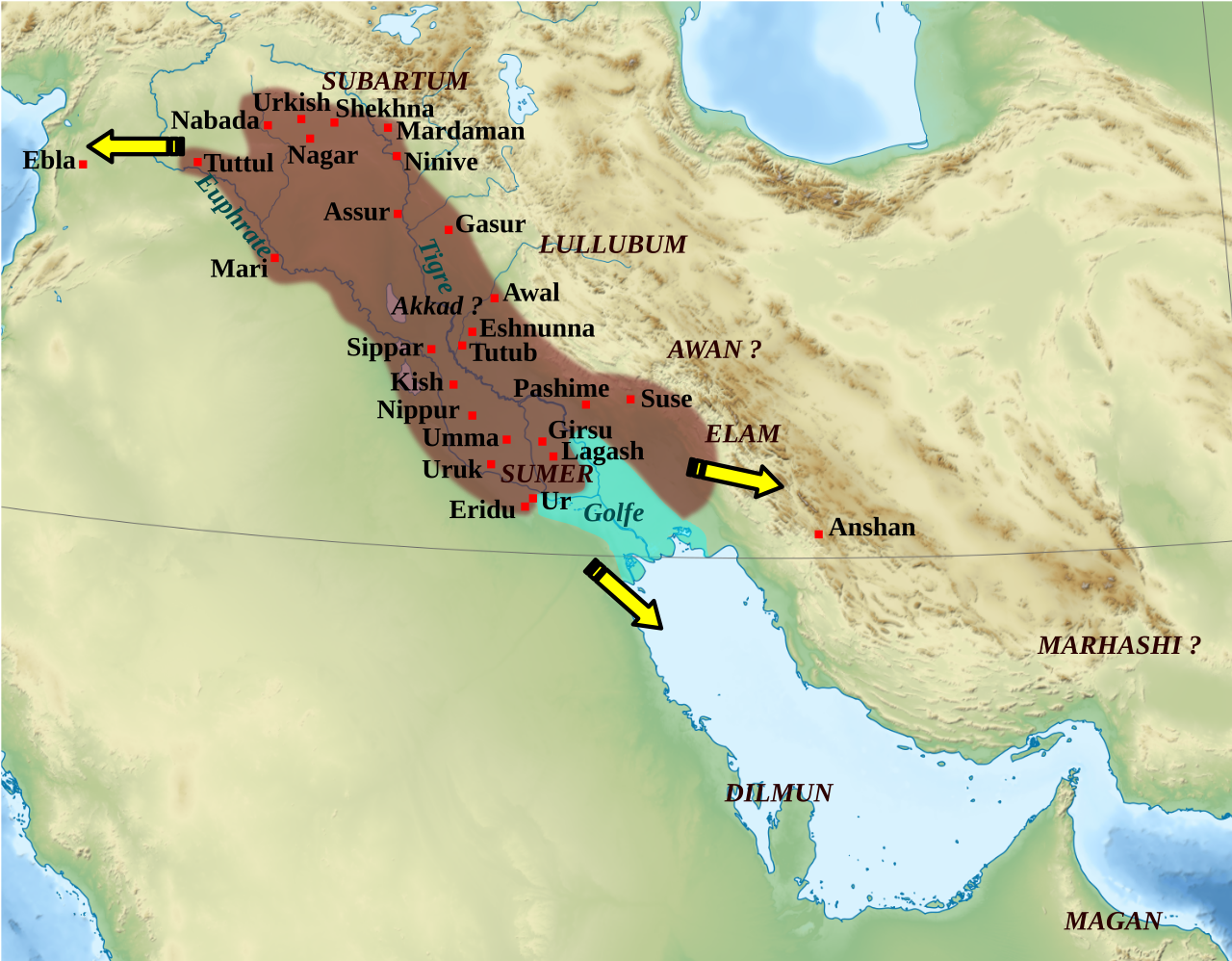
The Akkadian Empire was the world's first multinational empire, centered on the city of Akkad, somewhere along the Euphrates in what is now Iraq; the city's exact site has never been found. Rising to power around 2334 BCE under the legendary Sargon the Great, it united the Akkadian and Sumerian speaking cities of Mesopotamia under a single rule for the first time on such a scale. It matters because Sargon set the model that later Mesopotamian kings would follow or strive to surpass: his own inscriptions boast that he secured access to all the major trade routes, by sea and by land.
Sargon was not quite the first unifier: Lugalzagesi of Uruk had subdued the cities of Sumer before him, but on a smaller scale, and Sargon improved on that model to build something larger and stronger. Under his dynasty, Akkadian replaced Sumerian as the everyday language of rule and letters, except in sacred services, and it remained the common tongue of the Near East long after the empire itself was dust.
Empire was heavy handed work: Sargon's successors spent enormous effort crushing revolts, and later generations remembered kings like Sargon and Naram-Sin in poems and myths as great but flawed figures, brutal in suppressing any dissent. After the reign of Shar-Kali-Sharri the dynasty frayed into civil war, with four men fighting for the throne in quick succession, and central authority collapsed around 2154 BCE.
Yet the idea of Akkad never died: the Sumerian kings of Ur III consciously followed Sargon's example, and the Assyrian kings of the next millennium took him as their prototype, the image on which they modeled their own ambitions. The first empire lasted barely two centuries, but every empire that came after walked the road it cut.
 Britannica: History of Mesopotamia - Sumer, Akkad, 2350-2000 BCE
 World History Encyclopedia: Akkad and the Akkadian Empire: The First Multinational Empire in the World
 Humanities LibreTexts: 2.4: The Akkadian Empire
 National Geographic: King Sargon of Akkad—facts and information