 Go Back

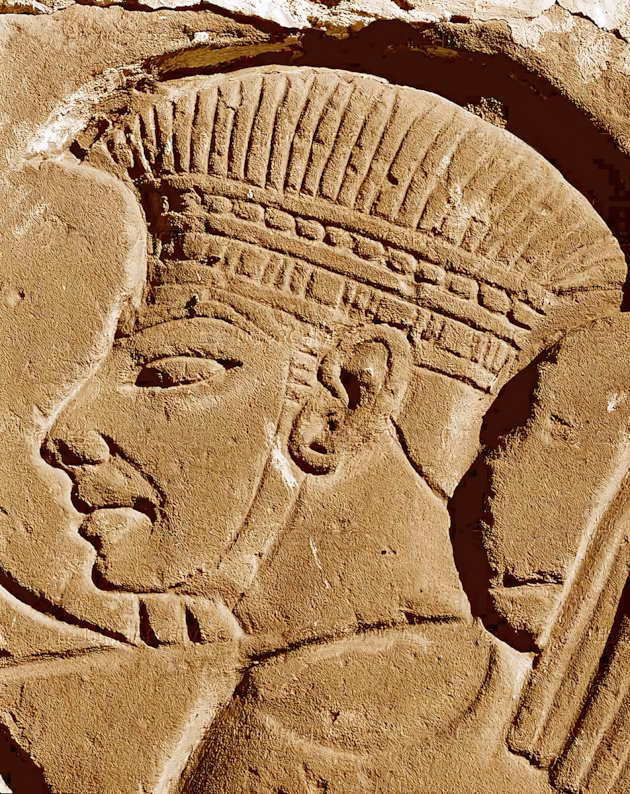
The Philistines were a people of Aegean origin who settled the southern coast of Canaan in the 12th century BCE, about the time the Israelites were emerging inland. They first appear in history on the walls of the mortuary temple of Ramesses III at Medinet Habu, among the Sea Peoples who invaded Egypt about 1190 BCE after ravaging Anatolia, Cyprus, and Syria; repulsed by the Egyptians, they settled, possibly with Egypt's permission, on the coastal plain from Joppa down to Gaza.
There they formed a confederacy of five cities, the Pentapolis: Gaza, Ashkelon, Ashdod, Ekron, and Gath, a land called Philistia, from which the Greeks would eventually name the whole country Palestine. Biblical tradition says they came from Caphtor, perhaps Crete, and their archaeology backs an Aegean connection: their early pottery follows Mycenaean styles, and their excavated temples at Ashdod, Ekron, and Tel Qasile show Aegean design.
The Philistines matter as the great rivals of the early Israelites: around 1050 BCE their superior arms and organization let them occupy part of the Judaean hill country, and their local monopoly on iron smithing, a skill probably acquired in Anatolia, gave them a military edge remembered in the Bible's complaint that no smith could be found in Israel. The struggle echoes through the Bible's Samson saga, and it was the Israelite king David who, in the biblical account, finally broke their power in the 10th century.
After David, their history became that of individual cities rather than a people: they paid tribute to the Assyrian king Adad-nirari III in the 8th century BCE, passed from Assyrian to Egyptian vassalage in the 7th, and became part of Nebuchadnezzar's Neo-Babylonian empire. The cities later passed under Persian, Greek, and Roman control, while the Philistines themselves faded as a distinct people - their language replaced by Canaanite, Aramaic, and later Greek - leaving only their name on the land.
 Britannica: Palestine - Iron Age, Canaanites, Philistines
 World History Encyclopedia: Philistines
 Smithsonian Magazine: Ancient DNA Sheds New Light on the Biblical Philistines
 National Geographic: Ancient DNA may reveal origin of the Biblical Philistines