 Go Back

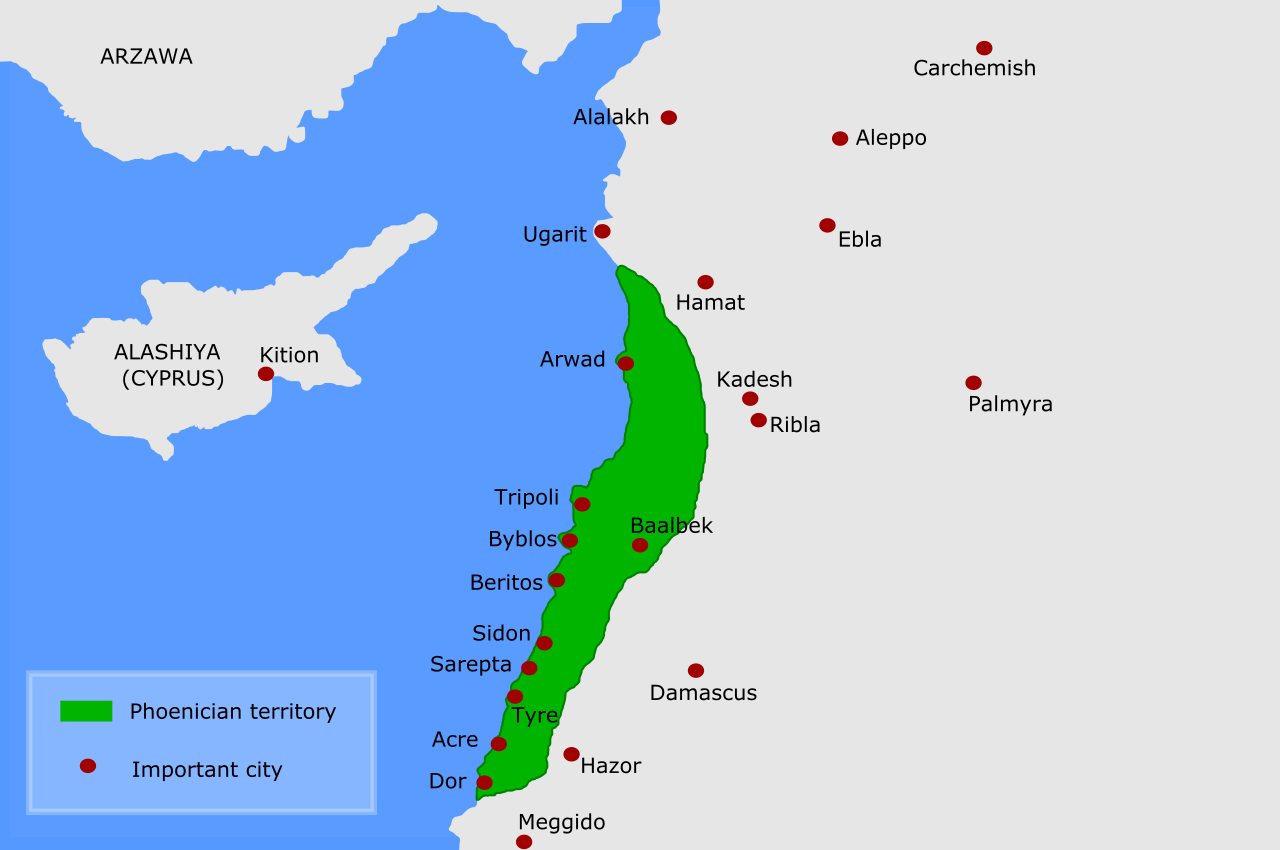
Phoenician City-States. The Phoenician City-States were a collection of independent coastal trade hubs located primarily in modern day Lebanon, thriving between 1500 BCE and 300 BCE. Cities like Tyre, Sidon, and Byblos operated independently rather than forming a unified empire, bound together by a shared language and culture. The Phoenicians were the master seafarers and merchants of the ancient Mediterranean, famous for trading a highly prized purple dye extracted from murex snails. Most importantly, they invented the first phonetic alphabet, a revolutionary system that drastically simplified writing and formed the direct basis for the Greek and Roman alphabets used today.
As they expanded their trading networks, the Phoenicians established numerous wealthy colonies across the Mediterranean coast, with Carthage in North Africa becoming the most famous and powerful. Their dominance in maritime trade slowly waned as they fell under the successive control of the Assyrian, Babylonian, and Persian empires. The final blow to their independence came in 332 BCE when Alexander the Great famously besieged and destroyed the island city of Tyre, permanently shifting the region's cultural trajectory toward Hellenism.