 Go Back

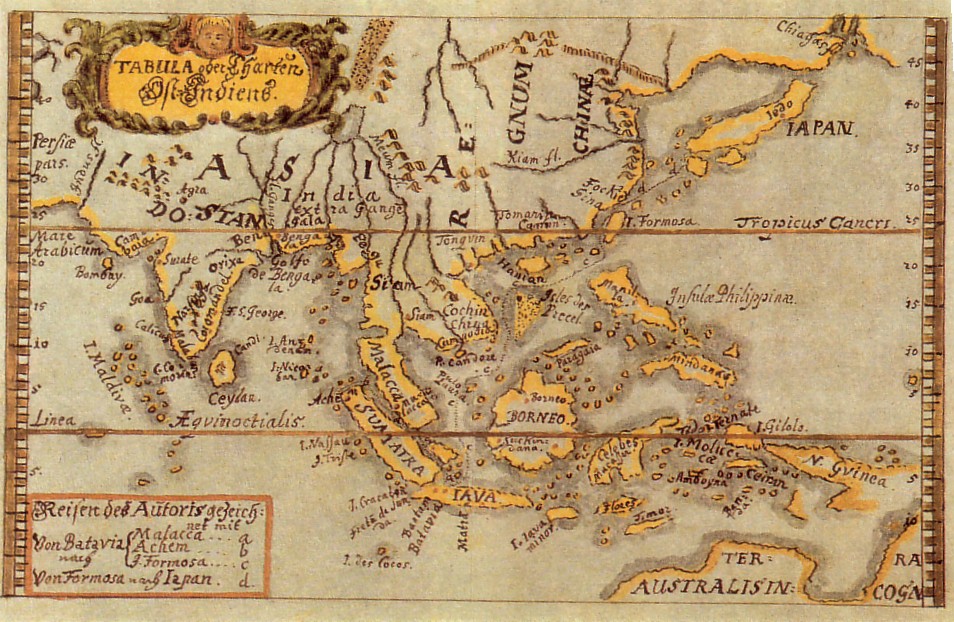
Island Kingdoms of Southeast Asia. While mainland Southeast Asia raised its kingdoms on rivers and rice, the archipelago - the thousands of islands of modern Indonesia and Malaysia - built powers of a different kind: maritime states grown rich on the chokepoints of the spice trade. The greatest of them, Srivijaya and Majapahit, between them commanded the seas between India and China for seven hundred years.
Srivijaya, centered at Palembang on Sumatra from the late 7th century, was the first power to dominate the island world. Its position straddling the Strait of Malacca - the narrow funnel through which all India-China shipping had to pass - made it the tollkeeper of the richest trade route on earth. The Chinese monk Yijing, who studied there in 671, found a devout Buddhist kingdom with more than a thousand monks, and for centuries Srivijaya was a renowned center of Buddhist learning, its kings patrons of monasteries from Sumatra to Bengal. A thalassocracy rather than a territorial state, it ruled through a web of loyal port cities whose allegiance was bought with shared profits - and enforced by fleets when persuasion failed.
Srivijaya survived for six centuries, weathering invasion by the Cholas of southern India in 1025 and endless rivalry with Java, until shifting trade and Javanese pressure reduced it by the 13th century. Java then produced the archipelago's second great power: Majapahit. Founded in 1293 by Raden Wijaya - who famously turned a Mongol invasion force against his own local rivals, then drove the Mongols back to sea - Majapahit rose under the brilliant prime minister Gajah Mada and King Hayam Wuruk (reigned 1350-1389) to claim suzerainty over nearly the whole archipelago: the court poem Nagarakretagama boasts of 98 tributaries from Sumatra to New Guinea, though historians debate how real that control was beyond eastern Java.
Majapahit was the last and greatest of the Hindu-Buddhist island empires. Weakened by civil war after Hayam Wuruk's death and undercut by the spread of Islam along the trade routes it depended on, it collapsed in 1527 under attack from the Islamic Sultanate of Demak; its courts and craftsmen fled east to Bali, which keeps Majapahit's Hindu culture alive today. The island kingdoms left a template - the sea-trading, religiously cosmopolitan maritime state - that Malacca and the later sultanates would inherit, and a golden age that Indonesia still claims as its own.
 Britannica: History of Southeast Asia
 The Metropolitan Museum of Art: Art of Island Southeast Asia: The Fred and Rita Richman Collection
 Smithsonian Magazine: Indonesian Divers Discover Treasures From Enigmatic 'Island of Gold'
 National Geographic: Divining Angkor