 Go Back

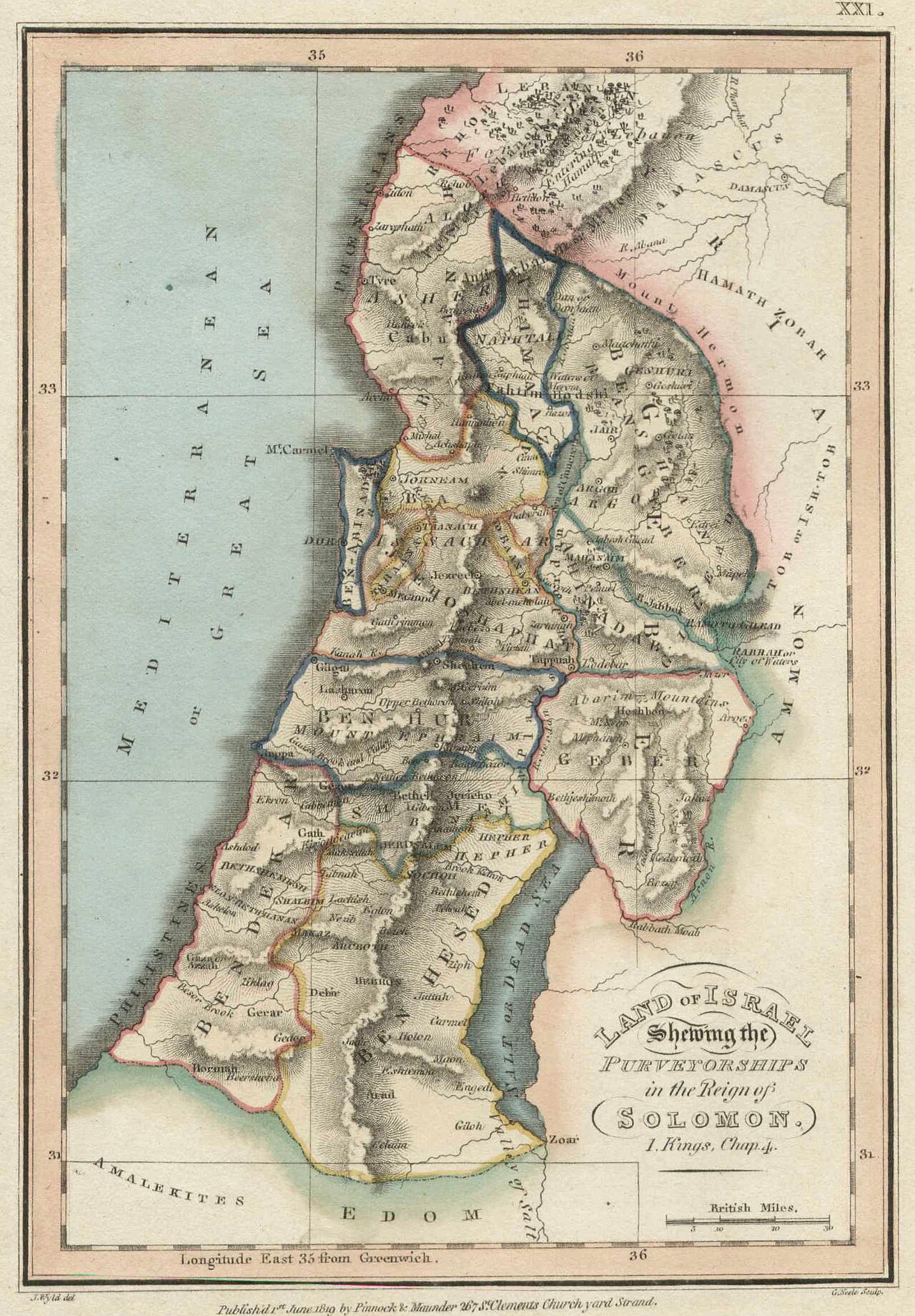
The Israelite Kingdoms. According to the Hebrew Bible, the tribes of Israel were first united in a single kingdom under Saul, then David (c. 1008-970 BCE), and then Solomon (c. 970-931 BCE), who built the First Temple in Jerusalem with the help of Tyrian architects and craftsmen. The first mention of Israel outside the Bible comes much earlier, on the Egyptian Merneptah Stele of 1208 BCE, but how grand the united monarchy really was is one of archaeology's fiercest debates: since the 1980s scholars like Israel Finkelstein have argued the evidence for a large 10th-century kingdom is too weak, while others, like Amihai Mazar, defend a modified version of the traditional chronology. What is certain is that by the mid-9th century BCE a 'House of David' ruled a kingdom in the south, as the Tel Dan Stele, discovered in 1993, attests.
On the accession of Solomon's son Rehoboam, around 930 BCE, the northern tribes broke away under Jeroboam and the kingdom split in two: the Kingdom of Israel in the north, ruled from Shechem, then Tirzah, then Samaria, and the Kingdom of Judah in the south, ruled from Jerusalem by the House of David for four centuries. The northern kingdom was the larger and wealthier of the two, and Assyrian records knew it as the 'House of Omri': the Kurkh Monolith of 853 BCE names 'Ahab the Israelite' fighting at Qarqar, and the Black Obelisk of Shalmaneser III shows King Jehu bowing in tribute, the only surviving ancient Near Eastern portrait of an Israelite or Judean monarch.
Both kingdoms lived in the shadow of the Neo-Assyrian Empire. Tiglath-Pileser III annexed Galilee and Gilead in 732 BCE, and after a three-year siege Samaria itself fell around 720 BCE; Sargon II's own inscriptions record that he carried away 27,290 Israelites, the deportation remembered as the Assyrian captivity and the origin of the legend of the Ten Lost Tribes. In reality only a fraction of the population - perhaps a fifth - was exiled; those who remained around Mount Gerizim became the ancestors of the Samaritans, while many refugees fled south, swelling Jerusalem to perhaps five times its former size under King Hezekiah.
Judah outlived its northern sister by nearly a century and a half, prospering as an Assyrian vassal in the 7th century BCE despite Hezekiah's revolt against Sennacherib, and enacting Josiah's religious reforms as Assyrian power waned. When Assyria fell in 605 BCE, Judah was caught between Egypt and the rising Neo-Babylonian Empire, and its Egyptian-backed rebellions proved fatal: in 587 BCE Nebuchadnezzar II besieged and destroyed Jerusalem and its Temple, deported a large number of Judeans to Babylonia, and annexed the kingdom as a province. The Babylonian exile that followed became one of the defining chapters of Jewish history - and it is from Judah, the smaller but longer-lived kingdom, that the Jewish people take their name.
 World History Encyclopedia: Kingdom of Israel
 Humanities LibreTexts: 2.11: The United Kingdom of Israel
 Livius: Israel - Livius
 The Metropolitan Museum of Art: Cyrus and the Judean Diaspora